
Septoria leaf blotch
Septorioideaceae
Description
Symptoms
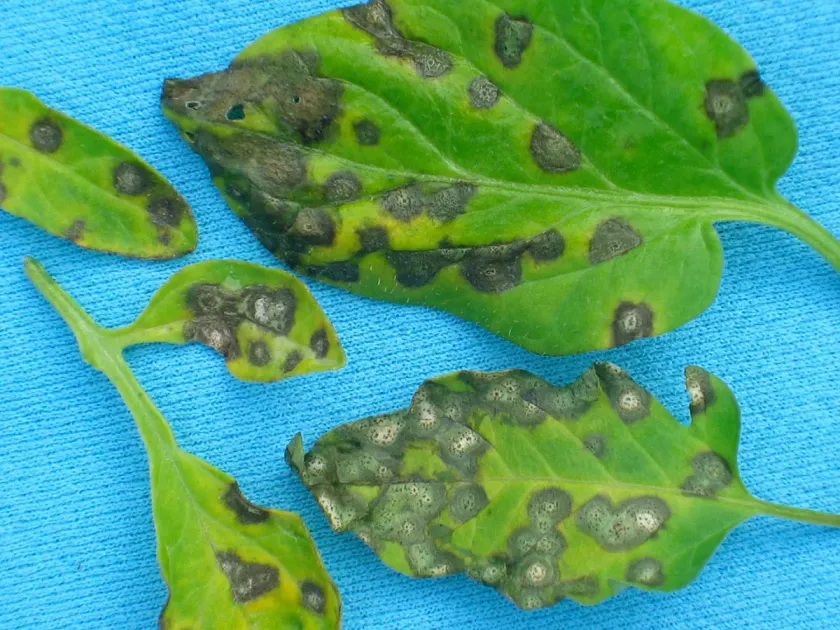
The initial signs of Septoria infection appear as small, water-soaked spots on the leaves. As the disease progresses, these spots expand, turn necrotic, and often develop a distinct margin that reflects the limitations imposed by leaf veins.
The lesions typically range from yellow to light brown or greyish-brown. A key diagnostic feature is the presence of tiny, black, pepper-like dots within the necrotic tissue, which are the fungal pycnidia containing spores.
Symptoms often manifest first on the lower leaves, where humidity levels are higher, and gradually move upward. Severe infections cause the foliage to yellow, wither, and drop off prematurely, which severely reduces the plant's ability to produce energy.
In addition to leaves, the fungus can also infect stems and glumes. On stalks, lesions appear as elongated or oval patches, which can weaken the stem and lead to lodging or reduced nutrient transport to the head or fruit.
- Water-soaked spots evolving into necrotic lesions.
- Presence of black pycnidia within the center of the spots.
- Premature chlorosis and wilting of the lower canopy.
- Reduced photosynthesis and overall plant stunting.
- Weakening of stems, potentially leading to plant collapse.
Pathogen
Septoria leaf blotch is caused by various fungi belonging to the family Septorioideaceae, most notably species within the Septoria genus. This group of pathogens affects a wide variety of crops, including wheat, tomatoes, and sunflowers, causing significant agricultural losses.
The pathogen typically survives the winter in infected crop debris, soil, or on seeds as pycnidia and mycelium. When environmental conditions become favorable, spores (conidia) are released and spread via wind or splashing rain to infect healthy plant tissues.
Infection occurs when spores enter the plant through stomata or wounds. Once inside, the fungus spreads through the intercellular spaces, secreting enzymes that break down plant tissues and interfere with essential metabolic functions, including photosynthesis.
The lifecycle of the fungus is rapid, and it can undergo multiple cycles of sporulation and infection during a single growing season. This high reproductive capacity allows the disease to spread quickly across large fields under humid conditions.
The fungi possess significant biological plasticity, allowing them to adapt to diverse climatic conditions. Through the production of toxins, the pathogen compromises the plant’s structural integrity and overall vigor, making it susceptible to secondary infections.
Conditions for development
High relative humidity and frequent rainfall are the most critical factors driving the spread of Septoria. Rain splashes and dew droplets act as the primary vectors for transporting spores to healthy leaves.
Optimal temperatures for fungal development generally fall between 18°C and 25°C. In these conditions, the incubation period is significantly reduced, allowing the fungus to replicate at a much higher velocity.
High planting densities that restrict airflow create a humid microclimate within the crop canopy, which is highly conducive to disease development. Furthermore, excessive nitrogen applications can stimulate lush, succulent growth that is more easily invaded by the pathogen.
The presence of large amounts of crop residue on the soil surface is a major risk factor, as it serves as the primary reservoir for overwintering spores. In the absence of proper sanitation, the infection cycles persist year after year.
Alternative hosts, including various grasses and weeds, can harbor the fungus. These weeds often provide a "green bridge" that allows the pathogen to survive and spread to susceptible crops in adjacent fields.
Why it matters
The primary economic impact of Septoria is a significant reduction in yield, which can exceed 50% in severe, untreated cases. The loss is largely due to the destruction of the photosynthetic surface and premature leaf senescence.
Beyond yield volume, the quality of the harvested product is often compromised. For grain crops, this manifests as lower grain weight and poor test weights, while in vegetable crops, it leads to disfigurement and reduced marketability.
Infected crops are also less resilient against environmental stressors like drought or cold. This weakens the overall stand and makes the plants more prone to infestation by other pests and diseases.
Financial losses also accrue from the increased costs of necessary fungicide applications. When the disease pressure is high, multiple spray events are required to mitigate losses, which increases the cost of production.
In cases of severe infestation, the long-term viability of the farm's soil health may be challenged due to the continuous requirement for synthetic interventions and the potential accumulation of pathogen spores in the fields.
Protection
A robust crop rotation strategy is the cornerstone of managing Septoria. By rotating away from susceptible crops for at least 3-4 years, the buildup of soil-borne inoculum can be effectively broken.
The selection of disease-resistant varieties is the most effective long-term management tool. Utilizing modern, resistant germplasm helps to maintain consistent yield performance even in years with high disease pressure.
Proper field sanitation, including the deep burial or removal of crop debris, is essential. This practice exposes the fungal structures to decomposition, drastically reducing the amount of primary inoculum available at the start of the season.
Chemical control involving fungicides, such as triazoles, strobilurins, or carboxamides, is frequently necessary. It is crucial to use these tools preventatively or at the earliest sign of disease, while alternating active ingredients to prevent resistance development.
Maintaining optimal planting densities and ensuring balanced soil fertility, particularly with adequate potassium and phosphorus levels, strengthens the plant's natural defense mechanisms and helps keep the canopy well-ventilated.
Discussion
No discussions yet — be the first.