
Ryegrass cryptic disease
Ryegrass cryptic
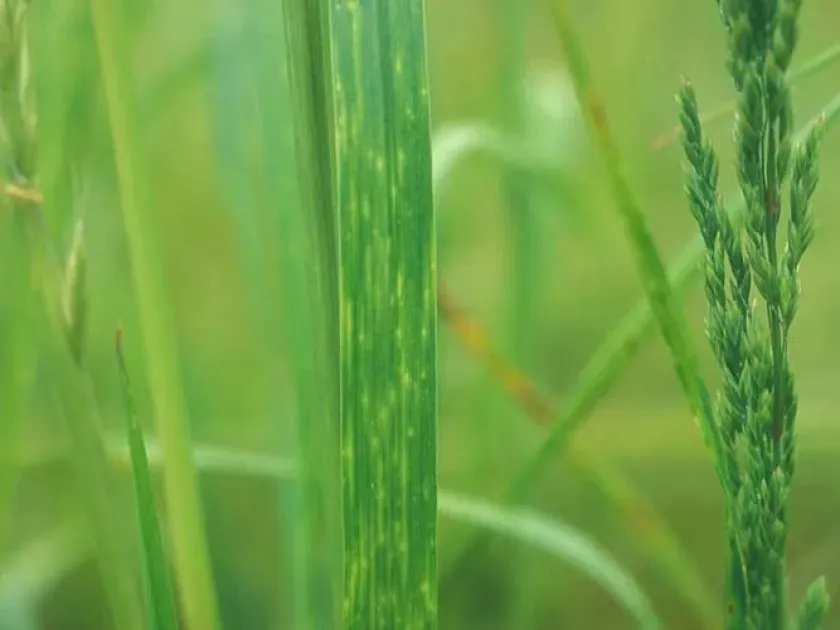
Description
Symptoms
The disease is defined by its cryptic nature, meaning that the host plants do not exhibit any obvious disease symptoms.
There are no visible leaf mosaics, lesions, yellowing, or growth abnormalities that could indicate a viral infection to a casual observer.
Despite the lack of symptoms, the viral replication occurs systematically within the plant tissues, particularly in the reproductive organs.
Detection is only possible through highly specialized laboratory diagnostic procedures, such as RT-PCR or ELISA tests.
In most commercial settings, the disease goes unnoticed unless specific diagnostic screening of the seed lots is conducted.
Pathogen
The causative agent of Ryegrass cryptic disease is the Ryegrass cryptic virus (RGCV), which belongs to the Partitiviridae family.
These viruses contain double-stranded RNA and are characterized by their strictly vertical transmission and persistent latent lifestyle.
RGCV particles are simple in structure, consisting of a capsid protein protecting the viral genome during the transmission process.
The virus lacks horizontal transmission mechanisms, meaning it does not require an insect vector to spread throughout a crop population.
The genetic stability of the virus within the host plant allows it to persist through numerous cycles of plant reproduction.
Conditions for development
The primary condition for the virus spread is the reproductive phase of the host, as it is transmitted through pollen and seeds.
Environmental factors do not trigger the symptoms because the virus exists in a state of host-pathogen equilibrium within the plant.
Seed transmission rates are exceptionally high, which explains why the virus can persist in fields for many years without natural insect carriers.
The lack of horizontal spread means that field management practices focusing on pest control have no impact on reducing virus incidence.
Long-term survival in seed lots is the main reason for the persistent prevalence of this virus in cultivated ryegrass varieties.
Why it matters
Although the disease is asymptomatic, chronic viral infection can lead to subtle physiological stress in the grass.
Research suggests that severe infections might result in reduced biomass accumulation and decreased nutrient uptake efficiency.
For seed producers, the economic impact is significant because infected seeds cannot meet the standards for certified or disease-free categories.
Over time, the cumulative effect of the virus may reduce the competitive ability of cultivated ryegrass in multi-species pastures.
Reduced vigor and lower seed germination rates are potential risks associated with prolonged infection in breeding programs.
Protection
The primary control strategy for Ryegrass cryptic disease is the utilization of certified virus-free seed lots.
Seed certification programs should include mandatory viral screening to prevent the distribution of infected germplasm.
Breeding programs should implement meristem-tip culture techniques to eliminate the virus from infected elite cultivars.
Strict monitoring of nursery and foundation fields is required to maintain the genetic purity and health of the seed supply.
- Use certified disease-free seeds.
- Implement viral diagnostics in breeding programs.
- Remove infected lots from the seed production chain.
- Adopt meristem culture for sanitization.
Discussion
No discussions yet — be the first.