
Reticularia
Reticularia
Description
Symptoms
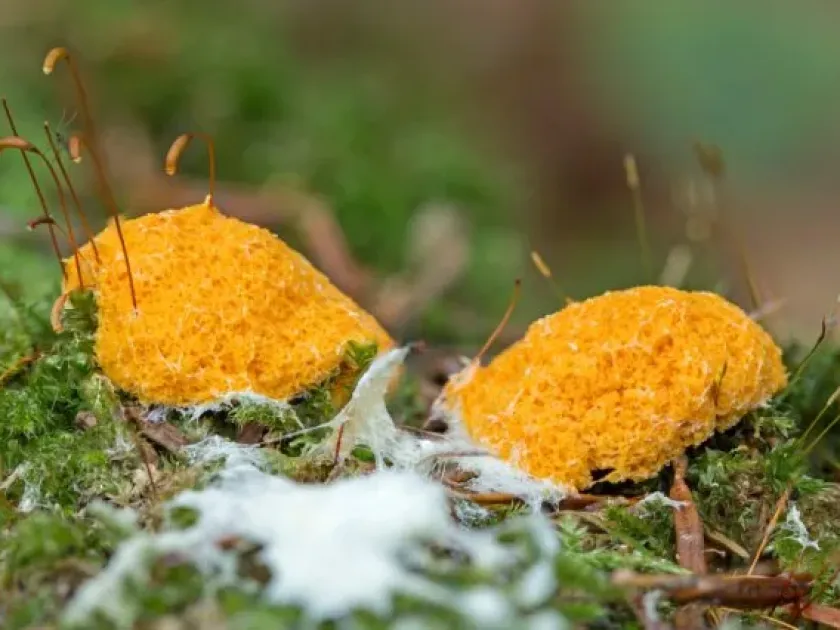
The primary symptom is the appearance of white, slimy masses on the surface of tree bark, logs, or soil. These masses are soft to the touch and expand rapidly under high humidity.
As the organism matures, the slime hardens into a silvery-gray or brownish spherical structure (sporangium) with a papery outer membrane called a peridium.
When disturbed or fully ripe, the structure ruptures, releasing a dark brown, powdery mass of spores. This resembles a puffball fungus, which is why it is often confused with mushrooms.
Affected areas might show localized patches of growth that do not immediately cause tissue death, but create a visible and unsightly residue on the plant stem.
Under dry conditions, the fruiting body becomes brittle and can be easily brushed off, though the spore load remains in the immediate environment.
Pathogen
Reticularia is a genus of slime molds (myxomycetes), specifically known for species like Reticularia lycoperdon. These organisms are not true fungi but exist as a plasmodium that feeds on decaying organic matter and microorganisms.
The life cycle involves an amoeboid stage that moves across surfaces, followed by the formation of a fruiting body known as a sporangium. This process is triggered by environmental changes such as light and moisture levels.
In agriculture, Reticularia is typically classified as a saprotroph. While it does not directly feed on living plant cells, it can become problematic when it colonizes the stems or trunks of ornamental and fruit trees.
The organism reproduces through millions of microscopic spores. These spores are highly resilient, capable of surviving harsh winter conditions and remaining viable in the soil or bark crevices for several years.
Biological interactions show that Reticularia thrives by breaking down microscopic debris, but its physical presence on plants can impede normal physiological gas exchange.
Conditions for development
High relative humidity and rainfall are the most critical factors for the active development of Reticularia. It is most commonly found during wet seasons or in areas with stagnant water.
Shaded, poorly ventilated areas in a garden or orchard provide the ideal microclimate for the plasmodium to grow and produce sporangia.
The presence of deadwood, mulch, or rotting plant debris acts as a primary nutrient source and base for the organism to spread toward healthier living plants.
Poorly maintained plants with damaged bark or existing wounds are more susceptible to colonization, as these areas collect moisture and organic matter.
Temperature plays a secondary role; moderate warmth combined with high moisture provides the fastest growth rate for the vegetative plasmodium stage.
Why it matters
Reticularia is not a primary plant parasite, but its presence creates a barrier on the surface of the bark, which can hinder the plant's natural respiration process.
The thick slime layers can trap excess moisture, encouraging the growth of secondary bacterial or fungal infections that are truly pathogenic to the plant.
For ornamental plants, the presence of these structures significantly reduces the aesthetic value, leading to concerns regarding the health and care of the collection.
Massive spore release can cause respiratory irritation or allergic reactions in humans handling infected materials without proper protective equipment.
In cases of severe colonization, the presence of Reticularia indicates poor site hygiene, which may correlate with broader issues in plant health and garden management.
Protection
The most effective strategy is to maintain good garden hygiene by removing deadwood, rotting stumps, and excessive mulch away from the bases of valuable trees.
Proper pruning to increase airflow and sunlight penetration into the plant canopy reduces the moisture levels necessary for Reticularia to thrive.
Manual removal of the sporangia is recommended as soon as they appear, ideally while they are still in the slime stage, to prevent spore release.
Copper-based fungicides or sulfur sprays can be used to treat the surface of the bark, effectively sanitizing the area and preventing further growth of the plasmodium.
- Regular inspection of tree trunks and stems during wet seasons.
- Cleaning and disinfecting bark wounds with specialized garden sealants.
- Improving soil drainage to prevent humidity buildup in the lower levels of the garden.
Discussion
No discussions yet — be the first.