
Ramularia leaf spot of sorrel
Ramularia rumicis-crispi
Description
Symptoms
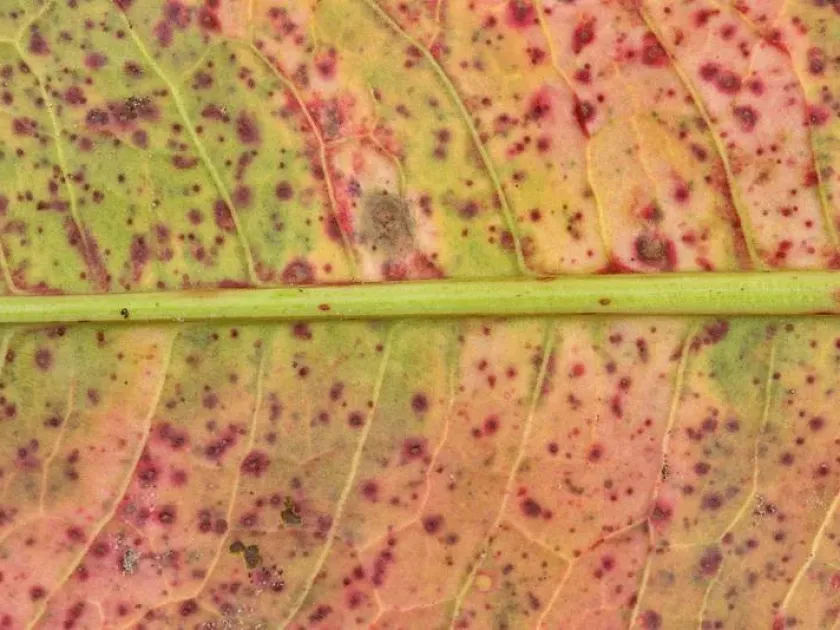
The most distinctive symptom of Ramularia leaf spot in sorrel is the appearance of numerous spots on the leaf blades. These spots are usually irregular or circular in shape, with diameters ranging from 2 to 5 millimeters depending on the severity of the infection.
The center of each spot typically fades to a light gray or whitish color, while the margin is bordered by a distinct dark brown or reddish-brown halo. This contrasting coloration is a key feature used for identifying the pathogen in the field.
During periods of high humidity, a grayish-white, powdery coating forms on the underside of the leaves within the necrotic spots. This coating consists of the fungus's conidia, which act as the primary inoculants for spreading the disease further.
As the infection progresses, individual spots often coalesce, covering large areas of the leaf surface. This causes the foliage to turn yellow, wither, and die prematurely, significantly degrading the quality of the harvestable greens.
In severe cases of infestation, the entire plant canopy shows signs of wilting. The aesthetic and nutritional value of the sorrel is severely compromised, rendering it unsuitable for sale or consumption in commercial food processing.
Pathogen
The disease is caused by the fungus Ramularia rumicis-crispi, a member of the hyphomycete order. This pathogen is highly specialized and primarily targets plants within the Polygonaceae family, with sorrel being a major host.
The fungus overwinters in the soil and on infected plant debris as mycelium and microsclerotia. These structures allow the pathogen to survive harsh winter conditions and serve as the primary source of infection once temperatures rise in the spring.
In the spring, conidia produced on overwintering debris are spread via wind, splashing rain, or garden tools. Once they land on healthy host tissue, they penetrate the leaf epidermis, initiating the infection cycle.
Inside the host, the pathogen grows in the intercellular spaces and secretes toxic compounds that destroy plant cells. This biochemical activity leads to the rapid formation of necrotic lesions and subsequent sporulation on the leaf surface.
Ramularia is a polycyclic disease, meaning it can produce multiple generations of spores throughout a single growing season. This reproductive capacity allows the fungus to rapidly devastate entire fields when environmental conditions are favorable.
Conditions for development
The development and spread of Ramularia leaf spot are heavily dependent on climatic factors. The disease thrives in moderately warm temperatures, typically between 15 and 22 degrees Celsius, accompanied by high humidity.
Frequent rainfall or persistent morning dew provides the leaf-surface wetness required for conidial germination. Extended periods of moisture on the foliage drastically increase the probability of a major disease outbreak.
High-density plantings create a microclimate that is highly conducive to fungal growth. Poor air circulation within the dense foliage prevents the leaves from drying out, allowing the pathogen to thrive and spread more efficiently.
Cultivating sorrel on the same plot for multiple consecutive years facilitates the accumulation of inoculum in the soil. Without adequate crop rotation, the risk of early and severe disease onset becomes increasingly high each year.
While the fungus prefers cool and moist conditions, it remains viable in host tissues during hotter, drier periods. As soon as wet conditions return, the pathogen can quickly resume its infection cycle and sporulation.
Why it matters
The primary economic impact of Ramularia leaf spot is a significant reduction in marketable yield. Infected leaves lose their crispness and color, making them unappealing to consumers and lowering their market value.
Reduced photosynthetic efficiency, caused by the extensive necrotic spotting, weakens the plant overall. This leads to stunted growth, reduced biomass production, and a weaker root system, which impacts the productivity of the plant in subsequent harvests.
If the infection occurs early in the season, it can lead to the death of young seedlings and sparse stands. This often requires replanting or abandoning portions of the field, resulting in direct financial losses for the grower.
The shelf life of harvested sorrel is negatively affected, as diseased leaves are prone to secondary rotting during transport and storage. This creates further losses for retailers and distributors in the supply chain.
Furthermore, weakened plants are more susceptible to secondary attacks by other pests and pathogens. This complex disease environment complicates the overall management of the crop and may lead to increased use of chemical inputs.
Protection
Adopting proper crop rotation practices is the most effective preventative measure. Rotating sorrel with non-host crops helps to break the pathogen's life cycle and reduces the number of spores surviving in the soil.
Sanitation is critical; all infected plant residues should be removed and destroyed immediately after harvest. By eliminating overwintering sites, growers can significantly reduce the initial infection pressure for the following season.
Choosing planting sites with excellent drainage and air movement is essential. Proper spacing between rows and plants helps maintain dry foliage, which effectively suppresses the germination and spread of fungal conidia.
A balanced fertilization program, focusing on phosphorus and potassium, helps improve the plant's overall health. Robust plants are more resilient to pathogen invasion and can recover more efficiently even if minor symptoms appear.
In commercial settings, if chemical intervention is necessary, fungicides registered for use on leafy greens should be applied according to label instructions. Always strictly observe the pre-harvest interval to ensure consumer safety.
Discussion
No discussions yet — be the first.