
Ramularia leaf spot
Ramularia obovata
Description
Symptoms
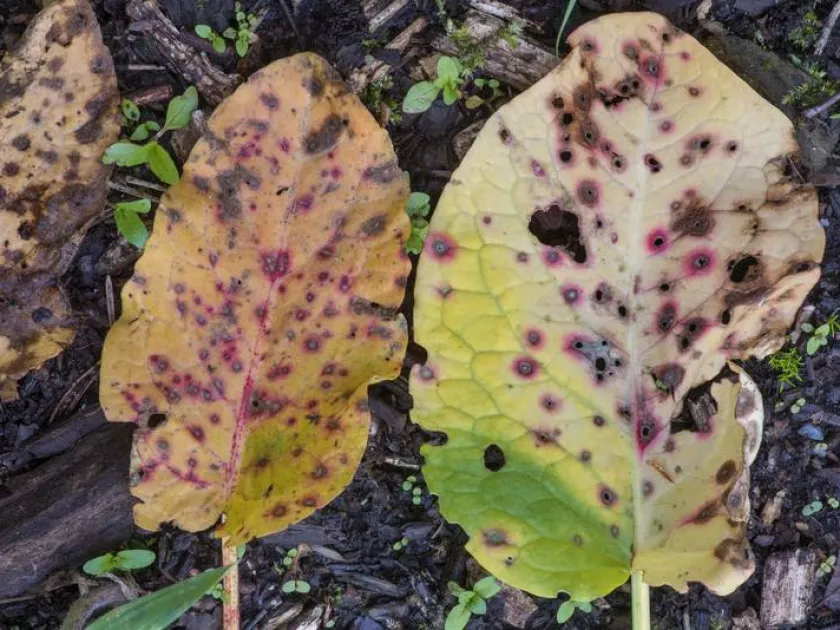
Initial symptoms of the disease appear as small, circular, or irregular spots on the leaves. These lesions typically change from light yellow to a dirty brown or grey color as they mature, often surrounded by a darker brown border.
A distinctive white or greyish powdery-like coating forms on the underside of the leaf directly beneath the spots. This is the sporulation mass of the fungus, confirming the presence of the pathogen on the host plant.
As the infection progresses, individual spots tend to coalesce and cover large areas of the leaf blade. This extensive damage causes the leaves to dry out, shrivel, and eventually die, significantly impacting the crop's vitality.
In cases of severe infestation, the disease affects the entire leaf rosette, resulting in stunted plant growth. The damage is most visible on the older leaves, which provide a micro-environment with high humidity near the soil surface.
The destruction of leaf tissue due to Ramularia leaf spot reduces the photosynthetic capacity of the plants, ultimately leading to poor yields and lower quality harvest, rendering the produce unmarketable.
Pathogen
The causal agent of this disease is the imperfect fungus Ramularia obovata, belonging to the Hyphomycetes class. This pathogen is a specialized parasite that primarily targets sorrel and other related species within the Polygonaceae family.
The fungus survives the winter primarily as mycelium or sclerotia within infected plant debris and soil, making it a persistent threat in established fields. Once favorable conditions arrive, it resumes sporulation to infect new foliage.
The reproductive strategy of Ramularia obovata involves the formation of dense fascicles of conidiophores that push through the stomata of the host leaves. These conidia are easily dispersed by wind and rain splashes to initiate secondary infections.
The biological cycle of the fungus is tightly synchronized with the growth phases of the sorrel plant. Multiple infection cycles can occur throughout a single growing season, allowing the disease to spread rapidly if not managed appropriately.
Genetic variability within the pathogen populations allows it to persist under various conditions, though it remains most active in humid, temperate environments where moisture is consistently available on the leaf surface.
Conditions for development
High relative humidity and temperatures ranging from 18 to 22 degrees Celsius are the primary drivers for the rapid development of Ramularia leaf spot. These conditions facilitate the germination of conidia and the successful penetration of host tissues.
Dense plantings or poor ventilation systems exacerbate the risk of infection. When plants are crowded, the humidity within the canopy remains high for extended periods, providing a perfect environment for the fungus to spread.
Frequent rainfall, fog, or overhead irrigation events promote the dispersal of spores from infected areas to healthy plants. Rapid moisture accumulation on leaves acts as a catalyst for new infection cycles.
Excessive nitrogen application without adequate potassium and phosphorus levels leads to succulent and thin leaf tissues. This lack of structural resilience makes the plants significantly more susceptible to fungal entry.
Fields with a history of sorrel cultivation are more prone to outbreaks due to the persistence of fungal inoculum in the soil. Without proper crop rotation, the level of pathogen pressure increases exponentially each year.
Why it matters
The primary harm caused by this disease is the devaluation of the harvest. Since sorrel is a leafy vegetable, even mild leaf spotting makes the product aesthetically unappealing and unacceptable for commercial markets.
The reduction in green leaf mass directly translates into lower economic returns for farmers. Plants heavily infected by Ramularia obovata are unable to recover quickly, leading to total yield loss in worst-case scenarios.
Chronic infection drains the plant's metabolic reserves, which are essential for overwintering. As a result, the vitality of the crop is compromised, often leading to patchy stands in subsequent years.
The nutritional value, including vitamin content and organic acids, decreases in infected foliage. This quality decline impacts not only fresh sales but also the effectiveness of the leaves in food processing.
Large-scale outbreaks often require early mowing of the entire crop to prevent further spread. This disruption in the harvesting schedule represents a significant financial loss and adds labor costs for field sanitation.
Protection
Effective management begins with strict crop rotation practices, ensuring that sorrel is not replanted in the same field for at least 3 to 4 years. This allows for the natural decline of the pathogen in the soil.
Planting site selection and spacing are critical. Open fields with good airflow allow the foliage to dry quickly after rain, which is a simple yet effective physical method to inhibit fungal sporulation.
- Utilizing disease-resistant or tolerant cultivars when available.
- Promptly removing and destroying all infected plant debris post-harvest.
- Applying a balanced fertilization program focusing on potassium and phosphorus.
- Implementing preventative sprays using biological fungicides or copper-based treatments.
- Regular monitoring of the crop to detect early signs of the disease.
When chemical fungicides are necessary, they must be applied according to strict safety regulations, especially considering the short harvest intervals typical for leafy greens. Integrated pest management strategies are preferred to ensure residue-free produce.
Sanitizing tools and controlling wild weed hosts from the Polygonaceae family surrounding the fields are essential steps to reduce the total inoculum load and prevent the introduction of the fungus into the cultivation area.
Discussion
No discussions yet — be the first.