
Radish yellows
Radish yellow
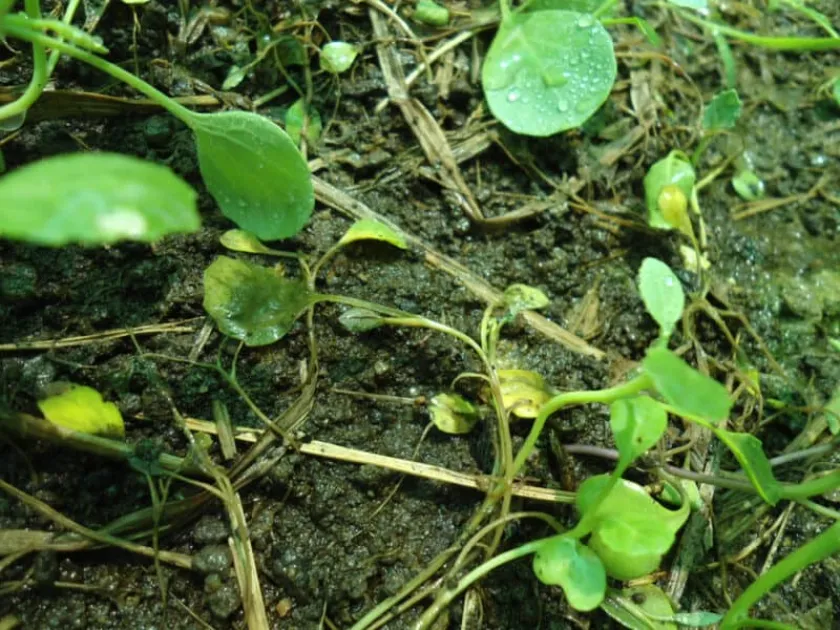
Description
Symptoms
Initial symptoms typically involve chlorosis, characterized by yellowing of leaf margins and an overall decline in the plant's photosynthetic activity.
Stunting is a constant feature, with affected radishes displaying shortened internodes and a general reduction in plant size compared to healthy specimens.
A hallmark of this disease is the proliferation of adventitious shoots, creating a bushy, distorted appearance commonly referred to as a witches' broom.
The root system of infected plants often fails to develop properly, resulting in thin, woody, or deformed radish roots that lack market value.
Flower tissues may undergo virescence, transforming into leaf-like structures and leading to total infertility and the failure of seed production.
Pathogen
Radish yellows is caused by phytoplasmas, which are specialized wall-less prokaryotes that thrive within the phloem sieve elements of host plants.
These pathogens function as obligate parasites, altering the hormonal balance of the plant to force the development of abnormal vegetative structures.
The transmission of phytoplasmas is biological, meaning they must replicate inside the insect vector before they can be transmitted to a new host.
Once injected into the plant, these microorganisms move systemically, colonizing vascular tissues and causing long-term physiological stress.
Due to the lack of a cell wall, phytoplasmas are extremely fragile outside the host environment and rely heavily on their vectors for survival and spread.
Conditions for development
The primary driver of disease incidence is the population density of leafhoppers, which act as the essential vectors for phytoplasma transmission.
Warm, dry weather conditions significantly increase the mobility and feeding rate of insect vectors, leading to higher transmission rates in fields.
Wild cruciferous weeds act as the primary overwintering reservoirs for both the phytoplasma and its insect vectors during the off-season.
High planting densities create a conducive microclimate that allows for the rapid spread of vectors from infected to healthy plants within the crop rows.
Lack of crop rotation and improper management of the field perimeter increase the likelihood of recurring infection cycles in subsequent growing seasons.
Why it matters
The economic impact of radish yellows is severe, primarily due to the loss of marketable root yield and the failure of commercial radish production.
Affected crops show drastically reduced quality, as the internal texture of the root becomes fibrous and unpalatable, rendering it unsuitable for fresh consumption.
Because the disease is systemic, there are no curative treatments available, meaning that once a field is infected, the potential for yield loss is high.
Seed production fields suffer even greater losses, as the sterility caused by the pathogen makes the harvest of viable seeds impossible.
Management costs increase significantly due to the necessity for intensive insect control and strict sanitation protocols throughout the season.
Protection
The most effective strategy is the systematic control of leafhopper populations using appropriate insecticides to prevent them from feeding on young radish plants.
Rigorous weed control, particularly of cruciferous species, is essential to eliminate the natural reservoirs of the phytoplasma and its vectors.
Using physical barriers such as floating row covers during the early stages of plant development can effectively exclude vectors from the crop.
Implementing a strict crop rotation schedule helps to break the lifecycle of the pathogen by removing host plants for extended periods.
- Monitor leafhopper density using sticky traps.
- Remove and destroy symptomatic plants immediately upon detection.
- Avoid planting near older cruciferous crops.
- Clean equipment to avoid cross-contamination of fields.
Discussion
No discussions yet — be the first.