
Clubroot
Plasmodiophorida
Description
Symptoms
Early symptoms of clubroot often manifest as wilting during the hottest parts of the day, with plants appearing to recover during the cooler evening and night hours.
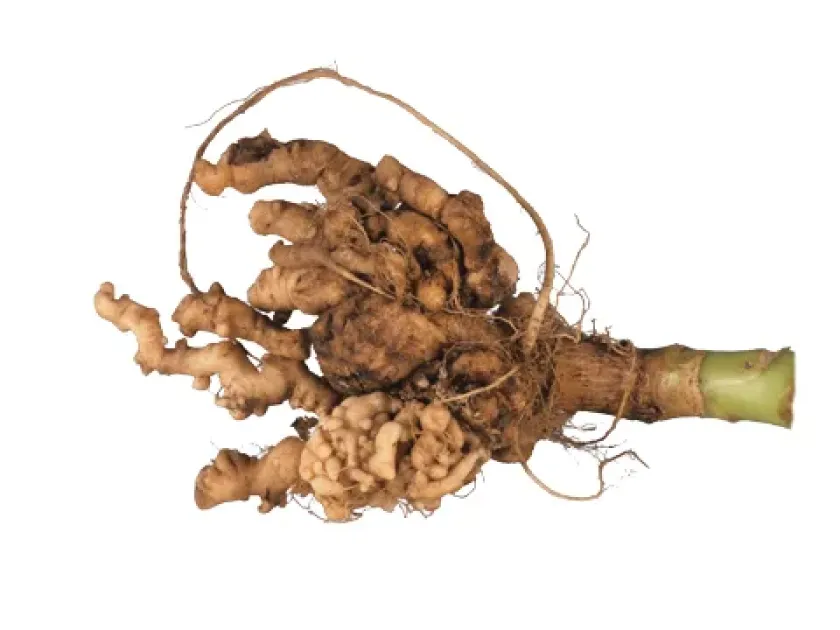
The primary diagnostic sign is found by carefully excavating the roots, where abnormal swellings or club-shaped galls indicate the presence of the pathogen.
As the disease progresses, the root system loses its ability to absorb water and nutrients efficiently. This leads to stunted growth, yellowing of leaves, and premature senescence.
In severe infections, the root system becomes massively malformed and eventually begins to rot due to the invasion of secondary bacteria and fungi in the decaying tissue.
In highly infested soils, entire crops may fail to form marketable heads or bulbs, resulting in significantly reduced yields and poor plant vigor throughout the season.
Pathogen
Clubroot is caused by the obligate parasite Plasmodiophora brassicae, a soil-borne protist that specifically infects the root systems of Brassicaceae family members.
The life cycle begins when dormant resting spores in the soil germinate and release primary zoospores. These zoospores swim through soil moisture to infect the root hairs of host plants.
Once inside the roots, the organism induces rapid cell division and enlargement, known as hypertrophy and hyperplasia. This results in the formation of characteristic galls or clubs on the roots.
As the galls develop, the pathogen produces millions of new resting spores. These are eventually released into the soil as the root tissue decomposes, ensuring the pathogen persists for several years.
This persistent nature of the pathogen makes it extremely difficult to eradicate once it has established itself in an agricultural field or garden soil.
Conditions for development
Clubroot development is heavily favored by acidic soil conditions, particularly with a pH level below 6.0, which promotes the movement and survival of zoospores.
High soil moisture is essential for the infection process. Areas with poor drainage or over-irrigated fields create the perfect environment for the pathogen to thrive.
Moderate temperatures ranging from 18 to 24 degrees Celsius are ideal for the activity of the organism, allowing for rapid colonization of the roots during the growing season.
The pathogen is primarily spread through infested soil moved by farm equipment, muddy boots, or runoff water during heavy rain events after the harvest.
Introducing infected seedlings is the most common way clubroot is introduced into clean fields, emphasizing the importance of utilizing pathogen-free planting material.
Why it matters
The economic impact of clubroot is significant, as it can render entire fields unproductive for Brassicaceae crops for many years if not managed correctly.
Beyond crop loss, the disease forces producers to alter their crop rotation plans, often leading to the use of less profitable alternative crops in infested fields.
Plants affected by clubroot show reduced quality, with smaller and unevenly developed vegetables that do not meet market standards for uniformity or size.
The long-term persistence of resting spores in the soil makes restoration of land fertility and crop production extremely costly and time-consuming for farmers.
Widespread outbreaks can disrupt supply chains in regional agriculture, as the disease is highly contagious and spreads easily across neighboring fields if left unchecked.
Protection
The most effective strategy is a long-term crop rotation, avoiding brassica crops for at least 5–7 years to allow the spore population in the soil to decline naturally.
Liming the soil is a critical control measure; maintaining a soil pH of 7.0–7.2 effectively inhibits the germination of resting spores and suppresses the disease.
Rigorous sanitation protocols should be implemented, including cleaning farm machinery and tools before moving between different plots to prevent soil transfer.
Choosing resistant cultivars is a key management tactic, as breeding programs have developed varieties that show strong tolerance or immunity to various pathotypes of the disease.
- Use only certified, disease-free seedlings from reputable nurseries.
- Improve soil drainage to prevent excessive moisture accumulation.
- Promptly remove and destroy infected plant residues with root systems.
- Monitor soil pH levels regularly to maintain optimal alkaline conditions.
Discussion
No discussions yet — be the first.