
Black canker of willow
Physalospora miyabeana
Description
Symptoms
Early symptoms appear on young leaves as small, dark brown or black spots. Over time, these spots expand, covering large portions of the leaf surface and causing necrosis.
Affected leaves often wither, turn dark, and drop prematurely. Extensive leaf loss significantly reduces the plant's ability to photosynthesize effectively during the growing season.
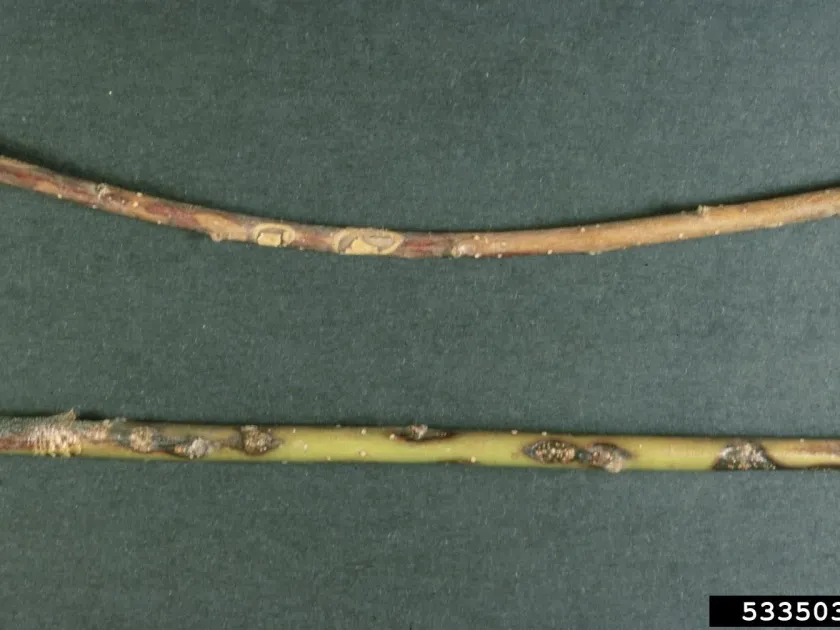
On stems, the disease manifests as distinct black cankers. These lesions may girdle the stem, leading to the death of the portion of the branch above the infection point.
Terminal shoots frequently show signs of "dieback" and curling. The tips of the shoots blacken and die, leading to stunted growth and an irregular crown structure.
- Small black necrotic spots on leaves.
- Premature defoliation of the tree.
- Cankerous lesions on young stems and branches.
- Death of shoot tips and terminal buds.
- Overall decline in plant vigor and crown health.
Pathogen
The causative agent of the disease is the ascomycete fungus Physalospora miyabeana (anamorph Colletotrichum gloeosporioides). It is a highly specialized pathogen affecting various Salix species.
The life cycle of the pathogen involves the formation of fruiting bodies on dead twigs and fallen leaves. These structures release spores that are easily spread by water splashes and wind.
The fungus persists in plant debris, infected bark, and soil throughout the year. It enters the plant through small wounds, pruning cuts, or natural openings like stomata.
As the mycelium colonizes the host tissue, it produces enzymes that break down cell walls, causing localized death of plant tissues and the development of characteristic cankers.
The pathogen thrives in dense willow plantations where limited airflow and high humidity allow the fungus to infect large numbers of plants in a short period.
Conditions for development
High relative humidity and frequent rainfall are the primary drivers of disease outbreaks. Moisture on leaf surfaces is essential for spore germination and infection.
Temperatures between +18 °C and +24 °C provide an ideal environment for the rapid development of the fungus. Warm, wet springs are particularly conducive to the spread of the disease.
Poor air circulation, common in overcrowded nurseries or poorly spaced garden plantings, prevents foliage from drying quickly after rain, favoring fungal growth.
Irrigation methods that spray water directly onto the foliage can promote the spread of spores from infected plant parts to healthy tissues nearby.
Overwintered debris left on the ground serves as the main source of inoculum for the next year. Warm and humid conditions in the following spring facilitate the re-emergence of the pathogen.
Why it matters
Black canker significantly diminishes the aesthetic value of willows, which are often used for their ornamental foliage and graceful form. Defoliation makes them look unsightly.
The death of terminal shoots causes permanent deformation of the tree's architecture. Regular dieback leads to a distorted and bushy appearance that can be difficult to correct.
Long-term infection weakens the tree, making it susceptible to secondary pests and environmental stressors like drought or severe frost, which can ultimately lead to death.
In commercial willow nurseries, the pathogen causes economic loss by destroying thousands of cuttings and young trees, leading to high culling rates before sale.
The disease can become a chronic issue in a garden setting, requiring constant maintenance and preventing the healthy, rapid growth typically expected from willow species.
Protection
Sanitation is the most effective management strategy. Regularly prune and remove all infected branches, ensuring you cut into healthy tissue well below the visible canker.
Strict hygiene in the autumn is crucial; rake and destroy all fallen leaves and debris to remove the primary source of overwintering inoculum from the site.
Preventive fungicide sprays, particularly those containing copper or systemic active ingredients, should be applied during the early spring to protect new growth.
Ensure proper spacing when planting to improve airflow through the canopy. Keeping the trees healthy through appropriate fertilization and watering improves their natural resistance.
Avoid planting willows in low-lying, damp areas prone to stagnant air. Proper site selection and careful monitoring are key to minimizing the impact of Physalospora miyabeana.
Discussion
No discussions yet — be the first.