
Peach star
Peach star mosaic disease
Description
Symptoms
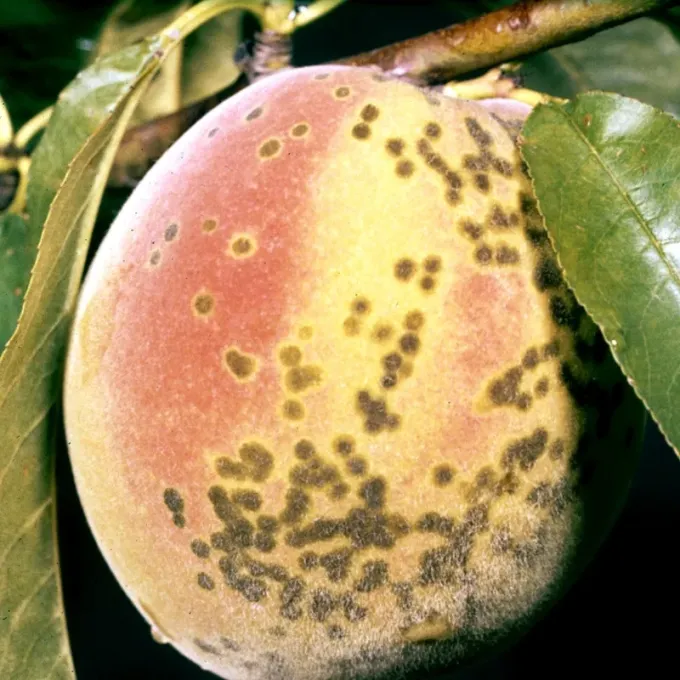
The primary symptom of Peach star is a severe deformation of the fruit, characterized by deep, radiating cracks on the skin that form a star-like pattern.
Affected tissues at the crack sites become hard, corky, and take on a brown discoloration, significantly degrading the quality of the harvested produce.
Infected fruits are typically stunted in growth, lose their aesthetic appeal, and are unfit for commercial markets or long-term storage.
Early stages of the disease may manifest as minor depressions or dimples on the fruit surface, which gradually deepen as the fruit matures.
In some cases, the tree itself may show signs of stress, such as yellowing of leaves or restricted shoot growth, although fruit symptoms remain the most diagnostic feature.
Pathogen
The causative agent of this condition is the Peach star virus, a systemic viral infection that affects all parts of the host tree.
The virus colonizes the plant's vascular system, disrupting the transport of nutrients necessary for proper fruit development and maturation.
It is classified as a viral plant disease, which implies that once a tree is infected, the pathogen persists throughout its entire lifespan.
Transmission primarily occurs through infected grafting materials, such as scions and rootstocks, which act as the main carriers of the virus.
Insect vectors, which feed on the sap of diseased trees, are also capable of transmitting the viral particles to healthy neighboring trees in the orchard.
Conditions for development
The introduction of the virus usually stems from planting infected nursery stock that was not properly screened for viral diseases during the propagation phase.
The spread of the virus within an established orchard is facilitated by the presence of insect vectors like aphids or leafhoppers that move between trees.
Poor horticultural practices, particularly the use of non-sterilized pruning tools, significantly increase the risk of transferring the pathogen between trees.
Neglected orchards with dense weed cover provide an ideal environment for insect populations to thrive and act as efficient vectors for the virus.
Environmental stress factors, such as extreme heat or cold, can exacerbate the visible symptoms on the fruit, making the infection more apparent during certain growing seasons.
Why it matters
The economic impact of Peach star is substantial, as it renders the entire yield of an infected tree unmarketable and unsuitable for fresh consumption.
Over time, the virus causes a gradual decline in the overall vigor of the tree, leading to decreased yields and increased vulnerability to secondary infections.
Since there is no chemical cure for viral infections in fruit trees, the disease forces orchardists to remove and destroy infected trees to prevent further spread.
The loss of trees not only reduces immediate revenue but also represents a long-term setback in the management and production goals of the fruit farm.
If left unmanaged, the virus can lead to the slow degradation of the entire orchard, requiring expensive replanting and site sanitation measures.
Protection
The most critical prevention strategy is to ensure that only certified, virus-free plant material is sourced for new orchard plantings.
Regular orchard monitoring is essential to identify and remove symptomatic trees promptly, thereby eliminating potential sources of the virus.
Effective pest management programs must be implemented to control the population of insect vectors through the targeted use of appropriate insecticides.
Strict sanitation protocols, including the disinfection of pruning equipment with alcohol or disinfectant solutions, must be followed after every tree intervention.
- Maintaining clean orchard floors to reduce vector habitats.
- Using only verified disease-free scion and rootstock sources.
- Conducting annual phytosanitary surveys to ensure early detection.
Discussion
No discussions yet — be the first.