
Navel orange
Navel orange infectious mottling virus
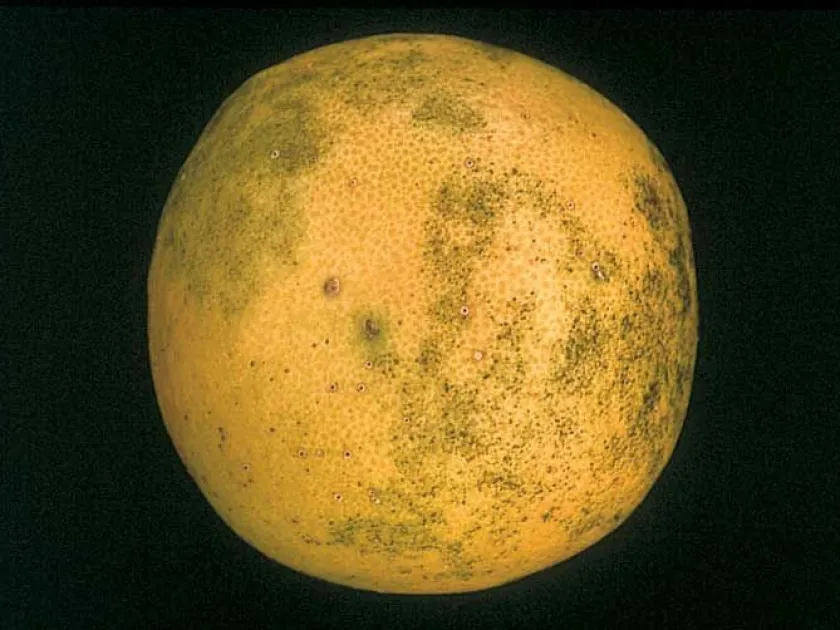
Description
Symptoms
The Navel orange phenomenon is widely recognized in agriculture not as a disease, but as a physiological growth disorder occurring during fruit development.
The primary symptom is the presence of a secondary, vestigial fruitlet located at the stylar end of the main orange, creating a distinctive indentation.
This anatomical feature resembles a human navel, which is why these cultivars are globally classified under the name Navel oranges.
In cases of severe deformity, the indentation can be quite deep, potentially exposing underlying tissues to external environmental factors.
These signs are generally consistent across all varieties exhibiting this trait, making them easy to identify during the fruit maturation stage.
Pathogen
It is critical to note that no pathogen, such as bacteria, fungi, or viruses, is responsible for the formation of the Navel orange defect.
The condition is entirely physiological, driven by the genetic expression of the cultivar during the early stages of flower development.
A secondary ovary is formed within the primary flower, and as the main fruit grows, the secondary fruitlet is pushed outward through the stylar canal.
Since the issue is not infectious, there is no risk of the 'disease' spreading to other trees or fruits within the orchard environment.
Agronomic efforts should focus on environmental and nutritional management rather than the use of antimicrobial plant protection products.
Conditions for development
Fluctuating temperatures during the critical flowering and fruit set windows significantly increase the prevalence and depth of the navel deformity.
Irregular water availability or severe drought stress during the initial phases of fruit enlargement can exacerbate the structural imbalance.
Excessive nitrogen fertilization, which pushes rapid vegetative growth, has been linked to an increased incidence of physiological fruit disorders.
Nutritional deficiencies, specifically of essential micronutrients like boron and calcium, negatively affect the integrity of the fruit tissue.
Poor ventilation within the canopy can lead to humidity pockets that impact the physical development of the fruit during the early stages.
Why it matters
The primary concern regarding this defect is the reduction in market quality, as consumers often perceive deformed fruits as lower grade.
The cavity at the stylar end creates a site where water can accumulate, becoming a perfect breeding ground for opportunistic pathogens like Penicillium.
Fruits exhibiting pronounced navels are often more susceptible to post-harvest decay, shortening their shelf life significantly.
The structural weakness of the peel at the navel site makes these oranges more prone to physical damage during harvesting and transit.
Economic losses occur due to the increased necessity for strict manual sorting and the rejection of premium-grade produce.
Protection
Maintaining consistent soil moisture levels throughout the irrigation cycle is the most effective way to prevent severe physiological deformities.
Implementation of a balanced fertilization program, with specific attention to calcium-based supplements, helps strengthen the fruit structure.
Proper canopy management and pruning techniques ensure optimal light and airflow, which help mitigate physiological stress on the tree.
Selecting cultivars that are less prone to extreme navel expression can be a long-term strategy for producers targeting high-end markets.
- Use of moisture sensors for precision irrigation management.
- Regular soil and leaf tissue testing for balanced mineral supply.
- Integrated orchard management to reduce general stress on the citrus trees.
Discussion
No discussions yet — be the first.