
Natsudaidai dwarf
Natsudaidai dwarf
Description
Symptoms
The primary symptom of the disease is a sharp stunting of the tree's growth, leading to a pronounced dwarf habit. Internodes of the shoots become significantly shortened, giving the crown a compact and unnatural appearance.
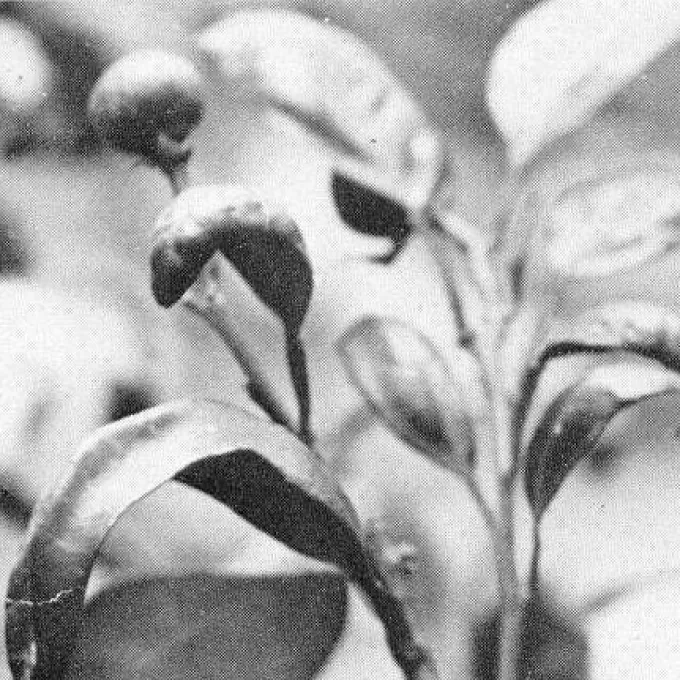
Leaves of infected plants are often smaller than normal and may exhibit chlorosis or characteristic mosaic patterns. Deformation of leaf blades is frequently observed, where leaves become curled or acquire a spoon-like shape.
Trees infected with this virus show poor flowering and rarely produce fruit. In rare cases where fruit sets, it is significantly smaller in size compared to the fruit of healthy trees.
The root system also undergoes degradation, causing the plant to lack sufficient nutrient uptake despite regular fertilization. The death of small feeder roots is observed, leading to a general decline in tree vigor.
The progression of symptoms is slow, often making external signs visible only several months after the initial infection. Early diagnosis is challenging due to the latent nature of the disease.
Pathogen
The causative agent of the disease is the Natsudaidai dwarf virus (NDV), which belongs to the group of viruses affecting citrus crops. This viral disease is primarily transmitted through infected propagation material.
The virus spreads systemically through all plant tissues, including the xylem and phloem. It disrupts normal cellular metabolism and the synthesis of growth regulators, leading to visible morphological changes.
In natural conditions, the virus can be transmitted by specific species of aphids that feed on the sap of infected plants. Vectors retain the ability to transmit the virus for a certain period after contact with an infected tree.
The virus is characterized by high stability and can persist in vegetatively propagated materials such as cuttings or buds. This makes the use of clean nursery stock a critically important aspect of disease control.
The molecular structure of the virus has been studied within the context of general citrus virus classification, and it is often categorized with viruses that induce similar stunting symptoms in other plant species.
Conditions for development
The spread of the disease is closely tied to agricultural practices, particularly pruning and grafting. Tools that have not been disinfected serve as a major vector for the mechanical transmission of the infection.
Regional temperature regimes influence the activity of insect vectors, which spread the pathogen most intensely during the spring and summer seasons. In hot climates, symptom development in trees can be accelerated.
High humidity levels promote aphid reproduction, which indirectly increases the risk of spreading the virus to healthy plantings. Controlling pest populations is essential to prevent large-scale outbreaks.
The use of weak or compromised rootstocks increases the susceptibility of citrus trees to the virus. Healthy and vigorous trees are better able to resist the development of systemic infections for a longer period.
Poor agricultural practices, including inadequate irrigation and micronutrient deficiencies, weaken the plant's immunity. Under such conditions, Natsudaidai dwarf symptoms manifest much more aggressively.
Why it matters
The main harm consists of the total loss of commercial fruit yields. Infected trees stop producing profitable crops and remain in the orchard only as a source of infection for neighboring plants.
Infected plants gradually decline and eventually die, necessitating the removal and destruction of entire orchard sections. This leads to substantial economic losses for citrus producers.
Contaminated propagation material introduced into a nursery can lead to the infection of young seedlings. This prevents the sale of produce and causes significant reputational damage to the agricultural enterprise.
The disease cannot be treated with modern methods, as the virus integrates into the tree's physiological processes. Curing an infected plant is impossible, which dictates strict isolation and eradication measures.
Virus infection reduces the overall vitality of the orchard, making trees highly susceptible to secondary fungal and bacterial infections. The tree becomes extremely vulnerable to any environmental stress factors.
Protection
The only effective control method is the use of certified virus-free nursery stock. Purchasing seedlings only from inspected and certified nurseries ensures the safety of the orchard.
Mandatory disinfection of pruning tools after each tree using alcohol-based solutions or chlorine-containing preparations prevents the mechanical transmission of the virus through sap.
Conducting regular phytosanitary inspections of citrus plantings allows for the detection of diseased trees in the early stages. Identified specimens should be immediately uprooted and destroyed by burning.
Managing insect vectors, especially aphids and scale insects, is a necessary measure within an integrated protection system. Regular application of systemic insecticides reduces the risk of pathogen transmission.
Adherence to quarantine regulations when importing or moving citrus seedlings helps localize the disease. The uncontrolled exchange of cuttings and graft material between orchards should be strictly prohibited.
Discussion
No discussions yet — be the first.