
Myxogastrea
Myxogastrea
Description
Symptoms
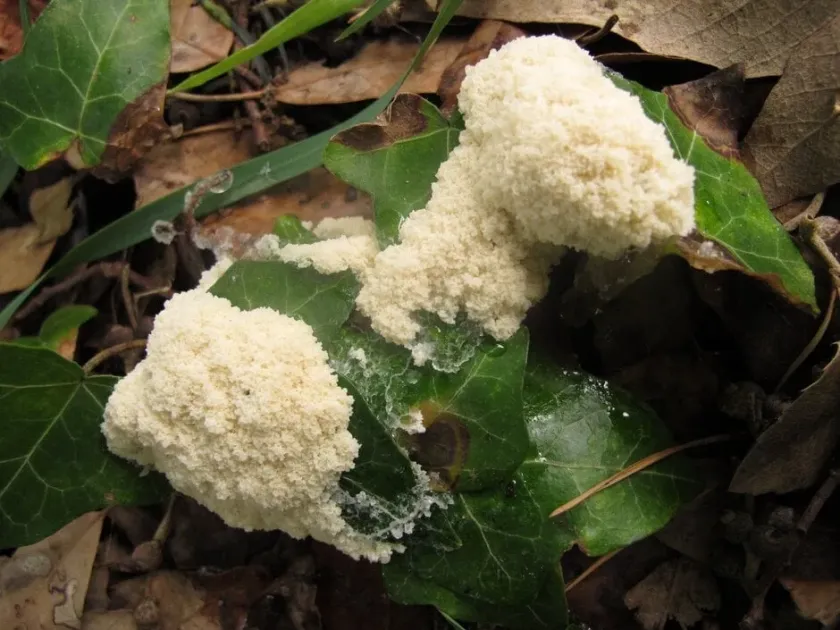
The primary sign of Myxogastrea presence is the sudden appearance of crusty, slimy, or foamy patches on leaves, stems, or even directly on the soil surface of a field or lawn.
These patches can be bright yellow, orange, white, or gray. Initially, they are moist and gelatinous, but as they mature, they turn into a dry, powdery mass that crumbles when touched.
On turfgrass, this phenomenon often presents as patches that appear to "smother" the grass. However, upon closer inspection, the blades of grass beneath the slime remain green and healthy.
Unlike true fungal infections, which leave distinct lesions, chlorosis, or shriveling behind, slime molds leave no damage to the plant tissue once they are wiped or washed away.
The rapid spread is a characteristic sign; colonies can cover large areas overnight after a heavy rain, which is often alarming for growers but is generally harmless to the plants themselves.
Pathogen
Myxogastrea (slime molds) are not fungi, bacteria, or viruses. They are protists that function as saprotrophs, feeding primarily on bacteria, fungal spores, and organic debris found in moist environments.
In agronomy, they are often misidentified as pathogens. However, they are biological entities that live on the surface of plants rather than inside them. They utilize the plant structure solely as a support for their movement and reproduction.
A well-known species is Fuligo septica, often referred to as "dog vomit slime mold" due to its yellow, jelly-like appearance. It represents the plasmodial stage of the organism, which is essentially a giant mobile cell.
Their life cycle consists of a plasmodium phase, where they move across surfaces to feed, and a sporulation phase, where they create fruiting bodies to release spores into the environment.
Understanding that these are not plant parasites is crucial. They do not consume plant sap or damage plant cells, meaning they do not cause diseases like rot, wilt, or necrosis.
Conditions for development
The development of Myxogastrea is entirely dependent on high moisture levels. They thrive in conditions with prolonged wetness, heavy rainfall, and poor surface drainage.
Warm temperatures combined with high humidity create the perfect microclimate for these organisms to actively migrate and multiply. They require moisture to facilitate the movement of their plasmodium phase.
Fields with high organic matter content and low airflow are prone to colonization. Organic debris provides a continuous food supply for the bacteria that the slime molds consume.
Dense crop canopy or poorly ventilated lawns often trap moisture, allowing slime molds to persist longer than they would on well-aerated, dry surfaces.
Spores are dispersed through splashing water during irrigation, wind currents, and mechanical contact from farm equipment, allowing them to colonize new areas rapidly when conditions are wet.
Why it matters
Myxogastrea cause virtually no direct damage to crops. Because they do not parasitize the plant, they do not impact the plant's health, growth rate, or yield capacity.
The primary concern is aesthetic. For nurseries, turfgrass management, and ornamental gardening, the visual presence of slime molds is considered a quality issue that can deter customers.
In high-density crops, a heavy coating of slime may technically interfere with photosynthesis by shading parts of the leaf, though this is rarely sufficient to affect final production yields.
For fresh produce, there is a sanitary concern. While the organism is non-toxic, consumers generally do not want to find slime-coated vegetables, necessitating extra cleaning steps.
Their presence is a strong diagnostic indicator of a "too wet" environment. This environment is highly conducive to genuine fungal pathogens, making slime molds an early warning sign of poor drainage.
Protection
Chemical fungicides are generally ineffective against Myxogastrea because they are not fungi, and their biological structure differs significantly from that of parasitic pathogens.
The most effective method for removal is physical: simply spray the affected area with water to wash the slime away or use a stiff brush or rake to break up the patches.
Proactive management focuses on reducing moisture. Adjusting irrigation schedules to ensure that foliage dries off during the day is the single most important preventative measure.
Improving field or lawn aeration is essential. This includes regular mowing, removing excess thatch, and ensuring that there are no low spots where water can pool for extended periods.
Maintaining proper plant spacing to improve airflow can help keep surfaces dry, thereby making the environment less hospitable for slime mold colonization and development.
Discussion
No discussions yet — be the first.