
Leocarpus fragilis
Leocarpus fragilis
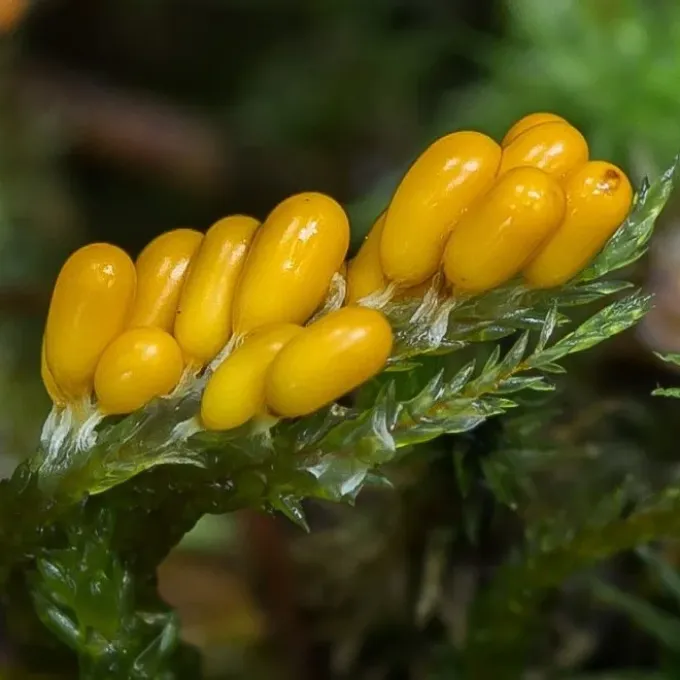
Description
Symptoms
The primary symptom is the sudden appearance of a yellowish or creamy, slimy mass on the lower parts of plants, such as stems and lower leaves near the soil.
As the organism matures, this slime transforms into firm, hardened clusters of sporangia, which look like a crust of small, dark brown or yellow grains attached to the plant tissue.
Infected plants may exhibit reduced vigor, and the area covered by the slime mold may appear discolored or water-soaked due to the blockage of plant pores.
Upon physical contact, mature sporangia often break apart, releasing a fine, dust-like powder of spores, confirming the identity of the organism.
Unlike parasitic fungi, this slime mold does not usually penetrate deep into the plant's vascular system, but its surface coverage can cause localized tissue suffocation.
Pathogen
Leocarpus fragilis is a species of slime mold belonging to the Myxomycetes group. It is not a fungus but a eukaryotic organism that exhibits unique biological behavior, shifting between a mobile plasmodium stage and a stationary spore-producing stage.
During the vegetative phase, the plasmodium moves across substrates, such as soil, mulch, or plant stems, engulfing bacteria, fungal spores, and decaying organic matter as nutrients.
The transition to the reproductive stage results in the formation of sporangia, which are distinct, wax-like, yellow-to-brown clusters often resembling small eggs or droplets on plant surfaces.
These sporangia eventually release millions of spores into the air, allowing the organism to colonize new, moisture-rich environments effectively.
Its complex lifecycle makes it a fascinating biological subject, though its presence in garden beds can be concerning for growers and gardeners alike.
Conditions for development
Leocarpus fragilis thrives in environments characterized by high humidity and poor air circulation, making it common after periods of heavy rainfall.
Shaded garden areas where the soil remains damp for extended periods provide the perfect habitat for the plasmodium to migrate and develop.
An abundance of organic debris, such as wood mulch, leaf litter, and compost, serves as the primary food source and breeding ground for the organism.
Crowded plantings that prevent sunlight from reaching the ground contribute to the maintenance of the moisture levels required for the slime mold's life cycle.
Inconsistent watering practices, especially overhead irrigation that wets the foliage, significantly increase the risk of an outbreak.
Why it matters
The harm caused by Leocarpus fragilis is primarily mechanical; it blocks the plant's surface, inhibiting gas exchange and light absorption essential for photosynthesis.
Prolonged presence of the slime mold on stems and leaves can create a moist microenvironment that encourages the growth of secondary bacterial or fungal pathogens.
For ornamental plants, the aesthetic damage caused by the slime and spore clusters renders the plants undesirable for display or commercial sale.
In vegetable gardens, if the slime mold settles on the crown or stem of seedlings, it can lead to rotting due to sustained high moisture levels at the contact point.
While rarely fatal to healthy, mature plants, it can significantly weaken young or stressed specimens, impacting their growth and overall yield.
Protection
The most effective strategy for managing Leocarpus fragilis is cultural: improve air circulation by thinning out dense foliage and pruning lower leaves to lift the canopy.
Implement proper irrigation techniques, ensuring water is delivered directly to the root zone rather than spraying the entire plant and saturating the surrounding mulch.
Physical removal is recommended; if spotted, the slime or sporangia can be gently wiped or washed off with a steady stream of water, followed by immediate drying of the area.
Remove decaying organic matter, such as old mulch or fallen leaves, to reduce the availability of food and nesting sites for the slime mold.
Chemical fungicides are generally ineffective against slime molds, so prevention through garden hygiene and moisture control remains the best line of defense.
Discussion
No discussions yet — be the first.