
Hypoxylon canker
Hypoxylon deustum
Description
Symptoms
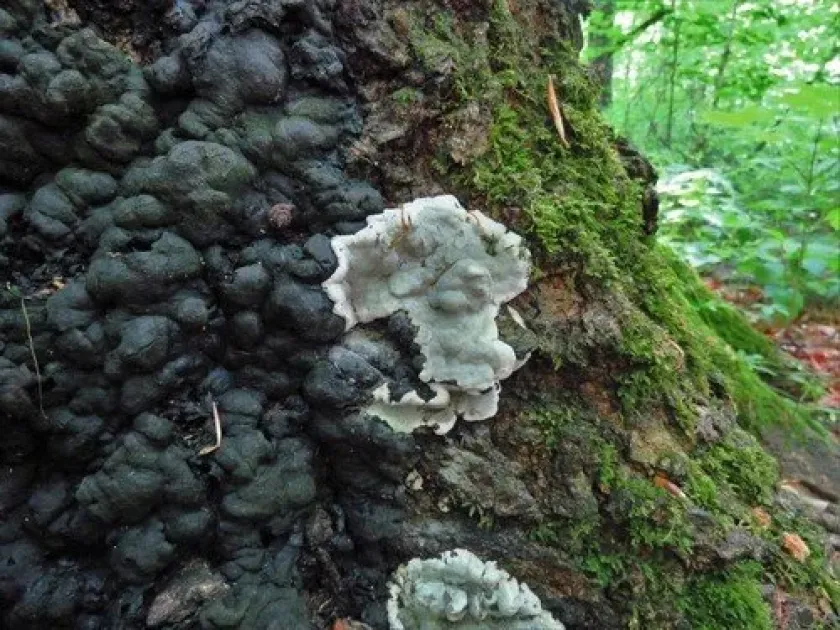
The most characteristic sign is the presence of flattened, charcoal-like stromata forming on the lower trunk or at the base of the tree near the roots.
Initially, these fruiting bodies appear as whitish or greyish powdery layers, eventually maturing into hard, carbonaceous black crusts.
Affected wood displays a distinct white rot appearance, often marbled with thin, black lines known as zone lines, which are specific to many wood-decay fungi.
Infected trees often exhibit canopy thinning, chlorosis, and progressive dieback, reflecting the failure of the root system to transport water and nutrients.
A major structural symptom is the increased risk of uprooting, as the fungus actively destroys the structural integrity of the tree's base.
Pathogen
The causative agent of the disease is the fungus Hypoxylon deustum (formerly Ustulina deusta), which is classified as a wood-decay pathogen causing white rot.
It typically behaves as a facultative parasite, targeting trees that have been previously stressed, wounded, or weakened by environmental factors.
The fungus colonizes the heartwood and sapwood, secreting enzymes that degrade complex organic compounds such as lignin and cellulose.
The infection cycle involves the production of stromata, which are flat, crusty fungal structures that release spores during humid conditions.
This pathogen is persistent and can survive for many years within decaying logs, stumps, and root systems, serving as a constant source of inoculum.
Conditions for development
High humidity and prolonged periods of moisture are essential for the dispersal of spores and the establishment of new infections.
Mechanical wounds to the bark, caused by landscaping equipment or severe weather, serve as primary entry points for the fungus.
Trees suffering from drought, soil compaction, or root damage are significantly more susceptible to colonization by Hypoxylon deustum.
Dense, shaded stands with poor air circulation can facilitate the development of the pathogen by maintaining higher levels of ambient moisture.
Climate conditions that lead to sudden temperature fluctuations or seasonal stress increase the vulnerability of hosts to this wood-decaying fungus.
Why it matters
Hypoxylon deustum is highly destructive because it primarily compromises the structural stability of the tree, leading to unexpected failure.
Unlike some pathogens that kill trees slowly, this fungus can create immediate hazards for surrounding infrastructure and human safety.
The fungus affects a broad host range, particularly deciduous trees like beech, oak, and lime, posing a threat to urban forestry and conservation areas.
The nature of the decay makes it nearly impossible to treat once it has progressed deep into the heartwood, rendering systemic chemical treatments ineffective.
Economic losses are compounded by the high costs of removing large, unstable trees and restoring the aesthetic value of public or private gardens.
Protection
The most effective strategy is the removal and disposal of heavily infested trees, ensuring that the root collar is also extracted if possible.
Proper wound management is crucial; all pruning cuts should be clean and, if necessary, treated to prevent colonization by airborne spores.
Regular monitoring of tree health, particularly after storms or construction activities, helps identify early-stage infections before they become dangerous.
Maintaining tree vigor through appropriate fertilization, irrigation, and avoiding soil compaction can significantly enhance a tree's natural resistance.
Sanitation practices such as removing dead wood and stumps from the garden environment help reduce the total spore load and pressure on healthy trees.
Discussion
No discussions yet — be the first.