
Grapevine bushy stunt
Grapevine bushy
Description
Symptoms
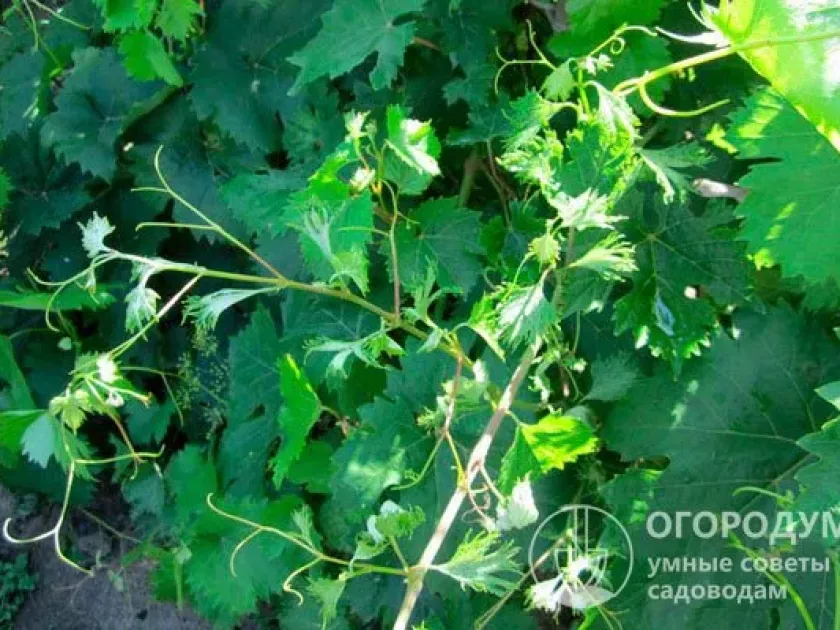
The hallmark symptom is severe stunting, where the vine exhibits restricted internode growth, leading to a bushy appearance of the canopy. The overall height of the grapevine is drastically reduced compared to healthy plants.
Leaves on infected vines often show distortion, smaller sizes, and chlorotic spotting or mosaic-like patterns. In later stages, necrosis along the leaf margins may occur, resulting in premature leaf drop.
Floral development is severely compromised, with frequent flower cluster abortion. If berries do develop, they remain small, fail to ripen properly, and display significant imbalances in acidity and sugar content.
The root system of infected plants is poorly developed, which significantly impacts the vine's ability to absorb water and nutrients. Consequently, affected vines are less resilient to environmental stresses.
In spring, infected buds often break dormancy later than their healthy counterparts. The shoots display a "witches' broom" effect due to the excessive and abnormal branching in the upper nodes.
Pathogen
The causative agent of this disease is the Grapevine bushy stunt virus (GBSV), a member of the Tombusvirus genus. This virus consists of a single-stranded RNA genome enclosed in a spherical protein coat.
GBSV infects the plant's vascular system, specifically moving through the xylem and phloem. Its ability to remain stable in the environment and survive in soil makes it a challenging pathogen for viticulturists worldwide.
Transmission occurs through vegetative propagation using infected rootstocks or scions. Additionally, contaminated pruning tools and soil-inhabiting nematodes serve as primary vectors for spreading the virus between plants.
The biology of the virus includes a significant latent phase. A plant may act as an asymptomatic reservoir, harboring the virus while showing no visible signs of stress until specific environmental conditions trigger symptom expression.
Because the virus is highly stable, it can persist in plant debris in the soil for extended periods, making it difficult to eradicate once a vineyard site becomes contaminated.
Conditions for development
Disease prevalence is highest in soils that are heavy and hold excessive moisture, as these conditions are ideal for the movement of soil nematodes. Poorly drained vineyard sites are at a much higher risk.
The presence of weeds acts as a critical factor in maintaining the virus population. Many common weeds function as alternative hosts, allowing the virus to persist in the vineyard even if infected vines are removed.
Mechanical spread is facilitated by routine vineyard operations. Using non-disinfected pruning equipment allows the virus to travel from an infected vine to healthy ones during the dormant season or pruning phases.
Extreme climatic conditions, such as prolonged drought or flooding, exacerbate the symptoms of the virus by placing additional physiological stress on the already weakened vascular system of the vine.
The initial establishment of the virus is most common in new plantings where nursery stock was not tested for GBSV or where the site had a history of soil-borne virus-carrying nematodes.
Why it matters
The economic impact of Grapevine bushy stunt is severe, primarily due to drastic yield reductions. Infected vines often become entirely unproductive, forcing growers to remove them prematurely.
The quality of the remaining harvest is generally unsuitable for winemaking. The juice from affected berries lacks the necessary sugar and flavor compounds, leading to poor fermentation outcomes and final wine quality.
Because the disease causes the vine to weaken over time, affected plants become more susceptible to other secondary diseases, such as fungal pathogens, which further increases the cost of crop protection.
The virus impacts the longevity of the vineyard. A high rate of infection effectively shortens the lifespan of the block, necessitating expensive replanting operations far sooner than expected in a healthy vineyard.
The spread of the disease creates patches of stunted growth, which makes uniform canopy management, irrigation, and fertilization difficult, increasing operational costs for the vineyard manager.
Protection
The primary control strategy is the use of certified virus-free planting material. Strict adherence to nursery certification programs is essential to prevent the introduction of GBSV to new sites.
If an infection is detected, the standard protocol involves rogueing—the complete removal and destruction of the infected vine, including its root system—to prevent the virus from spreading to neighboring plants.
Sanitation of tools is non-negotiable. Pruning shears, knives, and other equipment must be disinfected after each vine to prevent mechanical transmission of the viral particles.
Integrated pest management focusing on nematode control and weed suppression is necessary. Keeping the vineyard floor free of weeds reduces the potential reservoir for the virus.
Currently, there is no chemical cure for a virally infected vine. Therefore, management must focus on prevention, aggressive monitoring, and maintaining high biosecurity standards to protect the integrity of the vineyard block.
Discussion
No discussions yet — be the first.