
Oak leaf spot
Gnomonia quercina
Description
Symptoms
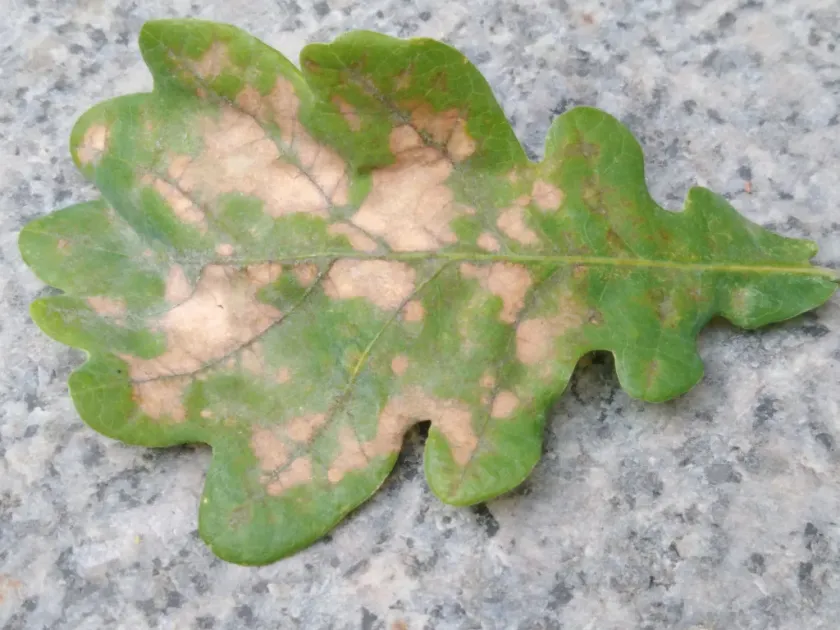
Symptoms typically begin as small, irregular brown or reddish-brown spots that appear on the leaves during late spring or early summer.
As the infection progresses, these spots expand, often merging to create large necrotic patches that cause the leaf to curl and become deformed.
The undersides of the affected leaf areas often show small, dark, pimple-like structures, which are the fungal fruiting bodies producing spores.
Severe infections lead to significant browning of the foliage, followed by premature leaf drop, leaving the tree canopy looking sparse and damaged.
In cases of high humidity, the entire foliage of a susceptible tree can appear scorched, which significantly reduces the tree's ornamental value.
Pathogen
The disease is caused by the ascomycete fungus Gnomonia quercina (syn. Apiognomonia quercina), which is a common parasite affecting oak foliage.
The fungus overwinters primarily in the fallen leaves as perithecia, which are small fruiting bodies that contain the sexual spores of the pathogen.
In spring, during warm and wet weather, these spores are released and spread via wind and rain splashes to infect the newly emerging oak leaves.
Once established, the fungus can produce secondary spores (conidia) that allow the disease to spread rapidly throughout the canopy during the summer months.
The pathogen thrives by colonizing the leaf tissue, causing localized cell death that manifests as distinct spots and lesions on the leaf blades.
Conditions for development
The development of oak leaf spot is strongly dependent on moisture; rainy springs provide the ideal environment for initial infection and spread.
Optimal temperatures for the fungus range between 18°C and 22°C, which often coincides with the timing of new leaf development in oak trees.
Poor airflow within dense tree crowns traps humidity, allowing the fungus to maintain high activity levels and infect more leaves.
Trees that are already stressed due to drought, soil compaction, or nutrient deficiencies are more susceptible to the disease.
Lack of sanitation, specifically leaving leaf litter under the trees, ensures a high inoculum load for the following growing season.
Why it matters
The primary damage caused by Gnomonia quercina is the reduction of the photosynthetic surface area, which hinders the tree's ability to produce energy.
Repeated yearly infections can lead to tree decline, resulting in stunted growth and a general loss of vigor over time.
While mature trees can usually tolerate the disease, young or recently transplanted trees may suffer significantly, potentially impacting their survival.
The aesthetic impact is substantial, making the disease a particular concern for landscape architects, park managers, and nursery growers.
Weakened trees become more prone to secondary attacks by wood-boring insects and other opportunistic fungal diseases that target compromised hosts.
Protection
The most important control measure is strict sanitation: all fallen leaves should be raked and destroyed in the autumn to eliminate the primary source of spores.
Pruning out dead or heavily infected branches helps improve air circulation through the canopy, reducing the humidity levels favorable to the fungus.
When necessary, fungicides containing copper or other systemic chemicals can be applied as a protectant treatment just as the leaves begin to unfold.
- Mulching the soil surface to cover potential inoculum reservoirs.
- Ensuring proper irrigation and fertilization to keep trees resilient.
- Monitoring the canopy for early signs to enable timely interventions.
- Selecting resistant oak cultivars for future planting in urban areas.
Integrated management focusing on cultural practices combined with strategic chemical applications usually provides the best results in controlling the disease.
Discussion
No discussions yet — be the first.