
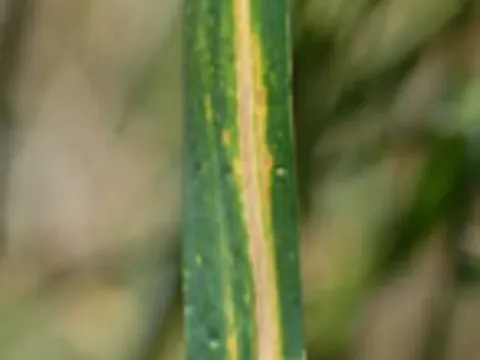
Cephalosporium stripe
Cephalosporium balanoides
The disease is caused by the fungus Cephalosporium gramineum, which colonizes the vascular system (xylem) of various cereal crops.
What the section contains
Cephalosporium stripe
It is a soil-borne pathogen that persists in infected crop residues, surviving for several years until a susceptible host is planted.
The fungus produces toxins that clog the xylem vessels, directly interfering with the plant's water and nutrient transport systems.
Infection primarily occurs through roots or crown tissues that have been injured by freezing, mechanical stress, or soil-dwelling pests.
Once inside the plant, the fungus spreads systemically through the stems, eventually inhibiting proper grain development and filling.
The most distinctive symptom is the appearance of long, yellow, narrow stripes extending along the leaf veins, usually occurring in late spring.
As the disease progresses, these stripes may enlarge to encompass the entire leaf, leading to premature yellowing and drying of the foliage.
Internodes of the stem often develop reddish-brown discolorations when split open, indicating a systemic colonization by the fungal mycelium.
Infected plants are often stunted in height and may show signs of premature senescence compared to healthy neighboring plants.
The heads of infected plants are often poorly filled or completely sterile, resulting in significant yield losses in the field.
The disease development is heavily dependent on moisture and temperature; cool, wet spring weather provides the perfect environment for the fungus.
Cycles of freezing and thawing in late winter and early spring cause root damage, which serves as a primary infection pathway for the pathogen.
Continuous cropping of winter wheat increases the amount of inoculum in the soil, raising the risk of severe disease outbreaks year after year.
Poorly drained or compacted soils can exacerbate the condition by keeping the root zone saturated for longer periods during the spring months.
Higher sowing densities can create a microclimate that remains humid, facilitating the movement of spores from soil debris to the plant base.
Cephalosporium stripe causes severe disruption to plant physiology, primarily by limiting the availability of water and essential minerals.
The reduction in photosynthetic capacity due to leaf stripe symptoms directly results in smaller, lighter, and lower-quality grain kernels.
Economic losses can be substantial, as the disease leads to both a reduction in overall yield and a decrease in the market value of the crop.
In severe infestation cases, the total yield loss can reach over 20-30%, especially in seasons with optimal conditions for fungal spread.
Plants weakened by this vascular disease are more prone to secondary infections and lodging, which can complicate mechanical harvesting operations.
Crop rotation is the most effective cultural practice, as avoiding cereal hosts for at least two years allows the soil inoculum to decline.
Planting resistant or tolerant cereal varieties is a critical strategy for managing the disease in regions with a history of Cephalosporium stripe.
Proper management of plant debris through deep plowing helps accelerate the decomposition of infected residues, reducing the fungus's survival.
Control of soil pests that injure root systems is essential, as these wounds provide the primary entry points for the fungal pathogen.
While seed treatments offer some protection, their efficacy against established soil-borne inoculum is limited, making integrated management vital.