
Description
Symptoms
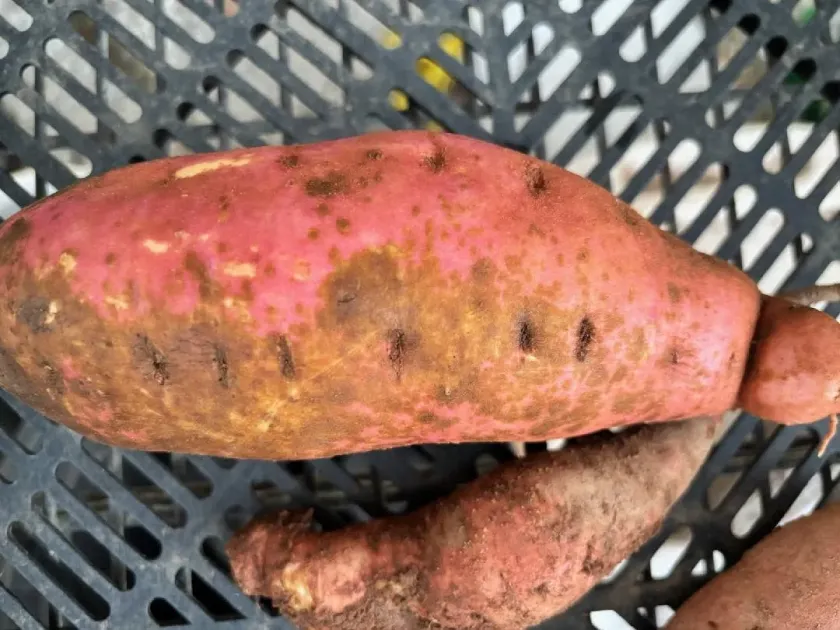
Initial symptoms present as small, circular, or irregular spots that are brown, gray, or dark in color, appearing clearly on the skin of the sweet potato tuber.
As the infection progresses, these individual spots can coalesce to cover large areas of the tuber, giving the vegetable an unappealing, discolored appearance.
The surface of the affected areas becomes rougher than healthy skin, and in some varieties, it may show slight peeling or a distinct "rusty" discoloration.
Unlike many soft rots, sweet potato scurf does not cause the flesh to soften or produce offensive odors. The interior tissue beneath the skin usually remains healthy and edible.
Diagnosis can be challenging on dark-skinned sweet potato varieties, as the infection may remain hidden until the tubers are washed thoroughly during preparation.
Pathogen
The disease is caused by the fungus Monilochaetes infuscans. It is a soil-borne pathogen that can persist for long periods in plant debris and soil particles.
The fungus specifically infects the underground parts of the plant, primarily the sweet potato tubers. Its mycelium colonizes the outer epidermis, resulting in discolored spots that detract from the tuber's appearance.
The life cycle of the pathogen is closely linked to moisture. Spores are easily disseminated through irrigation water, contaminated planting material, and infected soil carried on agricultural tools.
This pathogen is capable of surviving in the soil without a host crop, making it a persistent issue that complicates crop rotation practices. Soil temperatures between 20°C and 25°C are ideal for active fungal growth.
The disease is characterized as a surface fungal infection that typically does not penetrate deep into the tuber tissue, although it significantly impacts the aesthetic quality of the yield.
Conditions for development
High soil moisture is the primary driver of scurf development. Excessive irrigation or poor drainage in the field creates the perfect environment for the fungus to spread.
The pathogen thrives in alkaline or neutral soil conditions. Conversely, maintaining a slightly acidic soil pH can help inhibit the development of Monilochaetes infuscans.
Warm soil temperatures, specifically ranging from 20°C to 25°C, are optimal for the fungus to colonize the tuber epidermis effectively.
The spread of the disease is most frequently associated with the use of infected "slips" or seed tubers obtained from fields where the pathogen was already present.
Compacted, poorly aerated soil promotes the survival of the fungus and prevents the soil from drying out, which facilitates infection during the tuber development stage.
Why it matters
The main impact of sweet potato scurf is the loss of commercial marketability. Because the tubers suffer from aesthetic defects, they are often rejected by retailers and consumers.
Infected tubers lose moisture at a faster rate during storage, leading to premature shriveling and a reduction in the overall weight and quality of the stored harvest.
The compromised skin integrity serves as an entry point for secondary pathogens and bacteria, which can cause severe rot during long-term storage.
Presence of this disease limits the ability of farmers to sell their crop in premium markets that enforce strict cosmetic standards for produce.
Fields infested with this pathogen become unsuitable for producing high-quality seed tubers without extensive sanitation and soil treatment measures.
Protection
The primary control strategy is the use of disease-free, certified planting material. Before planting, slips can be treated with approved fungicides to prevent infection.
Maintaining a rigorous crop rotation schedule is essential; it is recommended to avoid planting sweet potatoes on the same land more than once every 3 to 4 years.
Managing soil pH by keeping it slightly acidic can effectively reduce the activity of Monilochaetes infuscans in the soil environment.
Ensuring proper field drainage is critical to prevent waterlogging, especially during the stage when tubers are actively growing and sensitive to infection.
- Thoroughly clear all plant debris from the field after harvest.
- Sanitize all farming tools and machinery after working in infected areas.
- Select and plant sweet potato cultivars known for higher resistance to scurf.
- Store harvested crops under dry, cool, and well-ventilated conditions.
Pathogens and affected parts
Affects crops · 1
Discussion
No discussions yet — be the first.