
Description
Symptoms
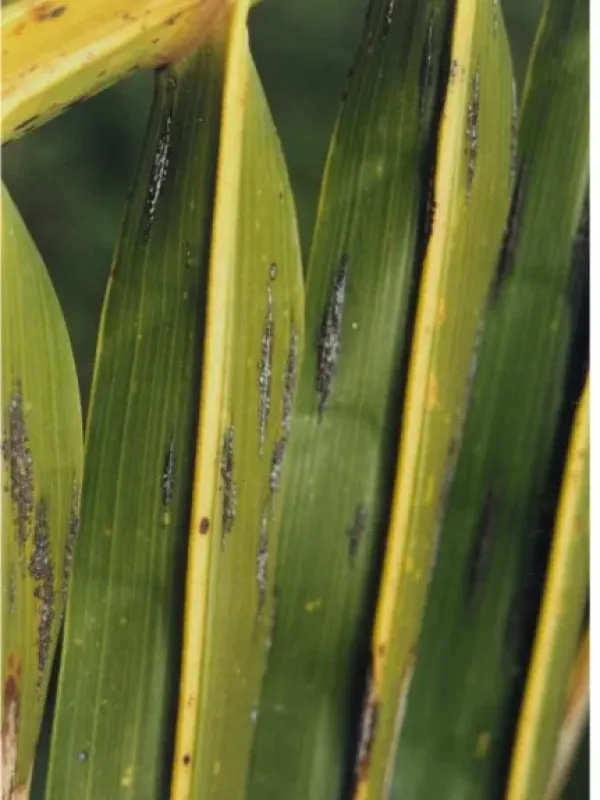
The primary symptom of Lixa pequenia is the appearance of distinct spots on the leaves of coconut palms. These lesions start as small chlorotic areas that gradually darken into brown or black spots as the fungal pathogen matures within the leaf tissues.
The centers of the spots often feature raised, crust-like structures known as stromata. These fungal formations erupt through the epidermis of the leaf, giving the affected areas a rough, sandpaper-like texture which is characteristic of this specific pathogen.
As the infection progresses, individual spots may coalesce to cover large sections of the leaf blade. This extensive damage disrupts the leaf's normal appearance and structural integrity, often leading to premature yellowing and necrosis.
The infection typically manifests first on the older, lower leaves of the canopy. However, under high humidity conditions, the fungal spores can easily spread to younger fronds, potentially causing significant foliage loss across the entire palm.
In advanced stages of the disease, the massive death of leaf tissue inhibits the palm's ability to maintain its crown, leading to a stunted appearance and a noticeable decline in the overall vigor of the infected tree.
Pathogen
The causal agent of Lixa pequenia is the ascomycete fungus Phyllachora torrendiella. This pathogen is highly specialized, specifically targeting members of the palm family, particularly coconut palms, within tropical environments.
The fungus completes its life cycle by forming stromata within the host's leaf tissues. These structures act as protective chambers for the fungus, allowing it to survive through drier seasons and providing a consistent source of inoculum for the next infection cycle.
Reproduction occurs through the production of ascospores. These spores are released into the environment, typically triggered by moisture, and are disseminated by splashing rain, wind currents, and occasionally by insects visiting the palm foliage.
As a biotrophic parasite, Phyllachora torrendiella absorbs essential nutrients directly from the living cells of the host leaf. This metabolic drain is what leads to the visible symptoms and the subsequent weakening of the host plant.
Scientific research highlights the fungus's ability to thrive in warm, humid regions. Its development is tightly coupled with the phenology of the coconut palm, ensuring it always has access to new tissue for continued proliferation.
Conditions for development
High relative humidity, consistently exceeding 80%, is the primary factor driving the spread and infection rate of Phyllachora torrendiella. Moist conditions are essential for the germination of spores upon reaching the leaf surface.
Temperatures ranging from 25°C to 30°C create an ideal thermal window for the fungus to metabolize and colonize host tissues rapidly. In such climates, the incubation period of the disease is significantly shortened.
Prolonged leaf wetness caused by frequent tropical rains, heavy dews, or persistent fog is critical for the infection process. Water films provide the necessary medium for spores to move toward and penetrate the leaf epidermis.
Plantation density is a major environmental factor. Overcrowded coconut palms suffer from restricted airflow, which prevents the foliage from drying quickly after rainfall, thereby maintaining a microclimate that heavily favors fungal development.
Lack of orchard sanitation is another significant condition for the disease's persistence. Allowing infected, fallen fronds to remain on the ground creates a permanent reservoir of spores that are easily reactivated by the arrival of the wet season.
Why it matters
The economic impact of Lixa pequenia is primarily centered on reduced crop yield. Because the disease destroys photosynthetic tissue, the palm has less energy available for fruit development, resulting in smaller and fewer coconuts per harvest.
Chronic infection weakens the overall constitution of the coconut palm. This physiological stress makes the trees significantly more vulnerable to secondary attacks by pests or other pathogens, which can eventually lead to the total loss of the tree.
In commercial operations, the aesthetic and physical damage caused by the fungus reduces the market value of the produce. Furthermore, the loss of canopy density decreases the lifespan and long-term viability of the coconut plantation.
The necessity for frequent fungicide applications adds a significant burden to operating costs. These expenditures increase the production cost of coconut products, squeezing profit margins for growers in affected tropical areas.
In extreme cases of infestation, the cumulative damage can lead to the death of the palm. The loss of productive trees represents a substantial capital investment loss, requiring costly replanting efforts and years before new trees reach maturity.
Protection
The cornerstone of managing Lixa pequenia is an integrated sanitation program. This involves regular pruning and immediate removal of all infected foliage from the plantation to prevent the massive buildup of spore inoculum.
Chemical control via systemic fungicides is recommended if monitoring indicates early signs of infection. Targeted applications during the beginning of the rainy season can suppress fungal colonization and prevent large-scale outbreaks.
Good orchard management, including proper tree spacing, is essential. Adequate spacing ensures sufficient ventilation and light penetration, which helps keep the foliage dry and creates an environment less conducive to fungal growth.
Maintaining the tree's health through optimal fertilization is a key preventive strategy. Ensuring balanced nutrition, particularly with potassium, strengthens the leaf cuticle, making it physically more resistant to fungal penetration.
Biological control, using specialized mycoparasitic fungi or beneficial bacteria, is an emerging field that offers a sustainable way to manage Phyllachora torrendiella populations while reducing reliance on synthetic pesticides.
Pathogens and affected parts
Affects crops · 1
Discussion
No discussions yet — be the first.