
Description
Symptoms
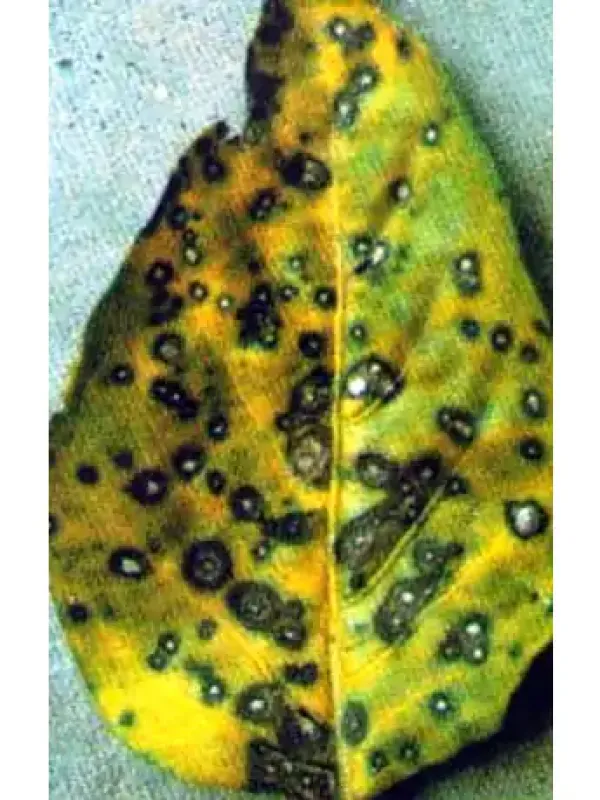
Initial symptoms include small, circular, light-colored spots that gradually turn brown or dark brown with a distinct dark edge on the leaves.
As the lesions mature, they enlarge (often up to 3 cm) and develop a characteristic light gray or whitish center, which is a key diagnostic feature for field identification.
Under high humidity, a grayish-olive mold develops on the undersides of the spots, representing the mass production of fungal conidia.
In severe cases, the infected leaf tissue may become necrotic and fall out, creating a "shot-hole" appearance across the foliage.
The disease can also affect petioles and stems, appearing as elongated dark lesions, which contributes to the eventual yellowing and premature abscission of leaves.
Pathogen
Cercospora leaf spot of pepper is caused by the fungus Passalora capsicicola (formerly classified as Cercospora capsici). It is a specialized fungal pathogen that primarily infects species within the Solanaceae family.
The pathogen survives the winter in infected plant debris left in the soil or on weeds. It can also be seed-borne, allowing the disease to be introduced into new fields or greenhouses.
The fungus produces spores (conidia) that are easily dispersed by wind, splashing rain, or overhead irrigation. Once spores land on susceptible leaves, they germinate and penetrate the tissue.
Within the plant, the fungus grows intercellularly, absorbing nutrients and eventually killing the host tissue. The incubation period typically lasts 7 to 14 days depending on environmental conditions.
Passalora capsicicola is highly persistent and can remain viable in decaying plant material for multiple seasons, creating a continuous infection cycle if not managed.
Conditions for development
The development of Passalora capsicicola is favored by warm temperatures, typically ranging from 25°C to 30°C. High humidity is the most critical environmental factor.
Frequent rainfall, heavy morning dews, and prolonged periods of leaf wetness provide ideal conditions for fungal spore germination and penetration.
In greenhouse settings, poor ventilation and inadequate air circulation lead to stagnant, humid conditions that dramatically accelerate the disease spread.
Planting density plays a significant role; overcrowded plants prevent foliage from drying out, creating a microclimate that supports rapid fungal growth.
Lack of proper sanitation after harvest, such as leaving crop residues in the field, creates an inoculum reservoir that fuels recurring infections in the following year.
Why it matters
The primary damage results from severe defoliation. When plants lose their leaves prematurely, their ability to photosynthesize is drastically reduced.
This loss of foliage prevents the plant from providing enough nutrients to the developing fruit, resulting in stunted, poor-quality peppers and significantly reduced yields.
Sunscald becomes a major issue as fruit that was previously protected by the leaf canopy is suddenly exposed to direct sunlight due to defoliation.
Weakened plants are more susceptible to secondary pathogens and pests, which can further complicate disease management and reduce plant vigor.
Commercial losses are substantial, stemming from both lower marketable yield and the high cost of intensive fungicide spray programs required to keep the disease in check.
Protection
Integrated pest management (IPM) is essential for control, beginning with the removal and destruction of crop debris to reduce the initial inoculum.
Transitioning from overhead irrigation to drip irrigation is a highly effective cultural practice, as it keeps foliage dry and reduces the window for spore infection.
Maintaining proper plant spacing and ensuring good airflow within the crop canopy are crucial to prevent the build-up of moisture and humidity.
- Rotation with non-solanaceous crops for at least 3 years.
- Use of certified, disease-free seed or treated seed.
- Regular monitoring and removal of symptomatic leaves.
When environmental conditions favor the disease, the application of copper-based or systemic fungicides (such as triazoles or strobilurins) is recommended, following strict pre-harvest intervals.
Pathogens and affected parts
Affects crops · 1
Discussion
No discussions yet — be the first.