
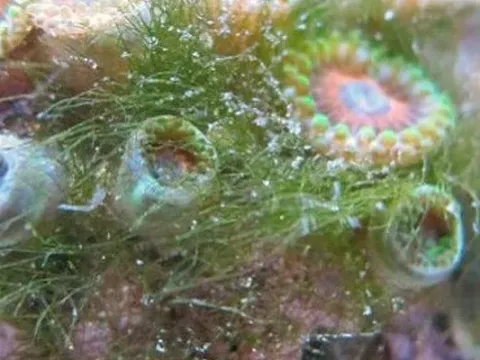
Lyngbya
Lyngbya
Lyngbya is a genus of filamentous cyanobacteria that often acts as a biological pest in agricultural systems, particularly in flooded crop environments like rice paddies.
What the section contains
Lyngbya
These organisms are characterized by the formation of dense, hair-like mats that can cover large surface areas, effectively creating an ecological barrier.
As autotrophic organisms, they thrive through photosynthesis and are capable of rapid colonization when environmental conditions are optimal for their growth.
They possess a complex metabolic system, and some species are known to secrete allelopathic compounds that negatively influence the growth of neighboring vascular plants.
The survival and spread of Lyngbya are facilitated by its ability to persist in moist soil conditions and propagate rapidly through fragmentation of its trichomes.
The primary symptom of infestation is the emergence of slimy, dark green to bluish or brownish mats on the surface of soil or irrigation water.
In infested fields, these mats may float to the surface, creating visible bubbles and thick, leathery layers that interfere with water movement and gas exchange.
Crops affected by Lyngbya exhibit stunted growth, yellowing of leaves, and an overall lack of vigor due to nutrient deprivation and root zone stress.
The roots of young plants may appear coated in a gelatinous substance, which prevents proper oxygen absorption and can lead to secondary root rot infections.
A foul, swamp-like odor is often associated with high densities of these cyanobacteria as they go through cycles of growth and decomposition.
High nutrient availability, particularly phosphorus and nitrogen levels, acts as a primary driver for the explosive growth of Lyngbya populations.
Warm water temperatures, typically ranging from 25 to 30 degrees Celsius, combined with stagnant water conditions, create the perfect habitat for colonization.
Exposure to direct, intense sunlight is essential for the photosynthetic activity of these cyanobacteria, promoting the rapid formation of large mats.
Poor water management, such as a lack of flow or improper drainage, prevents the natural disruption of these colonies and leads to accumulation.
A neutral to slightly alkaline pH in the water column enhances the nutrient uptake efficiency of Lyngbya, allowing it to outcompete other beneficial microflora.
The mechanical barrier formed by these algae prevents essential sunlight and oxygen from reaching the delicate shoots of emerging agricultural crops.
Competition for fertilizers is a major issue, as cyanobacteria absorb nitrogen-rich compounds from the water before the crop roots can utilize them.
Chemical toxins produced by the metabolism of Lyngbya can suppress plant enzymatic activity, leading to reduced overall yield and poor plant development.
The presence of dense mats inhibits soil warming, which is critical for early-season growth, especially for temperature-sensitive crops like rice.
Persistent infestations clog irrigation infrastructure and reduce water quality, which significantly complicates routine farming operations and water distribution.
Effective management includes periodic drainage of fields, which helps to dry out the soil surface and physically disrupt the structural integrity of the mats.
The application of approved algicides can provide quick suppression, though it must be done carefully to avoid harming the primary crop or surrounding ecology.
Precision fertilization techniques, such as deep-placement of nitrogen, reduce the availability of nutrients in the water column, effectively starving the algae.
Preventative cleaning of irrigation canals and water entry points reduces the load of initial spores and fragments that could lead to widespread field outbreaks.
Integrated biological control, including the use of competitive organisms or specific bacterial antagonists, is increasingly viewed as a sustainable management strategy.