
Description
Symptoms
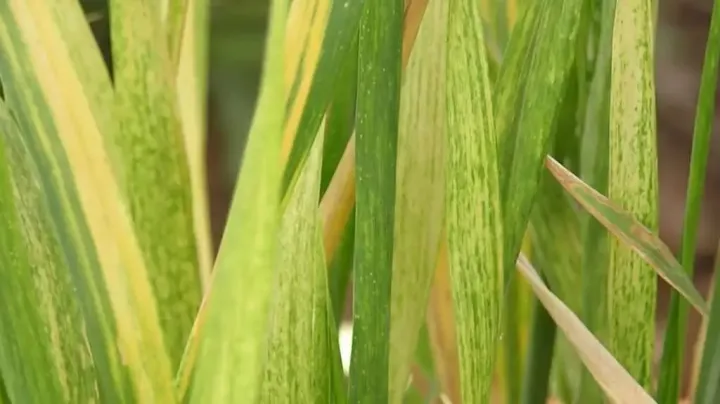
The primary symptom of the disease is the appearance of a characteristic mosaic pattern on winter wheat leaves, manifesting as alternating light green, yellow, and dark green spots, stripes, or streaks.
Affected plants often lag significantly in growth and development, appearing stunted, which is particularly evident during the tillering phase when diseased plants look suppressed compared to healthy ones.
As the disease progresses, tissue necrosis may appear on the leaf blades; in severe cases, leaf tips may wither and curl, reducing the plant's overall photosynthetic capacity.
Visual signs often include ring-like spotting or a specific net-like pattern that becomes more pronounced during cool weather in the spring season.
In some cases, deformation of the stems and spikes is observed, leading to the formation of poor-quality grain that is lightweight and lacks proper development.
Pathogen
The disease is caused by viruses belonging to the mosaic virus group (the most studied being wheat streak mosaic virus and various soil-borne viruses).
Transmission of the viral infection in winter wheat fields occurs primarily through soil-borne vectors, such as the fungus-like organism Polymyxa graminis, which inhabits the plant root system.
The virus persists in the soil within the resting spores of the fungal vector for several years, making crop rotation a key factor in managing the inoculum level in a field.
Secondary spread within the field can also occur through insect vectors, such as aphids or leafhoppers, which transmit viral particles from diseased to healthy plants during feeding.
A biological feature of the pathogen is its high persistence, allowing the virus to remain in a latent state until favorable conditions for infection arise.
Conditions for development
The development of wheat mosaic is closely linked to soil moisture and temperature, as these factors determine the activity of the vector, Polymyxa graminis.
The most favorable conditions for widespread infection are cool and rainy weather during the autumn, coinciding with the germination and early root development of winter wheat.
In heavy, waterlogged soils, the infection process is much more active, as excess moisture facilitates the rapid spread of fungal zoospores in the soil solution.
The optimal temperature for root infection ranges from +10°C to +15°C, while sharp temperature fluctuations in the spring can trigger outbreaks of visible symptoms.
Infection risk is also exacerbated by poor agronomic practices, particularly early sowing, which exposes seedlings to the pathogen in warm soil for longer periods.
Why it matters
The damage caused by wheat mosaic results in significant grain yield losses, ranging from 10% to 50%, depending on the level of infection and varietal resistance.
The disease leads to a sharp reduction in plant tillering, decreasing the overall density of the productive crop stand, which directly impacts the total harvest volume.
Disruption of physiological processes leads to a decrease in 1000-kernel weight, grain shriveling, and reduced protein and gluten content, significantly lowering the grain's commercial quality.
Plants weakened by the virus become more susceptible to adverse winter conditions, leading to stand thinning and the potential need for spring reseeding.
Infected fields serve as reservoirs for viral inoculum, which, if not managed, can spread to adjacent fields and subsequent crops in the rotation.
Protection
- Using resistant or tolerant winter wheat varieties is the most effective and economically viable management strategy.
- Adhering to a robust crop rotation plan, avoiding planting winter wheat on the same field more frequently than once every 3-4 years.
- Implementing agronomic measures to improve soil drainage and prevent stagnant water conditions.
- Optimizing sowing dates to avoid peak periods of vector activity and environmental conditions conducive to root infection.
- Controlling weeds, which can act as natural reservoirs for the virus and habitats for insect vectors.
Pathogens and affected parts
Affects crops · 1
Discussion
No discussions yet — be the first.