
Description
Symptoms
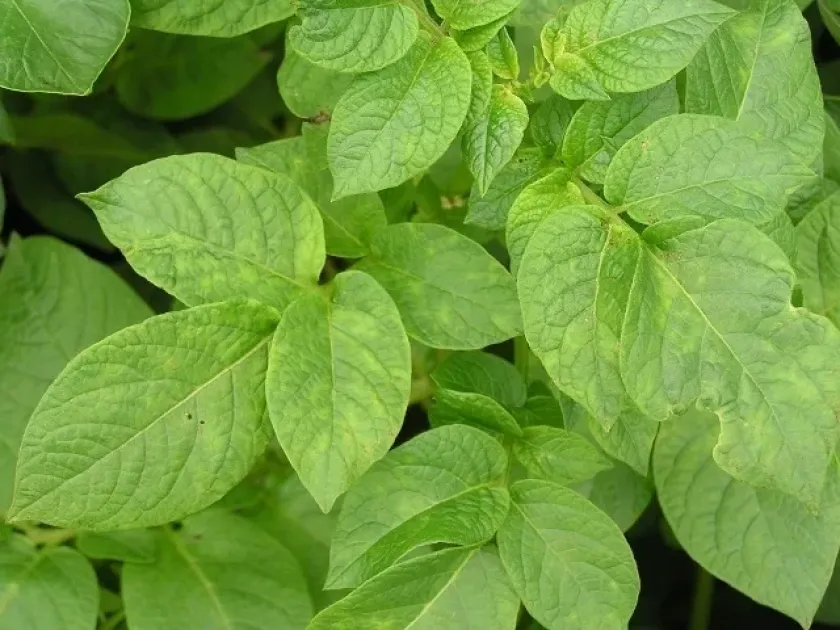
The most prominent sign of infection is the development of a distinct mosaic pattern on the leaves. This is characterized by a mix of light green, yellowish, and normal green patches, giving the foliage a mottled appearance.
Leaf deformation is a common secondary symptom. Infected leaves may become wrinkled, puckered, or curled, significantly reducing the surface area available for photosynthesis and weakening the overall plant vigor.
Plants often exhibit stunted growth and shortened internodes, leading to a bushy and compact appearance. This physiological suppression results in a noticeable size difference compared to healthy, robust plants.
In many cases, the tubers of infected plants remain small or misshapen, although they may not always show overt external symptoms. This lack of clear diagnostic signs on the tubers often leads to the unintentional spread of the virus.
- Mottling and chlorosis of foliage
- Puckering or rolling of leaf edges
- Stunted plant height
- Reduced photosynthetic efficiency
- Overall decline in plant health
Pathogen
The causal agent of this disease is the Wild potato mosaic virus (WPMV), a systemic plant virus that primarily impacts species within the Solanaceae family. It belongs to a category of pathogens that significantly compromise plant health by invading vascular tissues.
The virus acts as an obligate parasite, integrating into the host's cellular machinery to replicate. Once infected, the virus spreads through the phloem to all plant organs, ensuring its persistence throughout the lifecycle of the plant.
A major feature of this pathogen is its ability to persist in tubers. This makes the virus highly dangerous in agricultural settings, as contaminated seed material ensures the continuation of the disease cycle in subsequent seasons.
Transmission occurs through mechanical vectors, including various aphid species that feed on plant sap. Additionally, human activities such as using contaminated equipment can easily spread the virus between healthy and infected plants.
Understanding the biology of this virus is crucial for seed potato certification programs. Its silent, systemic nature requires precise laboratory diagnostics for effective identification in the field.
Conditions for development
Environmental conditions that favor high insect activity, particularly aphid populations, are major drivers of disease outbreaks. Warm temperatures and adequate moisture promote both the reproduction of vectors and the rapid spread of the virus.
High-density planting configurations create a favorable environment for mechanical spread. When foliage density is high, the frequency of contact between neighboring plants increases the likelihood of virus transmission.
The presence of weeds from the Solanaceae family around fields serves as a primary reservoir for the virus during the off-season. These weeds maintain the virus in the environment, ready to infect new crops when conditions become favorable.
Continuous cropping of potatoes on the same land without proper rotation allows the virus to survive in volunteer plants and crop debris, leading to increased pressure in subsequent years.
Improper seed selection, especially using saved seed from previous harvests without virus testing, is the primary reason for the persistent recurrence of mosaic virus in farm fields.
Why it matters
The primary impact of the Wild potato mosaic virus is a consistent decline in crop yield. As the virus diverts the plant's resources to its own replication, the development of tubers is significantly hindered.
Beyond quantity, the quality of the potatoes is severely affected. Affected tubers often lose their marketability due to size reduction and poor physiological quality, leading to economic losses for the grower.
Viral infection creates stress, which makes the plants more susceptible to secondary pathogenic attacks, including various fungal and bacterial rots that can devastate the remaining yield.
Long-term economic damage is linked to the cumulative effect of cultivar degeneration. Eventually, the variety becomes so degraded that it is no longer viable for production, necessitating costly variety replacement.
The costs associated with management, including insecticide application and labor for roguing, add a significant financial burden to potato production budgets affected by this viral pathogen.
Protection
The foundation of effective management is the use of certified, virus-free seed stock. Purchasing healthy seed is the most reliable way to prevent the introduction of the virus into a clean field.
Regular roguing, or the removal of symptomatic plants as soon as they are identified, is a vital practice. Removing both the foliage and the tubers of infected plants prevents the virus from spreading further during the season.
Integrated Pest Management (IPM) practices focusing on the control of insect vectors are essential. Monitoring and managing aphid populations using selective insecticides can significantly reduce the secondary transmission of the virus.
Maintaining a clean field environment by removing weed hosts and volunteer potatoes helps eliminate local reservoirs of the virus, thereby reducing the pressure on the current season's crop.
Sanitation practices, such as disinfecting machinery and tools after use in infected areas, prevent the mechanical spread of the virus, which is especially critical during harvest and planting activities.
Pathogens and affected parts
Affects crops · 1
Discussion
No discussions yet — be the first.