
Description
Symptoms
The most reliable sign of infection is the presence of perennial fruiting bodies on the trunk, typically near old wounds or sites of dead branch attachments. These are often easy to spot on older trees.
Inside the tree, the wood decay manifests as a yellowish-white rot often bordered by dark, distinctive lines. In later stages, the internal structure becomes soft and loses its structural integrity.
Infected trees often exhibit premature crown thinning, leaf yellowing, and general lack of vigor. As the conduction system of the tree is compromised, the overall health declines steadily over several seasons.
For black walnut trees, the infection often leads to necrotic lesions on the bark near the point of entry. Over time, the bark may peel away, creating further access for other secondary pathogens.
A hollow sound when tapping the trunk indicates advanced internal heart rot. This is a critical diagnostic indicator that the central heartwood has been significantly degraded by the fungal mycelium.
Pathogen
The causative agent of this disease is the wood-decaying fungus Phellinus igniarius, which belongs to the phylum Basidiomycota. It is a perennial parasite that primarily affects the heartwood of deciduous trees.
The fungal mycelium enters the tree through mechanical wounds, broken branches, or frost cracks. Once inside, it actively breaks down lignin and cellulose, leading to the development of central heart rot.
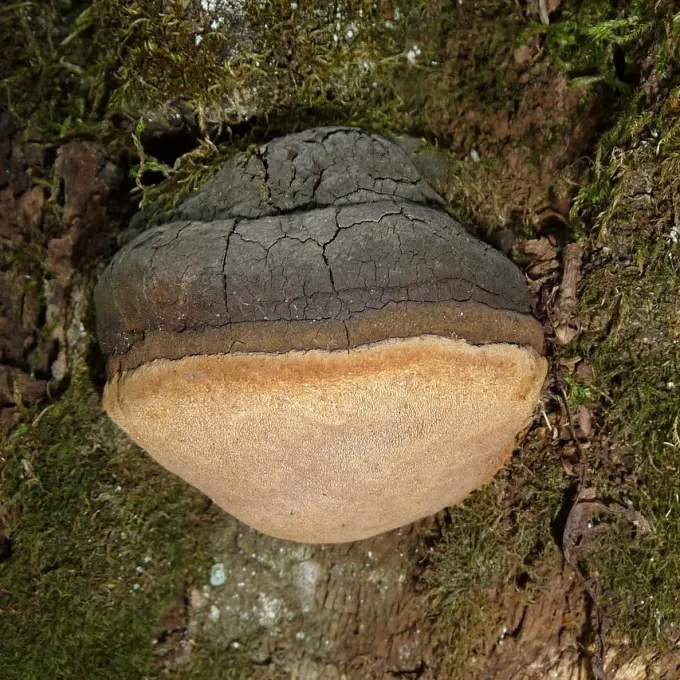
The fruiting bodies of this fungus are perennial, often appearing as hoof-shaped or shelf-like structures on the trunk. The surface is covered with a hard, cracked dark grey or black crust.
The interior of the fruiting body is rust-brown. The fungus continues to grow for many years, adding new layers of hymenophore annually to produce and release spores into the environment.
It affects a wide variety of hardwoods, including birch, aspen, willow, and valuable species such as the black walnut (Juglans nigra). The infection can spread rapidly in both managed and natural forests.
Conditions for development
The fungus thrives in high humidity and moderate temperatures, with spring and autumn providing the most favorable conditions for spore germination and colonization of new hosts.
Any break in the bark or exposed wood serves as a potential entry point for spores. Poor pruning techniques and mechanical injuries from gardening equipment are common causes of initial infection.
Densely planted areas with poor airflow create an ideal microclimate for the fungus. Lack of proper sanitation and failure to remove dead wood allow the pathogen to persist and multiply.
Trees that are already stressed by drought, poor nutrition, or environmental factors are more susceptible to colonization. The fungus specifically targets the moisture-rich heartwood of the tree.
Spore dispersal is primarily wind-driven, making it difficult to prevent the arrival of spores from nearby infested forest areas. This necessitates a proactive approach to tree management.
Why it matters
The main danger posed by Phellinus igniarius is the significant weakening of the tree trunk. This structural decay makes the tree highly susceptible to windthrow and breakage during storms.
For black walnut plantations, the fungus causes severe economic loss by degrading the high-value wood and reducing the tree's lifespan. It effectively ruins the timber quality of the host tree.
The disease reduces the vigor and reproductive capacity of the tree. Affected black walnut specimens may show diminished nut yields as the tree redirects energy to combat the spreading rot.
The infection center acts as a reservoir of spores, threatening neighboring healthy trees in the vicinity. Once a tree is colonized, it becomes a permanent source of infection for the entire orchard.
The decay process leaves the tree vulnerable to secondary attacks by wood-boring insects, which further accelerates the decline and eventual death of the host.
Protection
Prevention is the most effective management strategy. Proper wound care is essential; all pruning cuts should be clean, and larger wounds should be treated with appropriate fungicides and sealants.
Regular sanitation pruning is crucial. Any found fruiting bodies must be physically removed and incinerated immediately to reduce the spore load in the immediate environment.
Severely infested trees should be removed entirely, including the root system, to prevent the spread of the mycelium through root grafting or soil-borne contact with nearby healthy trees.
Maintaining optimal tree health through balanced fertilization and irrigation helps the tree build internal barriers, which can slow down the progression of the fungal rot.
Early detection through regular tree inspections allows for targeted intervention. While chemical control is limited once the fungus is established, systemic treatments may assist in protecting high-value trees.
Pathogens and affected parts
Affects crops · 1
Discussion
No discussions yet — be the first.