
African violet mottle
Viola mottle virus
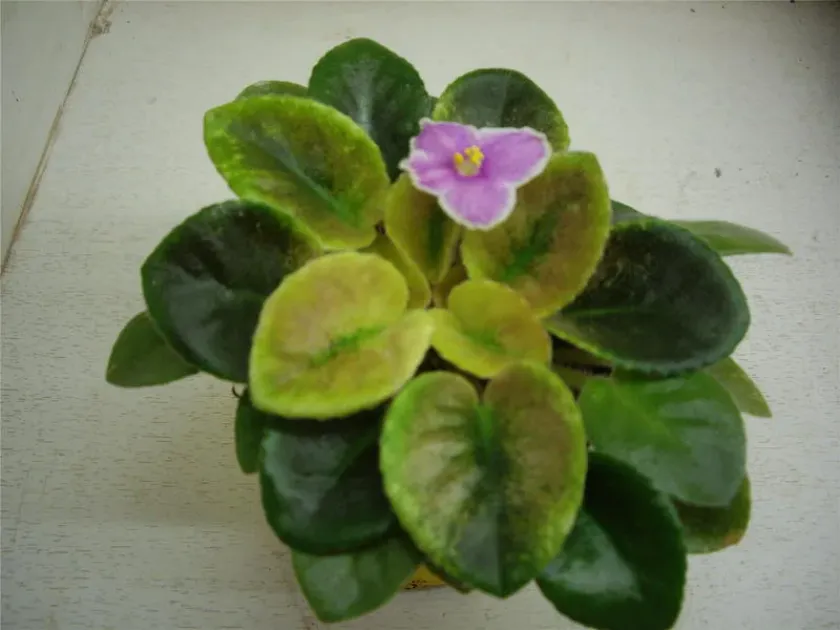
Description
Symptoms
The primary symptom of the disease is the disruption of the natural color of the violet's petals. Non-characteristic light spots, stripes, or streaks appear on solid-colored flowers, distorting the pattern and making the flower look variegated.
In addition to the flowers, the virus often manifests on the leaves of the plant. They may acquire a mottled or mosaic appearance, and sometimes, deformation and stunted leaf size are observed.
Plants affected by the virus show significantly reduced growth and development. Flower stalks become short and brittle, and the number of developing buds drops sharply or they may cease to grow entirely.
It is important to distinguish mottle from varietal characteristics (chimera). With the virus, the pattern on the petals is chaotic and unstable, changing with each blooming, whereas in chimera varieties, the coloring follows a regular pattern.
Often, the virus is latent, meaning the plant looks relatively healthy but is already a carrier of the infection. Such specimens pose a hidden threat to the entire collection.
Pathogen
The causative agent of African violet mottle is a virus belonging to the mosaic virus group. Potyvirus species are most often involved in the pathogenesis of violets, known for their ability to move rapidly through the plant's vascular system.
Viral particles are elongated filamentous structures containing single-stranded RNA. They cannot penetrate the plant independently and require tissue damage for infection to occur.
The infection is systemic, meaning the pathogen spreads through all plant organs, from the root system to apical meristems and reproductive parts.
The virus persists in the sap of the infected plant throughout its life. Even after removing damaged leaves, the pathogen remains in the cells of seemingly healthy parts of the violet.
Outside the host organism, the virus can persist on the surface of tools, hands, or in the substrate for a short time, which requires strict hygiene practices when working with the plants.
Conditions for development
The main condition for the spread of the virus in home collections is the presence of insect vectors. Aphids and thrips, by feeding on the sap of an infected plant, transfer viral particles to healthy specimens.
Mechanical transmission plays a key role when agricultural rules are violated. Using a common knife during division or propagation without disinfection leads to the immediate infection of healthy violets.
High plant density promotes the faster movement of pests, which multiplies the risk of an outbreak within a single windowsill or greenhouse.
Stressful conditions, such as improper temperature regimes or light deficiency, weaken the violet's immunity, making it more susceptible to the manifestation of viral symptoms.
Using unverified planting material obtained from infected collections is the primary route for the infection to enter new growing environments.
Why it matters
Mottle causes immense damage to the ornamental value of the violet, devaluing varietal traits and completely ruining the aesthetic appeal of the flowering plant.
Severe infection leads to the degeneration of the violet. The plant loses its ability to bloom properly, becomes weak, and is more prone to secondary fungal and bacterial infections.
Viral infection is incurable. No modern fungicide or antiviral medication can completely eliminate the virus from the tissues of an indoor plant.
In commercial greenhouse conditions, the disease leads to the culling of large batches of products, resulting in serious economic losses for flower-growing enterprises.
The main danger lies in its hidden spread. A single infected specimen in a collection can become a source of infection for all neighboring plants within a short period.
Protection
The definitive method of control is the immediate isolation or destruction of the infected plant. There is currently no cure for plant viral diseases.
- Regular disinfection of garden tools with alcohol or chlorhexidine solution.
- Rigorous control of pest populations (thrips, aphids, whiteflies) using systemic insecticides.
- Use of sterile substrate for repotting and mandatory 30-day quarantine for all new acquisitions.
- Strict personal hygiene: washing hands after handling each individual plant.
Prevention remains the only effective way to maintain the health of a collection, as combating the consequences of the virus is not possible.
Discussion
No discussions yet — be the first.