
Apple Scab
Venturiaceae
Description
Symptoms
Initial symptoms appear as light olive-green spots on the leaves, which later turn dark and velvety as the fungus produces conidia.
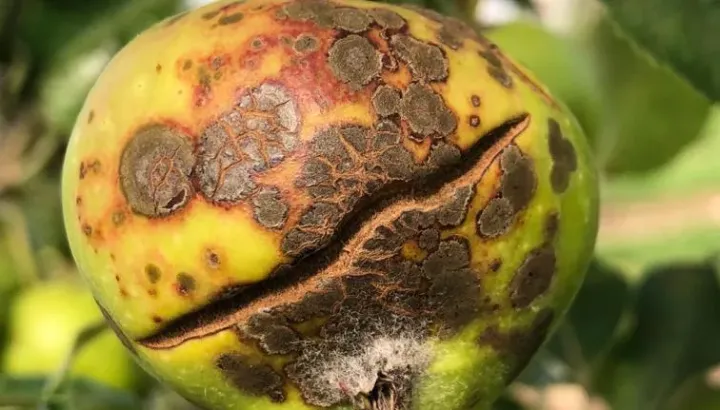
On fruits, scab manifests as circular, dark lesions. As the fruit grows, the tissue under the lesion becomes corky, leading to cracking and significant deformation.
Severe infestations cause premature leaf drop, which weakens the tree's vigor and reduces its ability to set flower buds for the following year.
Young shoots may also develop blisters and ulcerations, serving as a reservoir for the fungus to survive throughout the winter.
- Velvety olive to black leaf spots
- Cracked and deformed fruit surface
- Premature defoliation of trees
- Lesions on young twigs and shoots
Pathogen
The disease is caused by ascomycete fungi of the Venturiaceae family, primarily species of the genus Venturia, such as Venturia inaequalis.
The fungal life cycle involves both asexual conidial stages and sexual ascospores. The pathogen overwinters as pseudothecia on fallen leaves.
In spring, ascospores are released and spread by wind and rain. During the growing season, conidia facilitate secondary infections, spreading the disease rapidly.
The fungus penetrates the plant cuticle and forms a mycelium layer, which remains active as long as the environmental conditions are favorable.
High specificity of the pathogen means that different strains are adapted to specific host plants, complicating universal management strategies.
Conditions for development
Development is heavily dependent on moisture and temperature. Long periods of leaf wetness during spring are the primary drivers of infection.
The optimal temperature for spore germination is between 15 and 20 degrees Celsius. Continuous moisture is essential for the infection process to occur.
Poor orchard ventilation, resulting from dense tree canopies, maintains high humidity and creates an ideal microclimate for the pathogen.
Inadequate sanitation practices, such as failing to remove leaf litter, significantly increase the primary inoculum levels in the spring.
Weather conditions during the early bud break phase are critical in determining the severity of the primary infection outbreak.
Why it matters
The primary economic impact is the loss of commercial quality, as scabbed fruits are unmarketable and have a very short storage life.
Infected trees experience reduced photosynthetic capacity, leading to lower sugar accumulation and overall decreased yields over time.
The disease weakens the tree, making it more susceptible to environmental stressors such as winter frost and other secondary pests or diseases.
Without proper management, losses in susceptible varieties can exceed 80%, rendering the commercial cultivation of such varieties unsustainable.
High production costs associated with frequent fungicide applications negatively affect the overall profit margins of orchard businesses.
Protection
Effective sanitation, including the removal or destruction of fallen leaves in autumn, is crucial to reducing the primary inoculum source.
Pruning trees to improve air circulation helps the foliage dry faster after rain, significantly hindering the establishment of fungal spores.
Timely application of fungicides during critical growth stages, such as green tip or petal fall, is essential for managing outbreaks.
Planting resistant or tolerant cultivars is the most sustainable and long-term solution for managing scab in modern orchards.
Applying nitrogen-based soil treatments in autumn can accelerate the decomposition of leaf litter, further reducing the overwintering success of the pathogen.
Discussion
No discussions yet — be the first.