
Valsa canker
Valsa ambiens
Description
Symptoms
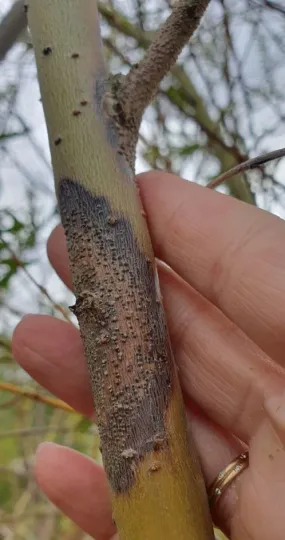
The first symptoms are the appearance of darkened, slightly depressed areas on the bark. These lesions often exhibit a reddish-brown discoloration.
Over time, numerous small bumps — the fruiting bodies of the fungus — emerge through the bark, often grouped in distinct clusters.
When the bark is peeled back, the underlying tissue shows necrosis, changing color to a dark, often pulpy consistency with a distinct odor.
Foliage on affected branches may yellow prematurely and wither, eventually dropping off as the vascular system becomes compromised.
In severe cases, affected branches dry up completely, and if the main trunk is infected, the entire tree may succumb to the disease.
Pathogen
The disease is caused by the ascomycete fungus Valsa ambiens. It is a facultative parasite that primarily attacks weakened woody plants through bark wounds or fissures.
The fungal mycelium spreads within the bark tissues, eventually invading the cambium and sapwood, which disrupts the tree's nutrient transport system.
The pathogen reproduces via spores, which are disseminated by wind, rain, and insects throughout the growing season. It overwinters as mycelium and fruiting bodies on dead bark.
During its life cycle, the fungus produces pycnidia and perithecia that erupt through the bark surface, appearing as small, characteristic bumps.
This fungus is known to survive on deadwood debris for extended periods, making orchard sanitation a critical component of disease control.
Conditions for development
The primary infection pathway for Valsa canker is through mechanical injuries, such as frost cracks, sunburn, pruning wounds, or pest damage.
High humidity and frequent rainfall are critical environmental factors that facilitate spore germination and entry into the tree tissue.
Trees weakened by poor soil conditions, nutrient deficiencies, or environmental stress are significantly more susceptible to infection by Valsa ambiens.
Fluctuating temperatures in late winter and early spring cause bark expansion and contraction, creating cracks that serve as prime entry points for the pathogen.
A dense, unpruned canopy reduces air circulation, maintaining high moisture levels around the bark and promoting fungal spore production.
Why it matters
Valsa canker causes significant dieback of limbs, which leads to substantial losses in fruit production and overall tree vigor.
The infection reduces the tree's winter hardiness and its ability to store necessary energy reserves for the following season.
As the bark and cambium die, the structural integrity of the branches is compromised, making the tree more prone to breakage.
Extensive infections throughout an orchard can necessitate the removal of entire trees, resulting in economic losses for the grower.
The pathogen severely limits the lifespan of affected trees, often turning otherwise productive orchards into unproductive or hazardous environments.
Protection
The cornerstone of management is the prompt removal and destruction of infected branches, ensuring that cuts are made into healthy, green wood.
All pruning tools must be disinfected after each use to prevent spreading fungal spores between trees or sections of the orchard.
Protecting the bark from environmental damage via trunk painting and applying antifungal sealants to pruning wounds is highly recommended.
Good orchard husbandry, including proper fertilization and watering, helps maintain tree health and enhances natural defense mechanisms.
- Application of preventative fungicides during the dormant season.
- Regular inspections of orchard trees to catch cankers in early stages.
- Control of bark-boring insects that create entry sites for the fungus.
- Removal of dead branches to reduce the overall fungal spore load.
Discussion
No discussions yet — be the first.