
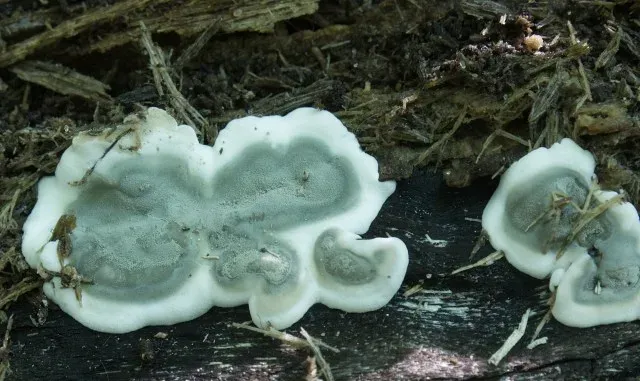
Description
Symptoms
The primary symptom of this disease is the development of charcoal-like, crusty stromata on the bark of infected trees. These structures are hard, brittle, and black, often looking like burnt wood or soot, which is characteristic of this pathogen.
As the infection progresses, the fungal growths expand into broad, flattened plates or cushions. These structures may coalesce, covering significant portions of the trunk or major branches with a dark, ash-like layer.
Internally, the disease causes a soft, white rot in the wood. A distinct feature of this decay is the presence of dark, thin zone lines (rhizomorphs) within the wood, which physically demarcate the area colonized by the fungus.
In citrus and fruit trees, the foliage often shows symptoms of general decline, including yellowing and premature leaf drop. The growth rate of the tree slows significantly as the structural integrity of the main trunk and roots begins to fail.
In advanced cases, the bark cracks and sloughs off, revealing deep, fibrous decay. This structural weakness often results in the sudden breakage of branches or the total collapse of the tree during windy weather.
Pathogen
The causative agent is Kretzschmaria deusta, a pyrenomycete fungus that primarily acts as a wood-decay pathogen. It is a facultative parasite that exploits weak or wounded woody tissues to establish its colony.
The fungus produces ascospores within its black stromata. These spores are dispersed by wind and rain, traveling to nearby trees where they can initiate new infections whenever they encounter a suitable wound.
Infection typically occurs through wounds such as pruning cuts, frost cracks, sunscald areas, or mechanical damage from farm machinery. The fungus thrives in these open environments, allowing the mycelium to penetrate deep into the woody xylem.
The mycelium persists in the decaying wood of living trees, stumps, and fallen branches. This ability to survive as a saprophyte allows it to maintain a reservoir of infection within the orchard environment indefinitely.
Kretzschmaria deusta degrades both lignin and cellulose in the wood. This enzymatic breakdown is what leads to the rapid loss of mechanical strength in the affected tree parts.
Conditions for development
High relative humidity and consistent moisture are essential for the germination and spread of Kretzschmaria deusta spores. Rainy seasons provide the ideal conditions for the fungus to establish itself.
Trees that are under environmental stress, such as those suffering from poor soil nutrition, drought, or incorrect irrigation practices, are significantly more susceptible to infection by this pathogen.
Poor orchard hygiene, such as leaving pruning debris on the ground or allowing old stumps to decay nearby, creates a high spore load in the immediate vicinity of healthy trees.
Lack of proper canopy management, which leads to poor airflow, keeps the bark surface moist for longer periods. This extended wetness is a major factor that facilitates fungal attachment and penetration.
Mechanical damage during maintenance tasks is perhaps the most significant anthropogenic factor. Every exposed woody surface is a potential entry point for the fungus if left untreated.
Why it matters
The primary risk associated with this fungus is the structural failure of the tree. The white rot significantly weakens the wood, making large branches or the entire tree prone to falling without warning.
The disease reduces the long-term productivity of citrus groves and other fruit orchards. Infected trees exhibit poor nutrient uptake, which translates into lower yields and diminished fruit quality.
Once the interior of the trunk is extensively colonized, the infection is typically irreversible. This often necessitates the removal and destruction of the entire tree to protect the rest of the orchard.
Economic losses arise not only from the loss of tree production but also from the high costs associated with sanitation, stump removal, and the replacement of infected orchard sections.
The persistent nature of the pathogen in the soil and remaining roots means that replanting in the same location can lead to re-infection if the site is not thoroughly sanitized.
Protection
The most effective strategy is the maintenance of strict hygiene. Any wood showing signs of the fungus must be pruned immediately, removed from the orchard, and burned to eliminate the source of spores.
All pruning tools must be sanitized between cuts, especially when dealing with suspect or known infected trees, to prevent spreading the pathogen to healthy specimens.
Applying fungicides or professional-grade sealants to all pruning wounds is critical. A protected cut prevents the airborne spores from gaining access to the vascular tissue.
Regular monitoring of the orchard is necessary for early detection. Checking the base of trunks and major scaffold branches during the dormant season can help identify the characteristic black crusts early on.
- Remove and grind out all infected stumps to remove reservoirs.
- Improve soil health and water management to reduce tree stress.
- Avoid mechanical damage to bark during cultivation and harvesting.
- Use resistant rootstocks if available in your region.
- Ensure proper spacing for adequate light and air circulation.
Pathogens and affected parts
Affects crops · 1
Discussion
No discussions yet — be the first.