
Ustulina rot
Ustulina
Description
Symptoms
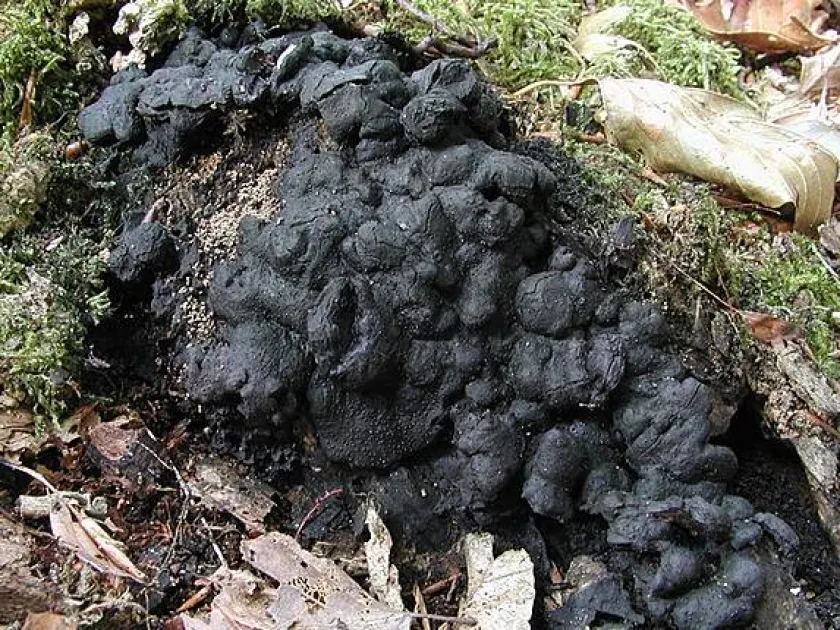
The most visible sign of infection is the presence of flat, crust-like fruiting bodies on the trunk near the ground. Initially whitish-gray, they eventually turn black, hard, and carbonaceous.
Internal examination of infected wood reveals characteristic black zone lines that delineate the decaying areas. This pattern is a diagnostic feature used to identify Ustulina deusta in field conditions.
Infected trees often exhibit crown dieback, sparse and chlorotic foliage, and significantly reduced annual growth. These symptoms result from the impaired movement of nutrients and water due to root and trunk decay.
Root rot caused by this fungus significantly compromises the anchorage of the tree. Consequently, wind-throw becomes a frequent event, as the structural roots lose their strength and ability to resist leverage.
Peeling bark or sunken areas at the base of the trunk may indicate the presence of extensive wood decay underneath. In some cases, white fungal mats can be found beneath the bark layers.
Pathogen
The disease is caused by the fungus Ustulina deusta (also known as Kretzschmaria deusta), a member of the ascomycetes class. This fungus is a specialized wood-decaying pathogen that efficiently degrades both lignin and cellulose.
The fungus typically infects broadleaf trees, targeting the roots, root collar, and trunks. It often persists as a saprotroph in dead wood before invading living tissues of weakened or stressed trees.
Its biological cycle is characterized by the formation of long-lived, charcoal-like fruiting bodies at the base of infected trees. These structures release spores that can spread over long distances via air currents.
Mycelium of Ustulina deusta colonizes the woody tissue deep within the trunk. Over time, it destroys the structural integrity of the wood, leading to the formation of brittle, decayed heartwood.
The pathogen is highly resilient and can remain viable in stumps, logs, and root fragments in the soil for many years, making long-term control a significant challenge in forest management.
Conditions for development
High moisture levels in the environment are the primary catalyst for the development of Ustulina rot. Damp, poorly drained sites provide the perfect conditions for spore germination and mycelial growth.
Mechanical damage is the most common entry point for the fungus. Injuries to the bark or roots, caused by equipment, animal browsing, or pruning, allow the spores to penetrate the tree's natural defenses.
Trees suffering from physiological stress, such as drought, nutrient deficiency, or overcrowding, are significantly more susceptible to infection compared to healthy, vigorous specimens.
Spore dispersal occurs predominantly during moist conditions in spring and autumn. This timing coincides with the production of conidia on the surface of the fungal fruiting bodies.
The presence of old stumps or decaying organic debris near healthy trees acts as an inoculum source, significantly increasing the risk of infection in managed landscapes and plantations.
Why it matters
Ustulina rot is extremely damaging because it causes silent, internal wood degradation. Often, by the time symptoms appear on the trunk, the structural integrity of the tree is already severely compromised.
The risk of sudden tree failure poses a major safety hazard in residential gardens, parks, and public spaces. This makes infected trees a liability that often requires immediate removal.
Economic losses are substantial, stemming from the need for arboricultural intervention, removal of hazardous trees, and potential damage to surrounding property caused by falling branches or entire trunks.
The fungus is difficult to treat once it has established within the heartwood. Conventional fungicides are largely ineffective, meaning that containment and removal are the only viable management strategies.
The overall impact on the environment includes the loss of mature tree cover, reduced ecosystem services, and the creation of an infection reservoir that threatens neighboring healthy trees.
Protection
Prevention focuses on maintaining optimal tree health. Proper fertilization, correct irrigation, and avoiding site compaction help trees resist potential fungal colonization.
Minimize mechanical injuries during all landscape maintenance operations. Always use sharp, sterilized pruning tools to ensure clean cuts that heal quickly, preventing fungal entry.
When an infection is detected, the affected tree should be removed promptly, including as much of the root system as possible. Stumps must be excavated to eliminate the infection source.
Monitor high-value trees regularly for signs of fruiting bodies, especially near the root collar. Early detection is crucial, although it rarely leads to a complete cure.
- Sterilize pruning equipment after each tree to prevent cross-contamination
- Avoid damaging the root zone with heavy machinery
- Remove and burn infected woody debris to destroy spore sources
- Consult an arborist for structural risk assessment of suspect trees
Discussion
No discussions yet — be the first.