

Description
Symptoms
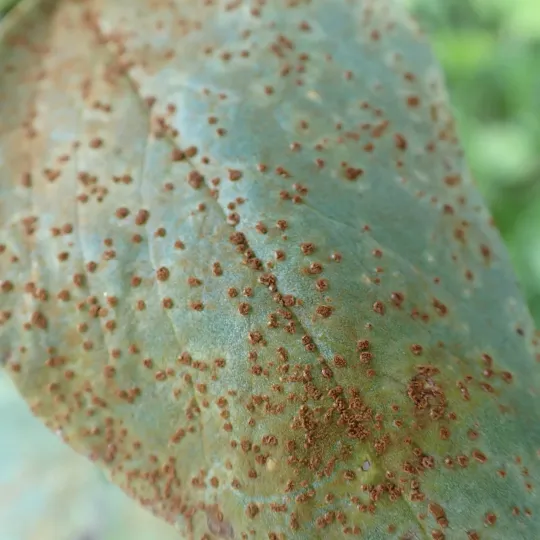
Initial symptoms typically appear on the underside of the leaves as small, pale-yellow spots. Over time, these spots develop into raised, rust-colored pustules filled with a powdery mass of fungal spores.
As the infection progresses, pustules can appear on stems, petioles, and even pods. Heavy infections lead to yellowing, leaf curling, and premature leaf drop, which significantly reduces the plant's photosynthetic capacity.
Typical signs of bean rust include:
- Rust-brown pustules appearing on the leaf surface.
- Chlorotic halos or yellowing of tissues surrounding the infection sites.
- Massive defoliation when the disease pressure is high.
- Deformation of pods and reduced bean quality.
Field identification is straightforward: touching the pustules leaves a reddish-brown residue on the fingers, which consists of millions of infectious spores. This visible powdery dust is a clear diagnostic indicator of rust.
In the final stages of the fungus's development, the pustules darken to a deep brown or black color. This shift indicates that the fungus has completed its asexual cycle and is preparing to survive the winter dormant phase.
Pathogen
The causal agent of bean rust is the fungus Uromyces appendiculatus. It is an obligate parasite that specifically infects legume crops, with common bean (Phaseolus vulgaris) being its primary host, causing significant damage in humid conditions.
This fungus exhibits a complex life cycle characterized by the production of several types of spores. The pathogen can survive on crop debris in the soil or be carried on contaminated seeds, making it a persistent threat in many regions.
As an obligate parasite, Uromyces appendiculatus relies entirely on living host tissues to extract the nutrients required for its growth. This parasitic interaction leads to the severe depletion and systemic weakening of the host plant.
During the growing season, the fungus reproduces rapidly through asexual urediniospores. These spores are easily dispersed by wind currents, allowing the disease to spread quickly across large fields and between neighboring plots.
As the season comes to an end, the fungus produces teliospores, which are specialized for overwintering. These spores are highly resistant to environmental stressors, including low temperatures, ensuring the infection's survival until the next planting season.
Conditions for development
Bean rust thrives in environments characterized by high humidity and moderate temperatures. Frequent rainfall, heavy morning dew, or persistent fog creates the ideal moist surface required for spores to germinate and infect plant tissue.
The optimal temperature range for spore germination and infection is between 18°C and 25°C. Under these conditions, the incubation period is significantly shortened, potentially leading to rapid epidemics in the field.
Poor aeration in dense crop canopies is a major risk factor. When plants are spaced too closely, the moisture on the leaves remains for longer periods, which provides the necessary window of time for the fungus to penetrate the plant.
Inadequate crop rotation and continuous planting of beans in the same area lead to a buildup of the pathogen in the soil. This high inoculum load increases the risk of early infections in young, vulnerable seedlings.
Plant health and mineral nutrition also play a role in resistance. Plants that receive excessive nitrogen but lack sufficient potassium are often more susceptible to fungal infections compared to well-balanced, hardy crops.
Why it matters
The primary impact of bean rust is the severe reduction of the green leaf area, which limits the plant's ability to produce energy through photosynthesis. This directly inhibits pod development and overall seed yield.
In years with favorable weather for the fungus, crop losses can be substantial, often exceeding 50%. This can lead to significant financial losses for farmers, particularly in high-yield commercial operations.
Besides quantity, the quality of the harvested produce is severely degraded. Seeds from infected plants are often undersized, have poor germination rates, and may suffer from a reduction in nutritional value.
Infected pods suffer from poor aesthetics, making them unsuitable for fresh market sales. Furthermore, weakened plants become more prone to secondary infections, further complicating the field management process.
Persistent presence of rust in the field necessitates long-term remediation efforts. Once the soil becomes heavily contaminated, it requires costly management strategies to reduce the disease pressure in future seasons.
Protection
The most effective strategy for controlling bean rust involves a combination of cultural practices and chemical interventions. Maintaining a strict crop rotation cycle of at least 3-4 years is essential to break the pathogen's life cycle.
Proper sanitation, including the removal and destruction of crop debris after harvest, is crucial. Deep plowing helps bury the inoculum deep in the soil, which accelerates the natural decline of the fungal spores.
Choosing rust-resistant bean varieties is the best long-term solution for management. Breeding programs continue to develop cultivars that show high levels of genetic resistance to local strains of the fungus.
If initial signs of infection are detected, the application of fungicides with systemic or contact action is necessary. Timely application, before the disease becomes widespread, is key to successful containment.
Regular field scouting allows for early detection of the pathogen, which is vital for preventing epidemic spread. Furthermore, providing optimal mineral nutrition with potassium and phosphorus helps maintain plant vigor and natural resistance.
Content graph
Connections · Bean rust
Most often together:
Marketplace
Products · 2

Community
Discussion
No discussions yet — be the first.