
Tubifera
Tubiferaceae
Description
Symptoms
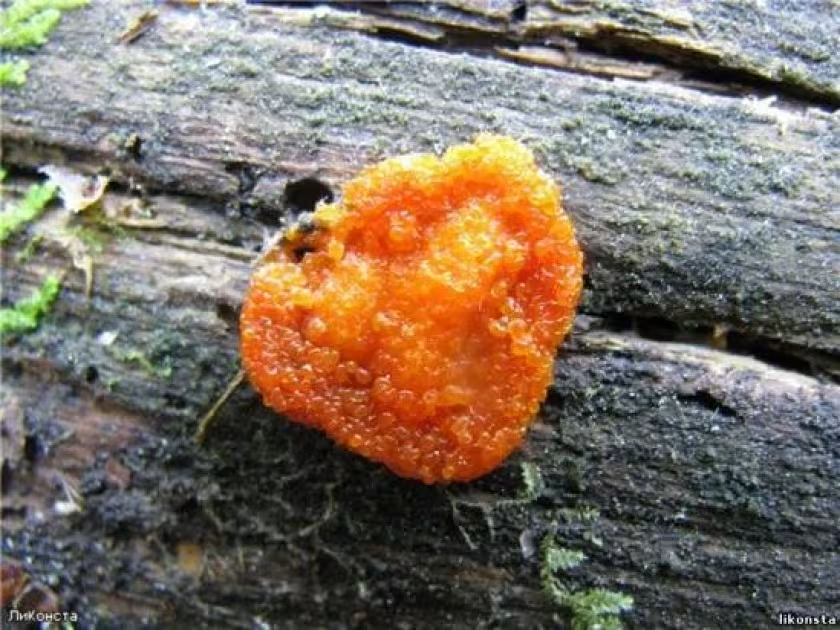
The primary visual sign is the emergence of distinctive sporangia clusters. Initially, they appear as light, translucent, blister-like structures that resemble clusters of tiny eggs or pinkish beads.
As they mature, the sporangia darken, shifting to rusty-red, dark brown, or metallic bronze shades. They are tightly packed together, creating a pillow-like appearance on the substrate.
When appearing at the base of a plant, they look like powdery or grainy growths. These structures are fragile and easily crumbled, releasing a fine cloud of dark spores when touched.
Unlike true fungal pathogens, Tubifera does not cause systemic symptoms like chlorosis, necrosis, or plant deformation. It simply coats the surface of the stem or leaf, creating a physical barrier.
- Vibrant pink, orange, or rusty clusters of blisters.
- Characteristic cell-like structures of sporangia.
- Release of dark brown spore powder upon mechanical disturbance.
Pathogen
Tubifera is a genus of slime molds (myxomycetes) that are often mistaken for true fungal plant diseases. Biologically, they are saprotrophic organisms that thrive on decaying wood or plant debris rather than being true parasites.
Their life cycle involves a plasmodium stage, which moves actively to ingest bacteria and spores. Eventually, it transforms into sporangia, which look like clusters of tiny beads or blisters.
Although Tubifera does not feed on living plant tissue, it can colonize weakened or rotting parts of crops. Its presence usually serves as an indicator of excessive moisture and the onset of decay in the environment.
As a member of the class Myxomycetes, it reproduces rapidly under favorable conditions, forming distinct and colorful colonies that are physically separate from the plant's metabolic processes.
The microscopic spores are highly mobile and easily dispersed by wind, water splashes, or insects, settling onto soil surfaces and plant parts throughout the cultivated area.
Conditions for development
The main driver for Tubifera development is high humidity in both the air and the soil. It prefers shaded, poorly ventilated areas in gardens or greenhouses where moisture accumulates.
The organism thrives at temperatures between +18 and +25 degrees Celsius. Under these conditions, the plasmodium can colonize available organic substrates very rapidly.
It prefers substrates rich in decomposing organic matter. Poor drainage and waterlogging in the root zone provide the perfect microclimate for the slime mold to flourish.
Overcrowded planting schemes and lack of airflow prevent the substrate from drying out, significantly increasing the likelihood of Tubifera outbreaks.
Prolonged rainfall or over-irrigation events trigger intense sporulation, leading to a rapid spread of the mold across the entire crop area.
Why it matters
While not a parasite, Tubifera causes indirect damage. It mechanically covers leaves and stems, creating a barrier that obstructs sunlight and inhibits the process of photosynthesis.
The formation of a thick crust of sporangia can block gas exchange (respiration) of the plant, which leads to physiological stress and reduces the overall vigor of the crop.
The presence of this organism is a marker for an unhealthy environment characterized by excessive moisture and decay, which itself poses a significant threat to root systems.
Large colonies of Tubifera can attract secondary soil pests that feed on the mold and subsequently cause damage to healthy tissues of the cultivated plants.
Produce that comes into contact with the ground and is colonized by these organisms becomes commercially unviable due to sanitary concerns and aesthetic degradation.
Protection
The most effective management strategy is to normalize water levels. Ensuring proper drainage and avoiding excess irrigation are critical steps to suppress the organism.
Timely removal of plant debris and dead wood is essential, as these materials serve as the primary food source and substrate for the slime mold's growth.
Using mulch helps to create a barrier between the soil and the plant parts, preventing the direct contact that facilitates the spread of spores onto fruits or leaves.
If large colonies are detected, they should be mechanically removed using a scraper or cloth, followed by the application of copper-based sanitizers to the area.
Maintaining proper spacing and ensuring excellent ventilation within growing spaces are the best preventive measures to stop the proliferation of slime molds.
Discussion
No discussions yet — be the first.