
Tubifera casparyi
Tubifera casparyi
Description
Symptoms
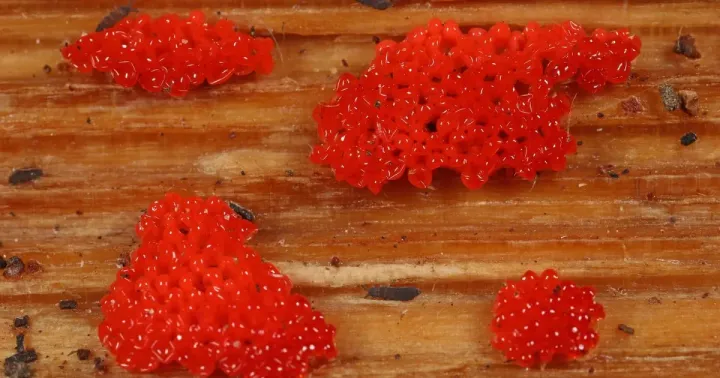
The primary visual symptom of Tubifera casparyi is the development of dense, bright-colored (pink, red, or rust-brown) clusters on plant stems, foliage, or surrounding soil.
At an early stage, these clusters appear as moist, jelly-like masses that gradually transition into more solid, tubular structures as the spores begin to mature.
Once mature, the surface of these clusters becomes dry and brittle. When disturbed, they release a fine, dust-like powder of spores, which can easily be carried by wind or irrigation splashing.
Affected plants often show signs of stress, including chlorosis or localized tissue softening, caused by the mold physically blocking sunlight and air exchange from the plant surface.
- Bright pink or brown cluster growth on stems.
- Jelly-like texture in early development.
- Spore dust release when disturbed.
Pathogen
Tubifera casparyi is a species of slime mold, a unique group of organisms that share characteristics of both fungi and amoebas. In an agricultural context, it is considered a saprotrophic organism that thrives on decaying organic matter.
It does not typically feed on living tissues, but rather uses the plant surface as a substrate for its movement and spore formation when environmental conditions are suitable.
The life cycle of this organism involves a plasmodium stage, where it moves across surfaces, and a reproductive stage, where it forms distinct clusters of sporangia, often described as coral-like or raspberry-like in appearance.
While not a primary plant pathogen, its presence indicates significant moisture issues within the greenhouse or field, which are often precursors to more serious fungal infections.
The biological nature of Tubifera casparyi allows it to remain dormant in the form of spores in the soil, ready to emerge when humidity and temperature conditions align.
Conditions for development
The development of Tubifera casparyi is strictly dependent on high humidity and poor air circulation. It flourishes in damp, shady areas where water remains on surfaces for extended periods.
Greenhouses with inadequate ventilation and fields with poor drainage following heavy rains create the perfect microclimate for the rapid colonization of this slime mold.
Optimal growth temperatures generally range between 18°C and 25°C, coupled with high relative humidity, which allows the plasmodium to cover plant parts quickly.
The presence of decomposing organic debris, such as mulch or fallen plant litter, acts as a primary nutrient source that supports the initial growth of the mold before it spreads.
Stagnant air conditions prevent the foliage from drying out, maintaining the high-moisture environment required for the organism to transition into its reproductive spore-forming stage.
Why it matters
The harm caused by Tubifera casparyi is largely indirect. By forming a thick layer over plant surfaces, it prevents the necessary gas exchange through the stomata, which can impair photosynthesis.
The moist environment created by the mold acts as a nursery for opportunistic bacteria and secondary fungal pathogens, leading to further rotting and tissue degradation.
From a commercial perspective, the presence of these slime molds significantly reduces the aesthetic and market quality of ornamental plants, vegetable seedlings, and leafy greens.
Excessive colonization can weaken the plant's overall vigor, making it significantly more susceptible to true parasitic diseases like botrytis or downy mildew.
The rapid spread of spores can turn a minor spot infection into a greenhouse-wide management problem, requiring immediate intervention to prevent crop loss.
Protection
Effective management begins with strict climate control. Improving greenhouse ventilation and reducing irrigation frequency to allow the substrate to dry are critical steps.
Sanitation is paramount: removing all dead plant tissue, organic debris, and standing water minimizes the availability of nutrients necessary for the mold to survive and multiply.
Mechanical removal, such as wiping the colonized stems with a clean, damp cloth, is an effective way to remove localized infestations before spore dispersal occurs.
Application of copper-based fungicides can act as a preventative measure, creating an environment on the plant surface that is hostile to the development of the slime mold's plasmodium.
Regular maintenance of the facility, including the disinfection of benches and trays with hydrogen peroxide solutions, prevents the carry-over of spores between planting cycles.
Discussion
No discussions yet — be the first.