
Tubifera
Tubifera
Description
Symptoms
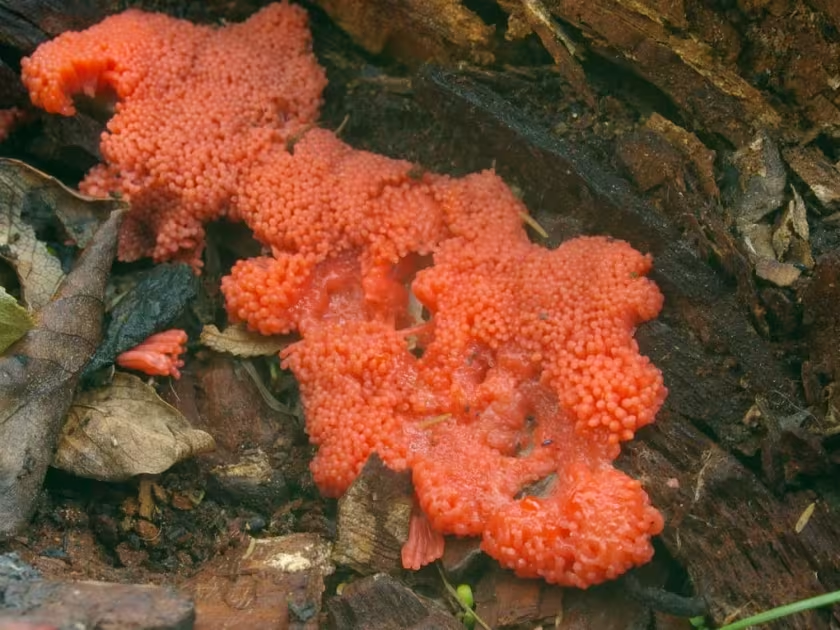
The primary symptom of a Tubifera infestation is the emergence of dense clusters of small, cylindrical sporangia. These clusters often resemble the shape and size of a raspberry or a mass of insect eggs.
Early-stage fruiting bodies appear vibrant pink or orange. As they mature, they shift in color to a dark, rusty brown or deep mahogany shade, making them easily distinguishable from most plant diseases.
The texture of the colony changes from somewhat soft and moist during development to a dry, powdery mass once the spores are ready for dispersal.
These clusters are most frequently found near the base of plant stems, on moist mulched areas, or on plant debris that remains in contact with wet, unventilated soil.
When disturbed, the mature mass releases a cloud of dry, brownish spores, confirming its identity as a slime mold rather than a fleshy fungal pathogen.
Pathogen
Tubifera is a genus of slime molds (myxomycetes) belonging to the phylum Myxomycota. While often discussed in agricultural contexts as a "disease," it is scientifically distinct from parasitic fungi.
These organisms exist as amoeboid masses known as plasmodia during their vegetative stage. When conditions are favorable, they aggregate to form fruiting bodies (sporocarps) that are highly visible to the naked eye.
The most commonly encountered species is Tubifera ferruginosa. It does not possess the biological mechanisms to invade healthy living plant tissues or extract nutrients from the host plant's vascular system.
Tubifera operates as a saprotroph, feeding on bacteria, fungal spores, and organic debris found on surfaces such as decaying wood, damp bark, or moist soil surfaces in agricultural settings.
It is essentially a decomposer that thrives in environments where organic matter is breaking down under conditions of high humidity and poor aeration.
Conditions for development
Tubifera development is strictly dependent on moisture levels. It thrives in high relative humidity (above 80%) and requires free moisture on surfaces to move and reproduce effectively.
Poor ventilation in greenhouses is the single most significant factor contributing to its appearance. Stagnant, moist air prevents the drying of substrates, allowing the slime mold to colonize surfaces rapidly.
The presence of excessive organic matter, including uncleaned crop residues, old sawdust, or thick, water-retaining mulch, provides an ideal habitat for its life cycle.
The organism prefers moderate temperatures ranging from 15°C to 25°C (59°F to 77°F). Shaded areas with limited sunlight exposure maintain the damp conditions necessary for its growth.
Over-irrigation, which creates persistent water film on stalks or soil surfaces, serves as a catalyst for the transition from the vegetative plasmodium stage to the reproductive fruiting stage.
Why it matters
Tubifera does not directly harm living plants. It is not a parasite and does not cause systemic infections, root rot, or tissue necrosis in healthy, vigorous crops.
The primary concern is the indicator role it plays; its presence suggests that the greenhouse or garden environment has become too damp, which is a precursor to actual fungal diseases like Botrytis or Phytophthora.
Massive spore coverage can interfere with the plant's ability to undergo respiration by blocking stomata on the lower stems or leaf surfaces, though this impact is typically minimal.
In post-harvest situations, spores can adhere to produce, which may reduce aesthetic quality and potentially promote secondary fungal growth on damaged or bruised skin of fruits.
While not a direct threat to yield, the visual presence of slime mold can be alarming to growers and is often a sign that humidity management protocols need to be updated.
Protection
The most effective strategy against Tubifera is environmental modification rather than chemical application. Reducing humidity through improved ventilation is the primary control measure.
Maintain high sanitation standards by regularly clearing away dead plant debris, rotting wood, and excessive organic mulch from the growing area to remove the organism's food source.
Optimize irrigation practices to avoid water pooling and keep the lower portions of the plant stems dry. Utilize drip irrigation systems to minimize surface moisture.
If colonies appear, they can be mechanically removed by brushing or wiping the affected area. There is no need for specialized fungicides, as slime molds are not susceptible to standard anti-fungal treatments.
Prevention also includes increasing air circulation using fans in greenhouses and ensuring adequate plant spacing to facilitate rapid drying of the soil surface and foliage after watering.
Discussion
No discussions yet — be the first.