
Plant trypanosomatosis
Trypanosomatidae
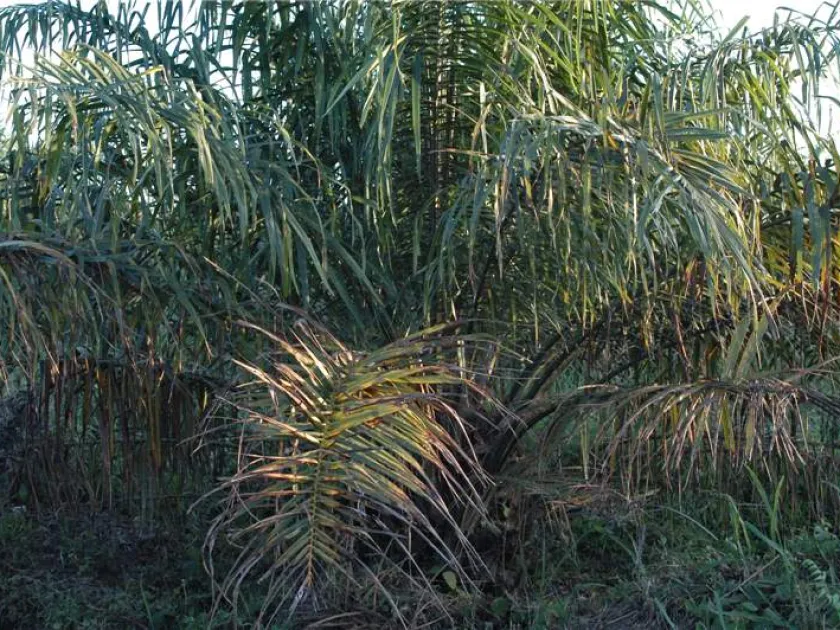
Description
Symptoms
Common symptoms include wilting of leaves and branches that persists despite adequate water availability due to the blockage of phloem vessels.
Infected plants often exhibit chlorosis, stunted growth, and necrosis of the stems, leading to severe deformations of the plant structure.
In crops like coffee and coconut palms, the disease manifests as sudden fruit drop or internal rot of the fruits before they reach maturity.
The foliage may lose turgor and turn yellow or brown as the supply of nutrients is effectively severed by the heavy colonization of parasites.
Confirmation of the disease usually requires molecular diagnostic techniques, such as PCR, or direct visualization of the parasites in the plant sap.
Pathogen
Plant trypanosomatosis is a disease caused by parasitic flagellates belonging to the family Trypanosomatidae, specifically the genus Phytomonas.
These are unicellular protozoan parasites that colonize the phloem of infected plants, disrupting the transport of nutrients from leaves to other parts of the plant.
Unlike their counterparts that infect animals, these plant-specific flagellates have evolved to thrive within the plant vascular system.
The transmission of the pathogen is mediated by insect vectors, primarily true bugs (Hemiptera), which introduce the parasites during feeding.
The biology of Phytomonas involves a complex life cycle shifting between the vector and the host plant, making it a challenging pathogen to manage.
Conditions for development
The spread of the disease is highly dependent on the presence of insect vectors, particularly bugs from the Coreidae and Pentatomidae families.
Warm and humid tropical environments are ideal for both the insect vectors and the multiplication of the parasite within the host.
Stressed or mechanically damaged plants are more susceptible to vector attacks, which significantly facilitates the transmission of the trypanosomes.
High planting density in agricultural plantations provides a bridge for insects to move easily between infected and healthy host plants.
Seasonal fluctuations in temperature and humidity can trigger outbreaks by impacting the population dynamics of the insect vectors.
Why it matters
Plant trypanosomatosis causes severe economic losses in the coffee and palm oil industries, as infected plants often become completely non-productive.
The disease reduces both the quality and quantity of the harvest, making it impossible to meet international standards for agricultural products.
Because there is no viable cure for infected trees, the disease forces farmers to remove and destroy entire plantations, leading to massive financial burdens.
The pathogen threatens food security in regions that rely heavily on susceptible crops, disrupting local economies and traditional farming practices.
The long-term impact involves the necessity of replanting fields with more resistant varieties, which requires significant time and financial resources.
Protection
Effective control strategies focus on the monitoring and management of insect vector populations through the strategic use of insecticides.
Strict phytosanitary measures, including the immediate removal and destruction of symptomatic plants, are essential to prevent the spread of the pathogen.
Creating buffer zones between healthy and infected plantations can help mitigate the risk of vector migration to uninfected areas.
Breeding and selecting varieties with natural resistance to either the pathogen or the insect vector is the most sustainable approach for the long term.
- Routine surveillance for early symptom detection.
- Application of systemic insecticides targeting vectors.
- Removal and burning of diseased plants.
- Implementation of integrated pest management (IPM) practices.
Discussion
No discussions yet — be the first.