
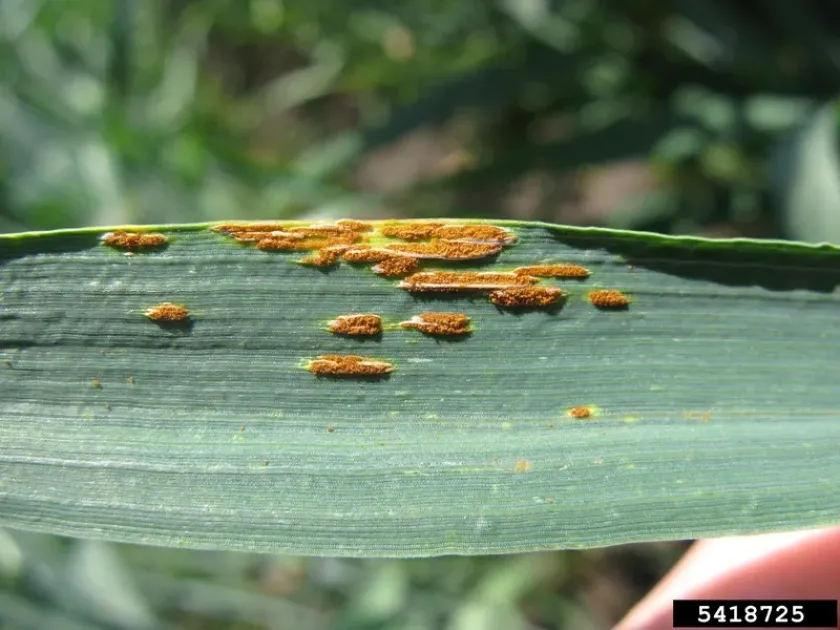
Description
Symptoms
Chlorotic leaf spot typically begins as small, faint yellow or chlorotic spots on the lower leaves. As the infection progresses, these spots expand, often merging to cover larger areas of the leaf surface.
A distinctive feature of this disease is the development of a mosaic or striped pattern between the leaf veins, caused by the depletion of chlorophyll in the affected cells. This visual indicator is key to early diagnosis.
Affected leaves tend to yellow and wither prematurely. Under severe pressure, the infection spreads upward, affecting the flag leaf, which is critical for grain filling and final yield determination.
In later stages, infected tissue may become necrotic and brittle. The necrotic areas often appear brownish, surrounded by a distinct chlorotic halo, indicating the advancing front of the pathogen.
The disease can easily be confused with nutrient deficiencies, but systematic monitoring and laboratory confirmation are essential for accurate identification and proper selection of control measures.
Pathogen
The pathogen responsible for chlorotic leaf spot consists of various fungal species specific to Triticum aestivum. These organisms are adapted to survive in diverse environmental conditions by forming resting structures.
The inoculum overwinters on crop residues, in the soil, or on infected seed. During the spring, primary infections occur when spores are dispersed by rain splash or wind currents to new plant growth.
The infection process involves the penetration of fungal hyphae through the leaf epidermis. Once inside, the pathogen secretes enzymes that degrade cellular components, leading to the characteristic yellowing of the tissue.
The pathogen's life cycle is closely linked to the developmental stages of the wheat plant. It rapidly colonizes host tissue during cool, moist periods when the plant is most vulnerable to invasion.
Understanding the biology of the pathogen is crucial for determining the timing of fungicide applications, as the disease is most destructive during the stem elongation and heading phases.
Conditions for development
Chlorotic leaf spot thrives in cool and humid conditions, typical of early spring. Relative humidity levels exceeding 80% are highly conducive to spore germination and the establishment of new infection sites.
Temperatures ranging from 15 to 22 degrees Celsius create an optimal environment for the disease to spread. Periods of frequent dew or light rainfall sustain the moisture levels required for the pathogen to thrive.
High planting density contributes to the spread of the disease by creating a humid microclimate within the crop canopy. Poor air circulation prevents the drying of leaves, extending the period for infection.
Short crop rotations are a major risk factor, as they allow the pathogen population to build up significantly in the soil. Proper management of post-harvest debris is essential to disrupt the disease cycle.
Plants stressed by poor soil conditions, imbalanced nutrition, or extreme weather are more susceptible to the disease, as their internal defense mechanisms are less effective against fungal invasion.
Why it matters
The primary damage caused by chlorotic leaf spot is the reduction of the photosynthetic surface area. This limits the energy available to the plant, resulting in reduced biomass accumulation and overall plant vigor.
Severe infections lead to a decrease in grain weight and number per head. The accumulation of starches and proteins in the grain is severely hampered, resulting in poor quality and low yields.
The disease causes premature senescence, shortening the grain filling period. This can lead to shriveled grains that do not meet quality standards for milling and commercialization.
In epidemic years, yield losses can be substantial, often ranging from 15% to 30%. The cumulative effect of reduced growth and grain quality impacts the economic viability of the wheat crop.
Additionally, infected plants are often more susceptible to secondary infections, such as root rots or opportunistic pathogens, further complicating the plant's health and increasing costs for growers.
Protection
The most effective strategy for controlling chlorotic leaf spot is the implementation of a diverse crop rotation. Avoiding continuous wheat cultivation helps break the infection cycle in the soil.
Cultural practices such as deep tillage to bury crop residues are highly effective in reducing the amount of primary inoculum available for infection in the following season.
The use of fungicide treatments is necessary when disease pressure is high. Applying systemic fungicides during stem elongation and flag leaf emergence can effectively protect the crop from significant damage.
Balanced fertilization, particularly maintaining adequate potassium levels, helps strengthen plant cell walls and enhances overall disease resistance.
- Choosing disease-resistant or tolerant wheat cultivars;
- Ensuring optimal seeding rates to improve air circulation;
- Treating seed with quality fungicides before planting;
- Regular field scouting to detect early symptoms of the infection.
Pathogens and affected parts
Affects crops · 1
Discussion
No discussions yet — be the first.