
Trichiales slime molds
Trichiales
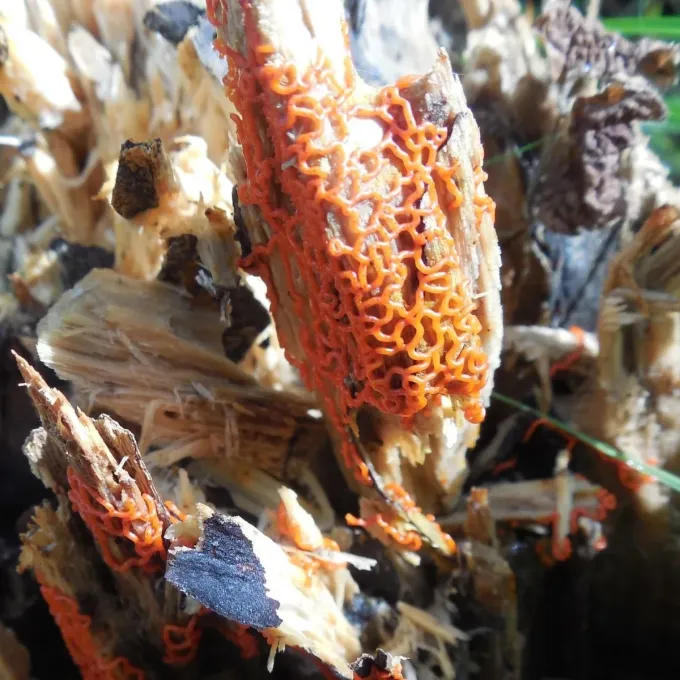
Description
Symptoms
The first indicator of a Trichiales presence is a slimy, oily, or frothy coating appearing on the stems, soil surface, or lower leaves of the plants.
Over time, these slimy masses transform into numerous small, spherical, or cluster-like sporangia. These bodies are distinct and can look like tiny beads or powdery clusters depending on the species.
Unlike mildew, which forms a static mycelial network, the slime mold mass is dynamic. It can change shape, move across surfaces, or even be found in different spots from one day to the next.
When the sporangia mature, they become brittle and dry, releasing clouds of spores when touched, which facilitates their further spread across the field or greenhouse.
There is typically no tissue necrosis or yellowing directly beneath the slime layer, which is a key diagnostic feature separating them from true pathogenic diseases like blight or rust.
Pathogen
Trichiales represent an order of slime molds, or Myxomycetes, which are fascinating organisms that share characteristics with both fungi and protozoa. They are not plant parasites in the traditional sense, as they do not consume living tissue.
The life cycle involves a plasmodium stage, a mobile mass that creeps over surfaces, and a fructification stage where they form spore-bearing structures. These structures are often brightly colored, ranging from yellow to reddish hues.
Because they do not penetrate the plant cell wall, they lack the invasive mechanism of true fungal pathogens. Their ecological role is primarily that of a saprotroph, feeding on decaying organic matter.
Despite their saprophytic nature, their presence in agricultural systems is undesirable as they can rapidly colonize stems and leaves if environmental conditions are favorable.
They are strictly dependent on environmental moisture; once the habitat dries out, the mobile stage usually disappears or forms resting structures, awaiting the return of humidity.
Conditions for development
High humidity and poor air circulation are the primary drivers of slime mold development. Environments where water remains stagnant are particularly prone to outbreaks.
The accumulation of dead plant debris, mulch, or rotting weeds serves as a reservoir for these organisms, providing the food source necessary for them to move onto healthy plants.
Optimal growth usually occurs in temperatures between 15°C and 25°C, coupled with high atmospheric moisture (relative humidity above 80%).
Over-irrigation, especially using overhead sprinkling in the evenings, ensures that the leaf surface remains damp for long periods, providing the perfect window for migration.
Lack of proper soil drainage leads to prolonged wet conditions, encouraging the mobility of the plasmodium stage across the ground and onto the lower foliage of crops.
Why it matters
The primary damage is physiological rather than chemical. The thick, slimy layers block stomata, hindering gas exchange and reducing the plant's ability to photosynthesize effectively.
The moist environment trapped beneath the slime layer creates a haven for opportunistic bacteria and secondary fungal rots, which can then cause actual tissue damage.
In ornamental horticulture, the presence of slime molds renders the plants commercially unacceptable due to the unsightly, unnatural coating on leaves and stems.
Extended periods under a thick slime coating can lead to weakened plant health, making the crop more susceptible to opportunistic pathogens that would otherwise be rejected by a healthy plant.
In commodity crops, the presence of these organisms can complicate harvesting and decrease the overall quality and cleanliness of the final product.
Protection
The most effective strategy is the modification of the microclimate. Ensuring proper plant spacing and thinning helps to improve air circulation and speeds up leaf drying.
Sanitation is paramount. Regularly removing decaying organic matter, weeds, and dead foliage eliminates the substrate that supports the growth of slime molds.
Switching from overhead irrigation to drip or sub-surface irrigation prevents the foliage from staying wet and minimizes the risk of spread.
Improve soil drainage and use mulching practices that allow for proper aeration, preventing the soil surface from staying excessively waterlogged.
While chemical control is rarely needed, sulfur-based or copper-based fungicides can act as a deterrent if the environment is conducive to mass outbreaks.
Discussion
No discussions yet — be the first.