
Trichia varia
Trichia varia
Description
Symptoms
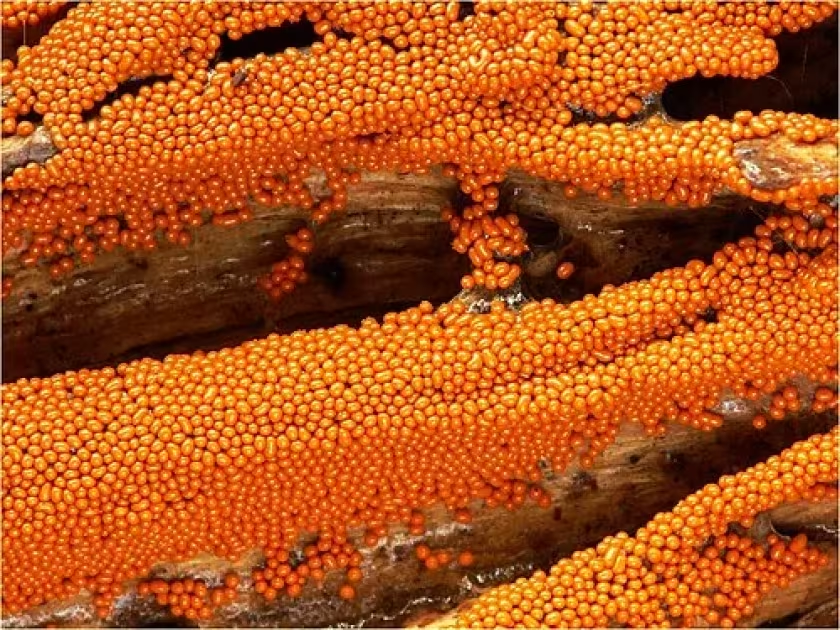
The visual signs of Trichia varia include the appearance of small, bright yellow to ochre-colored fruiting bodies. These are often found in tight clusters on bark or decaying logs.
The sporangia vary in shape, ranging from globular to slightly elongated or curved. As they mature, the outer wall ruptures, revealing a powdery mass of spores that can be golden or olive-colored.
Early stages of development may manifest as a translucent, slimy film spread across crevices in the bark. This film is highly responsive to moisture levels and can change shape quickly.
Unlike true fungi, which form extensive mycelial networks inside the plant tissue, Trichia varia growth is superficial. It relies on the micro-environment provided by the bark's surface texture.
Identifying these fruiting bodies is relatively straightforward due to their vibrant color and clustered arrangement, which distinguishes them from typical fungal pathogens.
Pathogen
Trichia varia is a species of slime mold belonging to the order Trichiales. Unlike parasitic fungi, it is a myxomycete that feeds on bacteria, fungi, and decaying organic matter found on wooden surfaces.
The life cycle begins as a plasmodium, a mobile mass of protoplasm that glides over substrates. Under favorable conditions, it forms distinct fruiting bodies known as sporangia to disperse its spores.
Biologically, it functions as a saprotroph. It does not possess the enzymes necessary to break down healthy living plant cells, which categorizes it as a non-pathogenic organism in agricultural settings.
The presence of Trichia varia on a tree serves as a biological indicator of decay. It thrives in environments where other primary pathogens have already weakened or killed the host tissue.
Spore dispersal is highly efficient, occurring through wind, water splashing, or insect vectors. Once they land on a suitable damp surface, the spores germinate and initiate new colonies.
Conditions for development
The development of Trichia varia is strictly dependent on high humidity and moisture content. It prefers shaded, damp habitats where evaporation is minimized.
Dense vegetation or poorly pruned trees create micro-environments with low airflow, which is ideal for slime mold proliferation. It is rarely found in well-ventilated, sunny garden areas.
The availability of decaying organic matter is essential. Frost cracks, bark damage, or improperly treated pruning wounds provide the initial base for bacterial activity, which subsequently attracts the slime mold.
Temperature fluctuations have minimal effect on its overall survival, but moderate warmth combined with moisture accelerates the production of fruiting bodies during the growing season.
The organism is sensitive to desiccation. During prolonged dry spells, the slime mold remains dormant, waiting for humidity levels to rise before resuming its reproductive cycle.
Why it matters
Trichia varia does not cause direct harm to healthy plants. It is not an infectious pathogen and cannot invade healthy plant tissues to cause disease or rot.
The primary concern is the underlying condition it represents. Its presence signals that the tree is already suffering from significant decay or necrotic tissue that requires immediate management.
Thick clusters of sporangia may physically obstruct the healing process of small wounds on the bark. By covering fresh calluses, the mold can inhibit the plant's natural recovery mechanisms.
In ornamental and commercial gardening, finding this organism is an aesthetic and diagnostic warning sign. It suggests that the tree's health is compromised and the internal wood structure may be weakened.
While the slime mold itself is harmless to the host, the conditions supporting it—excessive moisture and tissue necrosis—can lead to structural instability or death of the affected plant.
Protection
Since Trichia varia is not a parasite, standard fungicidal treatments are ineffective and unnecessary. Control relies on improved horticultural practices and tree care.
Sanitary pruning and the removal of dead wood are the most effective preventive measures. Ensuring that all wounds are clean and properly sealed with wound paint prevents the initial decay that attracts slime molds.
Promoting good airflow throughout the tree canopy by thinning excess growth helps keep the bark dry. A dry surface is naturally resistant to colonization by any type of mold or slime organism.
If colonies are discovered, they should be cleaned off manually, and the underlying surface should be inspected for primary fungal or bacterial infection, which may require specific attention.
- Regular monitoring of tree bark health.
- Pruning to remove necrotic and diseased wood.
- Improving drainage and reducing humidity around trees.
- Maintaining soil fertility to boost plant vigor.
- Sanitizing tools used on infected plants to prevent spore spread.
Discussion
No discussions yet — be the first.