
Trichia scabra
Trichia scabra
Description
Symptoms
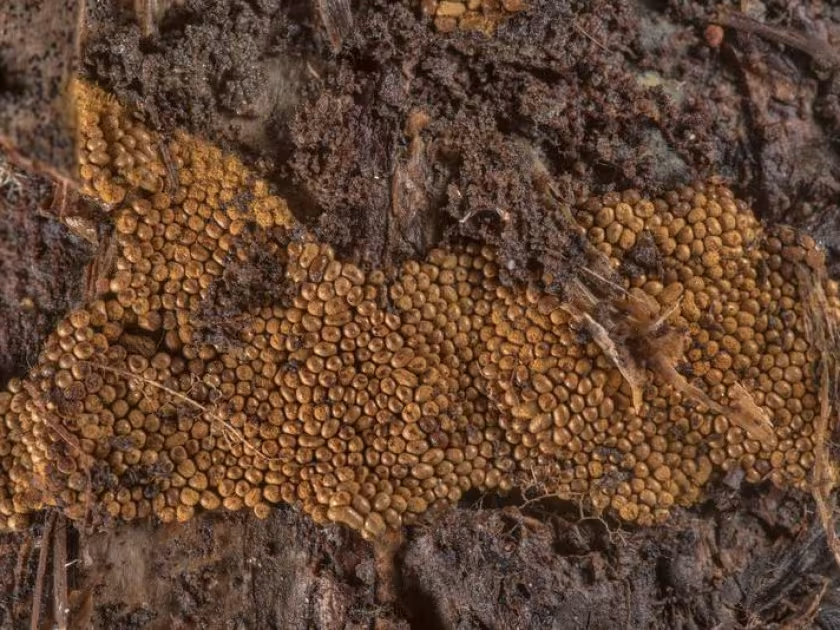
The organism becomes visible when it produces small, clustered fruiting bodies that are usually bright yellow, orange, or ochre in color.
These clusters are typically found on the surface of damp bark, wet mulch, or at the base of stems where moisture accumulates.
When the fruiting bodies mature, they rupture, releasing a mass of spores that can appear as a dusty, powdery coating on surrounding plant surfaces.
Unlike true plant diseases such as powdery mildew, Trichia scabra does not produce mycelium within the plant tissue and does not cause necrosis.
The clusters appear as small, dense, rounded structures that are easy to spot due to their vibrant, non-plant-like coloration.
Pathogen
Trichia scabra is not a parasitic fungus, but rather a species of slime mold belonging to the Myxomycetes class. It lives as a saprotroph, feeding on decaying organic matter, bacteria, and spores.
The life cycle of this organism alternates between a mobile amoeboid stage, known as plasmodium, and a stationary fruiting stage called sporocarps.
Because it does not derive nutrients from living plant cells, it is classified as a decomposer rather than a plant pathogen or a traditional disease-causing agent.
It is commonly found in forest soils, on rotting wood, and in damp environments where organic decay is occurring naturally.
From an agronomic perspective, its presence is a biological indicator of high moisture levels and poor sanitization of the growing area.
Conditions for development
High humidity and consistent moisture are the most critical environmental requirements for the development and maturation of Trichia scabra.
Temperatures ranging from 15°C to 23°C are ideal for the rapid formation of the fruiting stages of this slime mold.
The presence of decaying organic matter, such as old mulch, wood chips, or rotting crop residues, provides the necessary nutrients for the plasmodium phase.
Poor ventilation in greenhouses or dense plantings prevents the surface from drying out, creating an ideal microclimate for the mold to spread.
Overhead irrigation, which keeps the lower stems and soil surface perpetually wet, is the primary reason for its colonization of cultivated areas.
Why it matters
Trichia scabra does not pose a direct threat to plant health, as it is non-pathogenic and does not penetrate living plant tissues.
The primary issue caused by this organism is aesthetic degradation, as the bright clusters can reduce the market value of ornamental plants.
Indirectly, the presence of these clusters can indicate an environment that is also prone to secondary bacterial infections or other harmful fungal pathogens.
In dense greenhouse crops, extensive coverage of leaves by these spore masses can interfere with gas exchange and light interception, potentially slowing growth.
However, it is generally considered a nuisance rather than a destructive disease, signaling a need for better garden or greenhouse management.
Protection
Effective management begins with improving ventilation and reducing moisture levels in the immediate environment around the plants.
Sanitation is key: remove all rotting organic matter, such as old mulch or debris, to eliminate the substrate the slime mold requires for growth.
Modify irrigation practices by switching to drip irrigation to keep the foliage and stem surfaces dry, preventing the mold from establishing itself.
- Manually remove and dispose of visible fruiting clusters.
- Improve air circulation within the greenhouse or plant canopy.
- Ensure proper drainage to prevent water pooling on the soil surface.
In most cases, restoring dry conditions and practicing good hygiene are sufficient to eliminate the presence of this slime mold entirely.
Discussion
No discussions yet — be the first.