
Trichia botrytis
Trichia botrytis
Description
Symptoms
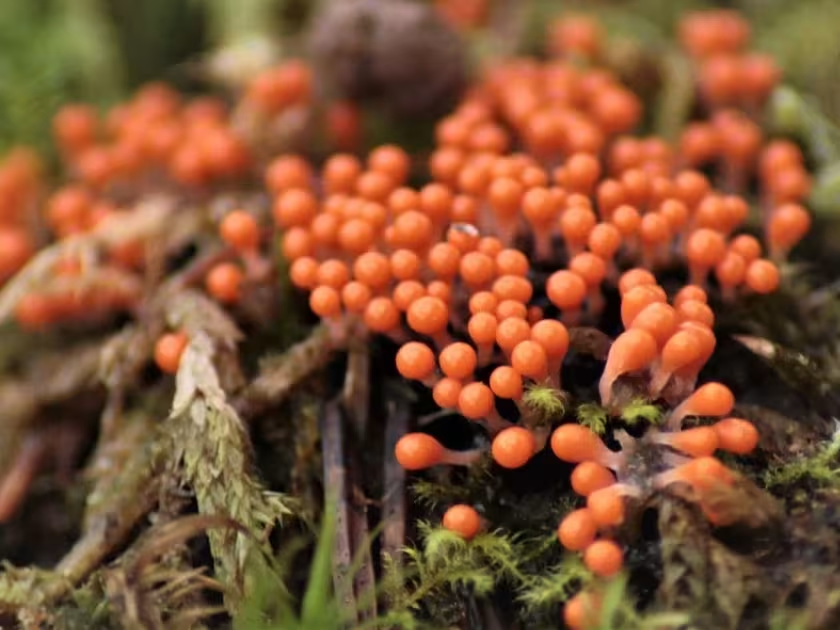
The primary symptom of Trichia botrytis is the appearance of tiny, clustered sporangia that look like tiny bunches of grapes or small, pear-shaped or spherical bodies.
These fruiting bodies often have a characteristic color ranging from yellow-ochre to reddish-brown. As they reach maturity, they become fragile and release a dusty mass of spores when touched.
They are usually found in dark, moist, and shady areas of the garden, particularly on damp logs, decaying stumps, or heavily mulched soil that stays wet for prolonged periods.
Unlike parasitic infections, there is no localized browning, wilting, or rotting of the underlying plant tissue. The organism sits on the surface without penetrating the cell walls.
When you encounter this mold, you will notice it can be easily wiped away, leaving the living plant tissue underneath completely intact and healthy.
Pathogen
Trichia botrytis is a species of slime mold (myxomycetes), not a fungal pathogen. Unlike true plant diseases, it does not attack living plant tissue but thrives on decaying organic matter.
This organism operates as a saprophyte, feeding on bacteria, fungi, and rotting organic particles. Its lifecycle shifts from a vegetative stage (plasmodium) to a reproductive stage (fruiting bodies known as sporangia).
The plasmodium is a mobile, multinucleate mass of protoplasm. It crawls across wet substrates, such as decaying wood, bark, or leaf litter, absorbing nutrients to prepare for spore production.
As a member of the class Myxogastria, it is biologically distinct from phytopathogenic fungi. While it appears on plants, it is essentially using the plant as a physical anchor for its spore-bearing phase.
Recognizing that Trichia botrytis is a slime mold rather than a fungus allows gardeners to avoid unnecessary and ineffective chemical treatments against this organism.
Conditions for development
Development is entirely dependent on moisture and humidity. Trichia botrytis requires a moist environment to sustain the vegetative plasmodium stage and to trigger sporulation.
Temperatures ranging from 15°C to 25°C are ideal for the rapid proliferation of the slime mold. During periods of drought or freezing temperatures, it enters a dormant state.
Poor aeration in the garden is a significant contributing factor. Shaded areas with low airflow allow water to evaporate slowly, keeping the ground and vegetation consistently damp.
Organic debris, such as piles of wood chips, dead branches, or decaying fruit, provides the perfect substrate for the slime mold to complete its lifecycle.
Areas with high organic content in the soil that lack proper drainage provide the steady supply of decay required to support significant populations of Trichia botrytis.
Why it matters
Trichia botrytis does not cause harm to agricultural or ornamental plants. It is harmless to living vegetation as it lacks the physiological ability to infect or feed on healthy tissues.
Its presence is primarily an indicator of environmental conditions, specifically excess moisture and the presence of decomposing organic matter that may need management.
While it does not kill plants, a dense colony covering young leaves might theoretically interfere with minor light absorption or gas exchange, but such cases are rare and transient.
The main concern for gardeners is the visual appearance of the colonies, which can look unsightly on stems, mulch, or lawn structures.
Misidentifying this organism as a pathogenic disease leads to wasted resources and unnecessary use of chemicals, which can harm the beneficial microflora of the garden soil.
Protection
Since Trichia botrytis is not a plant disease, there is no need for chemical intervention or fungicides. Management should focus on improving the physical conditions of the garden.
- Clear away stagnant organic waste, such as fallen branches and rotting wood.
- Improve site drainage to prevent water pooling around plant bases.
- Prune surrounding plants to increase light penetration and airflow.
- Avoid over-mulching with materials that remain consistently soggy.
- Keep the garden area clean and prevent debris from accumulating near stems.
If the appearance of the slime mold is bothersome, mechanical removal is the most effective solution. Simply brushing the sporangia away or washing them off with water is sufficient.
By optimizing the garden's microclimate, you naturally eliminate the moist conditions that Trichia botrytis needs to thrive, ensuring it does not return.
Discussion
No discussions yet — be the first.