
Trichia
Trichia
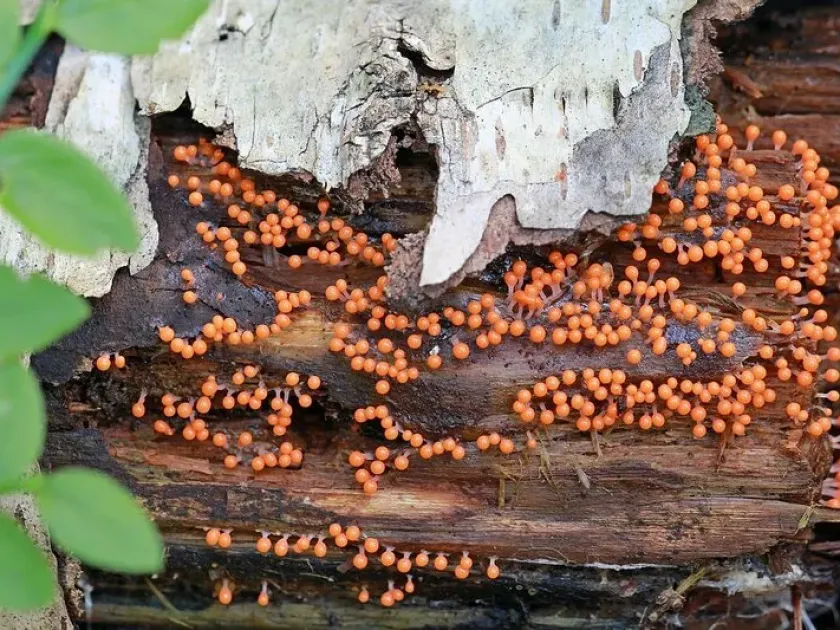
Description
Symptoms
The primary symptom of Trichia presence is the emergence of small, often brightly colored, powdery clusters on the surface of leaves or stems.
These clusters, or sporangia, may appear yellow, orange, or brown and typically look like granular or spongy deposits attached to the plant surface.
Unlike fungal mycelium, these deposits are easily wiped off, often leaving the plant surface underneath relatively intact, though potentially stressed.
Slime trails might be visible on the soil surface near the plant base, indicating the recent movement of the plasmodium before it sporulated.
Affected leaves may show localized chlorosis or stunted growth due to the blockage of light and obstruction of the plant's stomata.
Pathogen
Trichia is a genus of slime molds belonging to the group of Myxomycetes. These organisms are not true fungi but exist as mobile plasmodia during their vegetative life stage.
They feed on bacteria, yeasts, and organic debris in the soil. When conditions trigger their reproductive phase, they move onto vertical surfaces like plant stems to form fruiting bodies called sporangia.
These sporangia contain a mass of spores that are released into the environment. The lifecycle is highly dependent on environmental moisture and substrate availability.
Taxonomically, they are distinct from plant pathogens that invade tissue; however, their presence on crops causes significant management challenges for farmers and growers.
Understanding their lifecycle as decomposers helps in developing strategies to manage their presence in greenhouse and nursery environments.
Conditions for development
High humidity and moisture are the most critical factors for the development of Trichia. It thrives in environments where water remains on surfaces for long periods.
Temperatures ranging from 15°C to 22°C, combined with stagnant air, create an ideal habitat for slime molds to transition from the soil to the plant.
Poorly drained soils and the excessive use of organic mulches provide a constant food source and a reservoir for spores, facilitating their spread.
Dense planting schemes that prevent sunlight from reaching the lower plant canopy create the shaded, moist microclimate preferred by myxomycetes.
In greenhouses, improper irrigation management and condensation on leaves are the main drivers of population spikes in these organisms.
Why it matters
The harm caused by Trichia is mainly physical. By coating leaves and stems, it hinders photosynthesis and disrupts the plant’s normal gas exchange.
Although it does not actively feed on the host, the presence of these slime molds stresses the plant, potentially weakening it against other opportunistic pathogens.
In ornamental plants and seedlings, the aesthetic damage is significant, often leading to total loss of market value due to the presence of visible growth.
Long-term colonization can lead to the accumulation of dust and other debris on the plant surface, promoting the secondary development of bacterial or fungal rots.
In large-scale production, the appearance of slime molds can signal poor sanitation, requiring immediate action to prevent wider spread across the farm.
Protection
The most effective strategy against Trichia is to improve site sanitation and airflow. Reducing humidity is key to preventing the growth of slime molds.
Growers should focus on proper spacing of plants and regular pruning to ensure the lower canopy dries out quickly after irrigation or rainfall.
Removing decaying organic matter, such as dead leaves and old mulch, eliminates the primary substrate needed for the plasmodium stage.
- Improve greenhouse ventilation systems.
- Use inert mulching materials instead of wood-based mulch.
- Ensure efficient drainage to avoid water stagnation.
Mechanical removal of the sporulating bodies is often sufficient for small-scale infestations, provided the surrounding environment is also modified to be less conducive to their growth.
Discussion
No discussions yet — be the first.