
Description
Symptoms
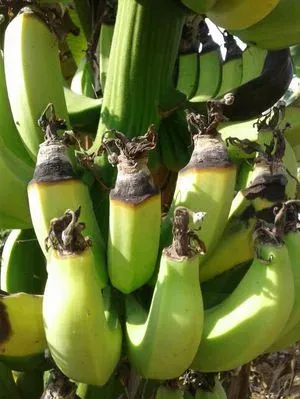
The most distinctive symptom is the development of a dark, shriveled, and blackened area at the tip of the banana fruit, resembling the end of a cigar.
As the infection progresses, the blackened zone extends, leading to the softening and decay of the entire fruit pulp, often accompanied by a foul odor.
A thick, whitish or greyish-colored mat of fungal spores frequently covers the diseased tissue, especially during periods of high atmospheric humidity.
In severe cases, the infected fingers exhibit stunted growth, turn yellow prematurely, and may eventually detach from the bunch due to advanced rot.
The disease transforms healthy, marketable fruit into a mass of necrotized tissue, rendering the entire affected banana hand unsellable.
Pathogen
The disease is caused by the fungus Trachysphaera frutigena, an ascomycete pathogen that specifically targets the floral remnants of developing banana fruits.
The fungus thrives by colonizing the dried flower parts that persist at the distal end of the banana fruit after the flowering phase is complete.
Once established, the mycelium invades the underlying fruit tissue, causing necrosis and degradation as it spreads throughout the banana bunch.
Reproduction occurs via conidia, which are produced in abundance on the necrotic surfaces, appearing as a dusty grey or white layer visible to the naked eye.
The pathogen is highly adapted to tropical environments and can survive on plant debris, ensuring its persistence across successive crop seasons.
Conditions for development
High humidity and consistent rainfall are the primary environmental drivers that facilitate the germination and spread of Trachysphaera frutigena.
Temperature plays a crucial role, with the fungus showing optimal growth and infection rates within the range of +24 to +28 degrees Celsius.
Poor plantation management, specifically high plant density that limits airflow, creates microclimates where moisture persists on flowers and fruit surfaces.
Splashing water from heavy rain or overhead irrigation systems plays a major role in transporting spores from infected debris to healthy fruit clusters.
The accumulation of plant debris on the plantation floor acts as a significant reservoir for the pathogen, fueling periodic outbreaks during the wet season.
Why it matters
The primary economic impact is the direct loss of export-quality fruit, as infected bananas are strictly rejected by quality control standards.
The disease causes significant post-harvest losses, as latent infections can manifest during shipping, resulting in the rotting of entire crates of fruit.
Reduced crop yield and the increased labor costs associated with sanitation and sorting significantly decrease the overall profitability of banana farming.
Heavy infections weaken the plant's physiological state, making it more susceptible to secondary stressors and other concurrent fungal diseases.
Widespread occurrence of cigar end rot can lead to complete loss of income for smallholder farmers who rely on banana production for their livelihood.
Protection
The most vital cultural control practice is the physical removal of dead flower petals from the tips of young fruits shortly after the bunch has emerged.
Improving plantation drainage and spacing ensures better air circulation, which helps keep the fruit surfaces dry and reduces infection risk.
Routine removal and burning or composting of infected fruit bunches and plant debris are essential to lower the total inoculum level in the field.
Judicious application of registered fungicides during the flowering period can prevent initial colonisation by the fungus when weather conditions favor disease.
Integrated Pest Management (IPM) strategies, combining sanitation, proper density, and chemical control, are necessary to maintain healthy and productive plantations.
Pathogens and affected parts
Affects crops · 1
Discussion
No discussions yet — be the first.