
Torrubiella
Torrubiella
Description
Symptoms
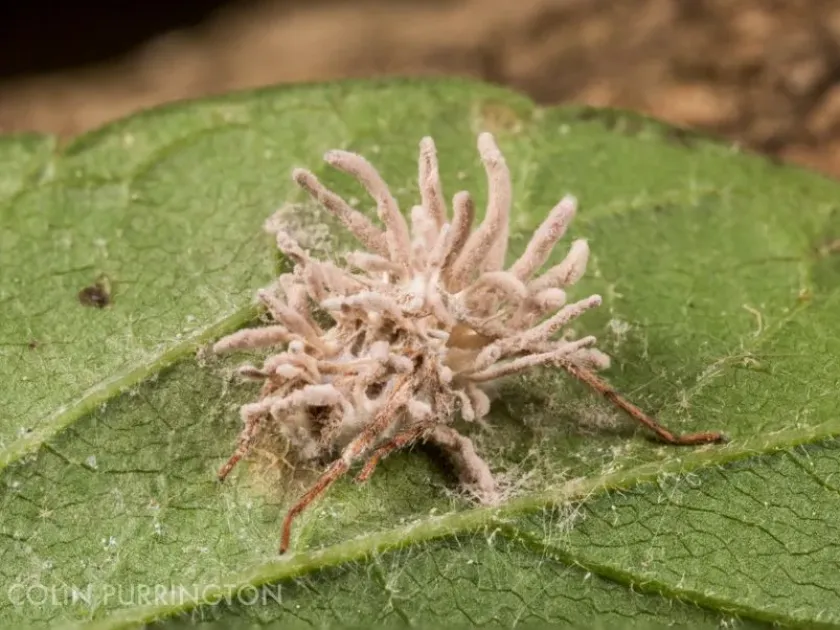
The most prominent sign of Torrubiella infection is the presence of a white or light-colored fungal coating covering the body of the insect pest.
As the fungus develops, you can observe small, thread-like or club-shaped structures protruding from the cadaver of the insect.
Infected insects typically exhibit reduced mobility and behavioral changes, often attaching themselves firmly to the undersides of leaves before expiring.
Clusters of affected insects may appear as patches of fungal growth on the foliage, which can be mistaken for other types of superficial mold.
The discoloration of the insect’s exoskeleton is a common early symptom, often turning paler as the internal tissues are degraded by the fungus.
Pathogen
Torrubiella is a genus of fungi within the order Hypocreales, well-known for being entomopathogenic, meaning they parasitize and kill insects and mites.
These fungi are closely related to the genus Cordyceps, and they play a natural role in regulating pest populations in various ecosystems, including agricultural plots.
The infection process begins when fungal spores adhere to the insect's cuticle, germinate, and penetrate the host's body using specific enzymatic processes.
Inside the host, the fungus develops its mycelium, consuming the insect's internal tissues, which eventually leads to the host's death.
After the death of the host, the fungus produces visible fruiting bodies that emerge from the insect's body to release new spores into the environment.
Conditions for development
High relative humidity is the most critical environmental factor for the successful infection and transmission of Torrubiella spores.
Optimal temperatures for fungal growth generally fall within the range of 18°C to 25°C, providing the energy required for rapid colonization of the host.
Stagnant air and poor ventilation in greenhouses create a microclimate that strongly favors the proliferation of these entomopathogenic fungi.
The presence of free moisture, such as dew or water droplets on leaves, significantly increases the rate of spore germination on the insect's surface.
Conversely, dry conditions and low humidity can effectively inhibit the development of the fungus, leading to a dormancy period for the spores.
Why it matters
While Torrubiella does not directly attack plant tissue, its presence indicates an environment that is excessively humid, which is risky for other reasons.
Massive development of the fungus can cause aesthetic damage to ornamental plants, as the fungal structures leave residues on leaves and stems.
The primary concern is that the conditions supporting the fungus are also highly favorable for the development of severe plant-pathogenic diseases.
In some cases, the presence of these fungi on produce can lead to marketability issues, requiring extra cleaning or sorting processes.
Ultimately, the harm is indirect, as the fungus is a byproduct of high pest density combined with poorly managed greenhouse humidity levels.
Protection
Since Torrubiella acts as a natural biological control agent, active suppression is rarely required or recommended by agronomists.
Management should focus on controlling the humidity levels through proper ventilation and the use of horizontal airflow fans in greenhouse environments.
Regular monitoring of pest populations is essential to ensure they do not reach levels that trigger widespread outbreaks of the fungus.
Maintaining adequate spacing between plants improves air circulation, which helps lower the humidity around the foliage and stems.
If the fungal growth becomes unsightly, standard fungicidal applications can be used, though this may disrupt the natural biological balance of the greenhouse.
Discussion
No discussions yet — be the first.