
Description
Symptoms
The earliest symptom of Tomentosus root rot is a decline in crown condition, where needles become chlorotic, sparse, and eventually fall off, leading to a thin, unhealthy canopy.
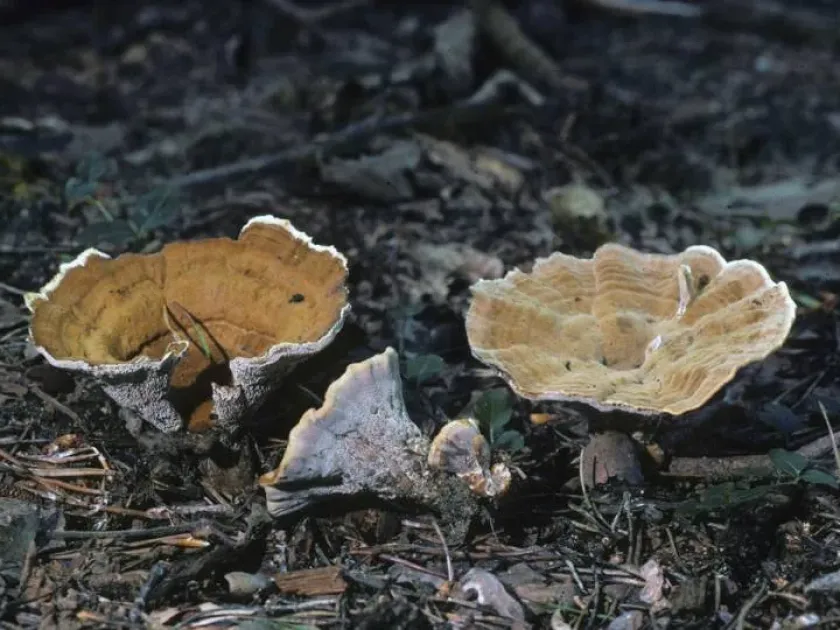
The presence of fruiting bodies at the base of the tree or on nearby roots is a definitive diagnostic sign of the pathogen’s activity in the area.
On affected trees, you may observe heavy resinosis at the root collar, where the tree attempts to defend itself against the advancing fungal infection.
Cross-sections of infected roots reveal a white, pitted rot pattern, often bordered by dark brown or black lines, which are characteristic of the fungal colonization.
- Yellowing and premature shedding of needles.
- Development of velvety conks at the base of the trunk.
- Increased incidence of windthrow due to root damage.
- Presence of white pitted rot in wood tissue.
- Reduced annual growth and overall vigor of the tree.
Pathogen
The causative agent of the disease is the basidiomycete fungus Inonotus tomentosus, a wood-decay fungus known for attacking the root systems of various conifer species.
It acts as a necrotrophic pathogen, causing a characteristic white pitted rot in the roots and the lower portion of the tree stem, effectively consuming wood tissues.
The fungus produces distinctive annual or perennial fruiting bodies at the base of infected trees. These conks are often yellowish-brown with a soft, velvety (tomentose) upper surface.
The pathogen spreads through the environment via wind-borne spores that colonize fresh wounds or directly through root-to-root contact in dense forest stands.
The mycelium of the fungus can survive in stumps and woody debris in the soil for many years, serving as a long-term reservoir for the infection.
Conditions for development
The disease thrives in environments with poor drainage and high soil moisture, which predisposes the root systems of conifers like Douglas-fir to fungal attacks.
High stand density is a significant factor, as it facilitates the transmission of the fungus between neighboring trees through root grafting, leading to expanding infection centers.
The age of the trees also matters; older, mature stands are typically more susceptible to the impact of the rot, though young plantations can also be devastated if the soil is infested.
The accumulation of woody debris and old stumps provides an ideal substrate for the fungus to persist and produce new spores for infection cycles.
Climatic conditions that favor moderate temperatures and high humidity support the vegetative growth of the fungal mycelium within the soil and root system.
Why it matters
Tomentosus root rot causes severe damage by destroying the structural integrity of the root system, which significantly increases the risk of trees falling over during storms.
The disease leads to reduced forest productivity, as trees with compromised root systems experience significant growth retardation and premature death.
In Douglas-fir and other coniferous species, large-scale infections can result in substantial economic losses for timber management, often requiring premature harvesting of stands.
The persistence of the pathogen in the soil makes it difficult to reforest the same area with susceptible conifer species, necessitating long fallow periods or the use of resistant species.
Furthermore, the aesthetic value of landscaped areas and parks is diminished, as infected trees become safety hazards and eventually require removal.
Protection
The most effective management strategy involves the removal of infected trees, including their root systems and stumps, to eliminate the primary sources of the inoculum.
Silvicultural practices, such as promoting mixed-species stands, can break the chain of root-to-root transmission, thereby reducing the rate of infection spread.
Maintaining proper site drainage and avoiding soil compaction around trees are essential to keeping the root systems healthy and more resilient to fungal pathogens.
Early detection through regular forest health surveys is critical to mapping infection pockets and implementing timely containment actions.
In some contexts, the application of biological control agents, such as specific competing fungi, to fresh stumps immediately after harvesting can prevent the colonization of Inonotus tomentosus.
Pathogens and affected parts
Affects crops · 1
Discussion
No discussions yet — be the first.