
Description
Symptoms
The most recognizable symptoms on tomato leaves are chlorotic rings, line patterns, or mosaic-like spots. As the infection progresses, these areas may become necrotic, often leading to leaf distortion and curling.
Infected plants typically exhibit stunted growth and an overall reduction in vigor. The stems may show necrotic streaking, and the root system is often poorly developed compared to healthy plants.
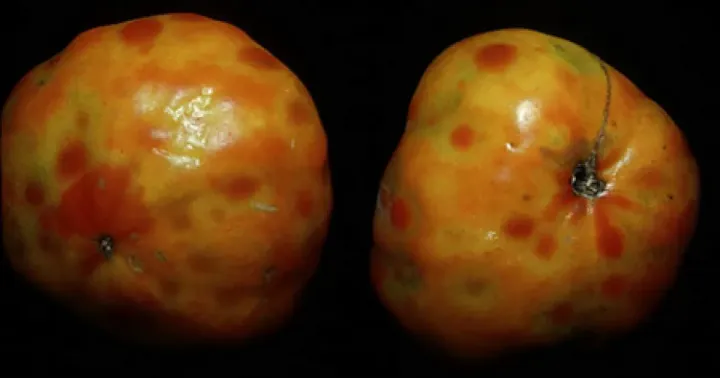
Fruit symptoms include uneven ripening, discoloration, and various forms of deformation. These characteristics significantly degrade the quality of the harvest, making the produce unsuitable for premium fresh markets.
In cranberries, the infection leads to marginal leaf yellowing, reduced fruit set, and overall poor plant health. Infected cranberry stands show declining yields over several seasons, eventually becoming unproductive.
Symptoms may vary depending on the plant variety and environmental conditions. Because signs can sometimes be masked by other biotic or abiotic stresses, laboratory testing such as ELISA or PCR is required for confirmation.
Pathogen
The causative agent of this disease is the Tomato ringspot virus (ToRSV), a member of the Nepovirus genus. It is a significant plant pathogen known for its ability to infect a vast range of herbaceous and woody plant species worldwide.
The virus is primarily transmitted by soil-dwelling nematodes of the genus Xiphinema. These vectors acquire the virus by feeding on the roots of infected plants and subsequently transmit it to healthy hosts during further feeding cycles.
A distinctive feature of ToRSV is its transmission through seeds and pollen, which allows it to disseminate over long distances. This makes the selection of virus-free seed stock a critical challenge for agricultural producers.
The host range of the virus is exceptionally wide, affecting numerous crops. Besides tomatoes, it poses a serious threat to fruit trees, small fruits, and ornamentals; notably, it also affects crops such as cranberries, leading to significant physiological declines.
The molecular biology of the virus shows high variability, leading to the existence of several strains. This diversity complicates the breeding of resistant plant varieties, as a new strain can overcome existing resistance traits.
Conditions for development
The development of the disease is heavily dependent on the presence of Xiphinema nematodes in the soil. These vectors require moist conditions and a steady food supply from host plant roots to survive and reproduce.
Outbreaks are most common in regions where perennial host plants are present, as these act as permanent reservoirs for the virus. In greenhouse settings, the introduction of contaminated growing media or infected seedlings is the primary cause of rapid spread.
Mechanical transmission during routine cultural practices, such as pruning or training plants, plays a major role in local spread. Contaminated tools serve as a highly efficient vector for transporting the virus from one plant to another.
Environmental temperatures influence the expression of symptoms. Mild to moderate temperatures often favor the virus's movement within the plant, while extreme heat may sometimes suppress the visible symptoms, leading to a false sense of security.
Soil management practices, including deep plowing and the use of chemical nematicides, can influence the activity and density of vector populations, directly impacting the frequency of new virus infections in a field.
Why it matters
The economic impact of Tomato ringspot virus is primarily driven by substantial yield losses. Infected plants fail to produce a full crop, and the fruit that is produced is often of poor quality and low market value.
Since the virus is systemic, it infects the entire vascular system of the plant. This disruption in the transport of water, nutrients, and photosynthates leads to a progressive decline in plant health, often resulting in premature death.
The systemic nature of the virus renders infected plants incurable. Once a plant is infected, it remains a permanent source of inoculum for the rest of the field, increasing the risk of widespread epidemics.
For growers, the presence of ToRSV often necessitates the removal and destruction of entire rows or sections of a plantation. This management strategy leads to significant direct losses and increased operational costs.
Additionally, the risk of seed transmission means that infected fields cannot be used for seed production, forcing farmers to seek alternative sources and potentially disrupting established supply chains.
Protection
The primary control strategy is the use of certified virus-free seeds and planting material. Testing all propagation material before introduction into the farm is the most effective preventative measure against this virus.
Managing the nematode population is essential for fields with a history of infection. This includes using crop rotation with non-host species and implementing soil solarization or chemical treatments to reduce vector density.
Strict sanitation protocols for equipment are necessary to prevent mechanical transmission. All tools used for pruning or harvesting must be disinfected between plants using approved solutions to halt the spread.
Weed management is a critical component of disease control, as many common weeds can host both the virus and its nematode vectors. Keeping the fields free of such weeds removes potential reservoirs of infection.
- Regular monitoring and scouting for symptomatic plants.
- Prompt roguing and destruction of infected plants and their root zones.
- Using tolerant or resistant varieties where available.
- Maintaining appropriate spatial isolation from infected fields.
Pathogens and affected parts
Affects crops · 1
Discussion
No discussions yet — be the first.