
Tomato mottle
Tomato mottle begomovirus
Description
Symptoms
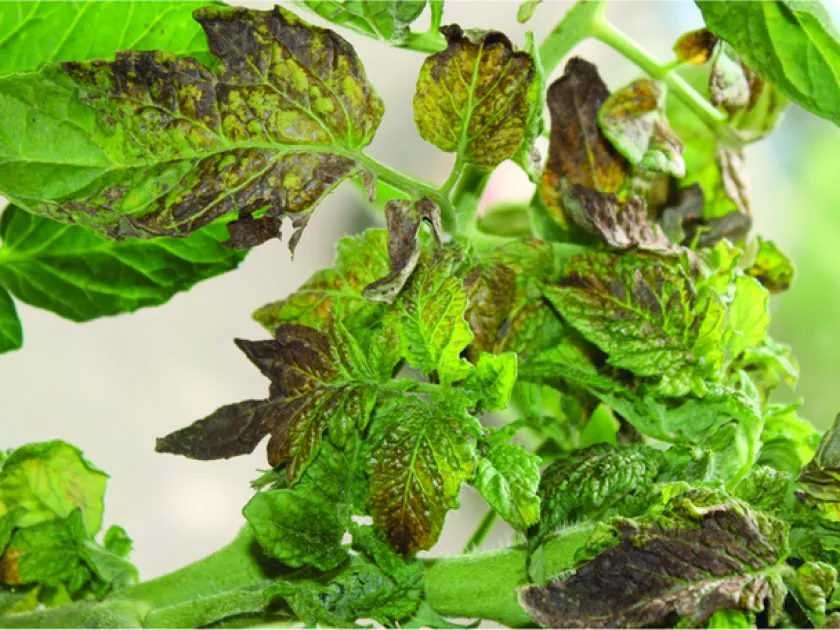
Initial signs include chlorotic spots on the leaflets, which progress into a characteristic mosaic pattern, giving the foliage a mottled appearance.
Leaf deformation is a hallmark of the infection; leaves become crinkled, curled, or distorted, and the leaflets may show uneven margins.
Stunting is clearly visible as the plant's growth rate decreases significantly. Affected plants are often much smaller than healthy ones, with shortened internodes.
Floral development is severely compromised; infected plants often exhibit reduced or no flowering, which prevents fruit set and drastically reduces yield.
When fruit is produced, it is typically small, misshapen, and poorly colored, failing to meet market standards for quality and freshness.
Pathogen
The disease is caused by the Tomato mottle virus (ToMoV), which belongs to the Begomovirus genus within the Geminiviridae family. It is characterized by a circular single-stranded DNA genome.
This is a viral infection that systemically colonizes the phloem tissues of the tomato plant, significantly disrupting physiological processes such as nutrient translocation.
The virus is exclusively transmitted by the tobacco whitefly, Bemisia tabaci. The insect acquires the virus during feeding and remains infectious throughout its lifespan.
Unlike some other plant viruses, it is not transmitted mechanically (through sap contact), emphasizing the critical role of vector control in managing the disease.
The virus persists in reservoir hosts, including various weed species and alternative crop hosts, making it a persistent threat in agricultural regions.
Conditions for development
Warm and dry weather conditions are ideal for the development of this disease, as they favor the rapid reproduction and high activity of the whitefly vector.
High weed density in the vicinity of fields serves as a primary source of the virus, providing a bridge for whiteflies to move onto healthy tomato crops.
Poor agricultural practices, such as failing to manage seedling health in greenhouses, often allow the virus to establish itself early in the season.
Inadequate pest monitoring and the absence of insect exclusion measures in greenhouses allow populations of the vector to flourish unchecked.
The use of infected transplants introduces the virus directly into the production field, leading to rapid spread across the planting site.
Why it matters
The primary impact of Tomato mottle is a severe reduction in harvest quantity and quality, as the virus causes physiological stress that limits plant productivity.
The infection forces farmers to incur significant costs for constant pest control and management, often leading to total yield loss in severe cases.
Because there is no cure for established viral infections in plants, removing and destroying symptomatic plants is necessary to prevent further outbreak.
Viral infection weakens the plant's overall health, making it more susceptible to opportunistic fungal and bacterial pathogens that further damage the crops.
Loss of marketability of deformed fruit results in direct financial losses for the grower, as the produce cannot be sold in fresh markets.
Protection
Management of the disease relies on the effective suppression of the tobacco whitefly population through an integrated pest management (IPM) approach.
Maintaining strict field and greenhouse sanitation is vital, including the removal of weeds that serve as alternate hosts for both the virus and the vector.
Planting resistant or tolerant cultivars is the most effective strategy to minimize losses and maintain sustainable production levels in areas with high disease pressure.
- Use fine-mesh screening in greenhouses to physically exclude whiteflies from the crop environment.
- Deploy systemic insecticides to control whitefly populations and break the transmission cycle.
- Implement yellow sticky traps for monitoring insect density and early detection of vector presence.
- Adopt spatial isolation between nurseries and main production fields to protect young seedlings.
The destruction of all crop debris immediately following harvest is crucial to eliminate the potential viral reservoir for the next growing season.
Discussion
No discussions yet — be the first.