
Tomato late blight
Tomato leaf curl Mayotte virus
Description
Symptoms
The first symptoms typically appear on lower leaves as water-soaked, dark green spots that quickly expand into necrotic brown patches.
Under humid conditions, a fine, white, fuzzy mold growth becomes visible on the underside of the leaves, marking the active sporulation phase.
Stem lesions manifest as dark, firm, elongated streaks, which often weaken the stem structure, causing the plant to collapse or snap.
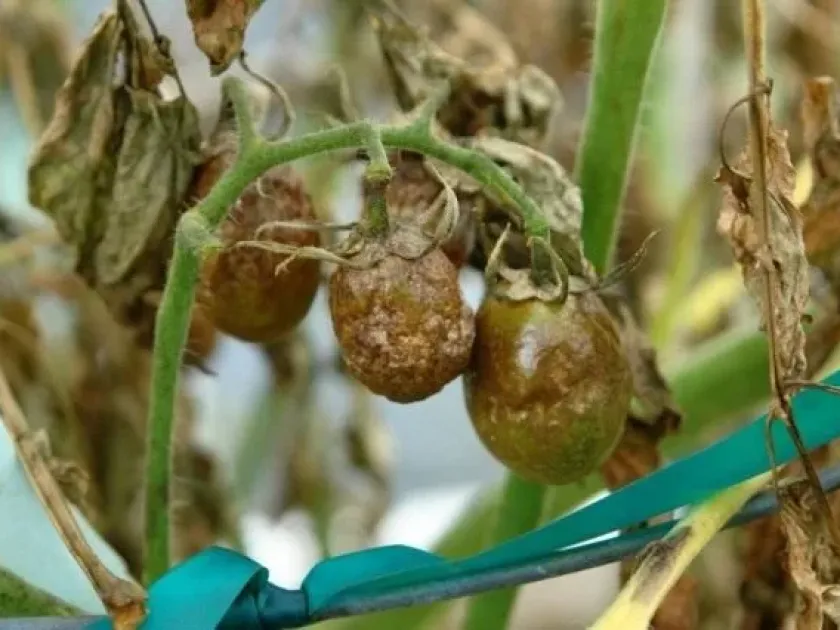
Fruits exhibit hard, dark, unevenly shaped patches that penetrate deep into the tissue, eventually causing the entire fruit to rot.
- Dark, irregular spots on foliage.
- White fuzzy growth on the lower leaf surface.
- Brown, sunken lesions on stems.
- Large, firm, dark brown patches on fruit.
- Rapid wilting and death of the entire plant.
Pathogen
The causative agent of this disease is the oomycete Phytophthora infestans, which belongs to the class of fungus-like organisms known as water molds.
This pathogen acts as an obligate parasite, extracting nutrients from living plant tissues and causing rapid necrosis and cell death.
It reproduces via sporangia that are dispersed by wind, splashing rain, and mechanical contact with contaminated agricultural tools or clothing.
The pathogen can overwinter in soil debris or infected potato tubers, which often serve as the primary inoculum for tomato crops in the following spring.
Phytophthora infestans is highly adaptive, evolving new strains that can overcome some traditional chemical fungicides, requiring integrated management practices.
Conditions for development
Late blight thrives in cool to moderate temperatures ranging from 15°C to 22°C, combined with high humidity or prolonged leaf wetness.
Dense plant canopies that lack sufficient airflow trap moisture near the leaves and stems, creating a perfect microclimate for spore germination.
Frequent rainfall, heavy fog, or overhead irrigation promotes the spread of zoospores from infected parts of the plant to healthy tissues.
Poor drainage in the field can increase humidity levels, further stressing the plants and making them more susceptible to the infection.
Over-fertilization with nitrogen can lead to excessive, soft vegetative growth, which is more vulnerable to rapid colonization by the pathogen.
Why it matters
Late blight is considered one of the most destructive diseases for tomatoes globally, capable of wiping out entire fields within a week under optimal conditions.
The economic impact is severe, as infected fruits are completely unmarketable and cannot be salvaged for processing due to rapid decay.
Complete crop failure often forces growers to abandon infected plants, leading to a total loss of the investment in seeds, fertilizers, and labor.
The disease limits the harvest season, forcing early termination of crop cycles and significant reduction in overall yield quantity.
Long-term soil contamination necessitates costly remediation strategies and strict adherence to crop rotation cycles to suppress future outbreaks.
Protection
The most effective strategy involves the use of certified disease-free transplants and planting resistant tomato cultivars whenever available.
Maintaining adequate spacing between plants and utilizing pruning or staking techniques is essential to improve air circulation and reduce humidity.
Proactive management includes regular monitoring and the application of protective fungicides before the symptoms become widespread during wet weather.
Proper sanitation, including the destruction of diseased plants and infected culls, is critical to reduce the source of inoculum in the garden.
Switching to drip irrigation systems prevents leaf wetness and reduces the risk of water-borne transmission of the oomycete spores.
Discussion
No discussions yet — be the first.