
Plumeria tobamovirus
Tobamovirus plumeriae
Description
Symptoms
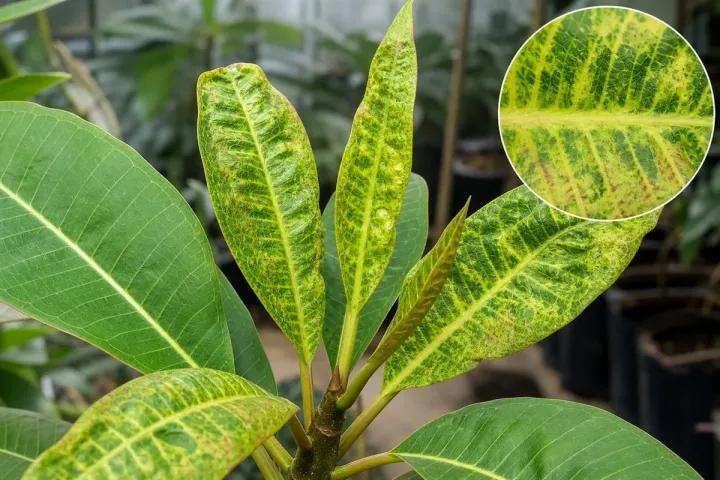
The key sign of infection is the appearance of a characteristic mosaic pattern on the leaves, represented by alternating light and dark green spots. Leaf blades may deform, becoming curled or acquiring irregular margins.
General growth stunting is frequently observed: internodes become shorter, and the plant noticeably lags behind healthy specimens in growth rate. In some cases, chlorotic streaks or ring spots may appear, visually mimicking micronutrient deficiencies.
On the flowers of infected plants, one can often notice pigmentation disorders in the form of color breaking in the petals. This significantly reduces the market value of plumeria, making it unsuitable for sale in the decorative gardening market.
In advanced cases, premature leaf drop and dieback of terminal shoots are observed. Symptoms can appear unevenly and worsen during active growth periods under high temperatures.
When performing visual diagnosis, it is important to distinguish viral symptoms from mite damage or sunscald. Laboratory diagnosis via ELISA or PCR is the only way to confirm the diagnosis with certainty.
Pathogen
The causative agent of the disease is Tobamovirus plumeriae, a member of the Tobamovirus genus, which is known for the high stability of viral particles in the environment. It is an RNA virus that primarily infects plants of the Apocynaceae family.
The disease type is a viral infection that spreads systematically through plant tissues. The virus is easily transmitted mechanically through tissue damage, pruning tools, or the sap of infected specimens.
A biological feature of this pathogen is its ability to persist for a long time in plant debris and growing media. It lacks natural insect vectors, making human activity the primary cause of epidemics in nurseries and collections.
Systemic infection means the virus permeates all vegetative parts of the plant, including stems and roots, rendering local treatment impossible. During its life cycle, the virus redirects the host cell's metabolism to replicate its own genetic material.
Studying this pathogen is crucial for commercial floriculture, as it prevents the normal development of decorative traits and slows down the growth of cuttings, which is critical for vegetative propagation.
Conditions for development
High ambient temperatures promote the development of the virus by accelerating the replication of viral particles in plant tissues. Optimal conditions for symptom manifestation are observed during the summer period.
The spread within a collection occurs during agricultural activities such as pruning, pinching, or taking cuttings. An infected knife that has not been disinfected becomes a vector for infecting healthy plants.
Crowded planting conditions and high humidity can indirectly contribute to plant stress, making them more susceptible to the pathogen. Weak, poorly rooted plants are infected much faster and suffer more severe viral loads.
The virus can persist in soil and substrates if infected root segments are present. Using contaminated tools is the main route of infection during repotting.
A lack of strict quarantine protocols when purchasing new plumeria specimens is the main factor in introducing the pathogen into greenhouses or private gardens, as latent forms of infection are not always immediately visible.
Why it matters
The primary damage is the irreversible infection of all plant tissues, causing the plant to lose its decorative value. The virus disrupts photosynthetic processes, leading to gradual depletion and eventual death of the specimen.
Infected plants become virus "reservoirs," posing a threat to the entire collection. Infected cuttings taken from diseased mother plants will invariably pass the virus to the next generation, making propagation impossible.
Gradual degradation leads to a decrease in the quantity and quality of blooms. Plants become less resistant to other stress factors, including fungal diseases and pests.
Economic losses are associated with the need to destroy infected batches of plant material and the costs of disinfecting work areas. No cure currently exists for plant viral diseases.
The long-term persistence of the virus in plant debris limits the reuse of soil from infected pots, increasing costs associated with waste disposal and substrate replenishment.
Protection
The main method of control is prevention. Strict hygiene protocols must be followed: disinfect all garden tools after each plant using alcohol solutions, hydrogen peroxide, or specialized disinfectants.
- Isolation of suspicious specimens from healthy ones.
- Careful selection of virus-free mother material.
- Removal and destruction of heavily infected plants along with their root ball.
- Use of sterile substrates during repotting.
- Regular disinfection of workbenches and tools.
Since no chemical treatments exist for viral plant infections, pest management remains an important, albeit secondary, element of the overall protection strategy.
When purchasing new plumeria, a quarantine period of at least one month is mandatory to monitor for potential symptom development. It is advised not to purchase plants showing signs of chlorosis or leaf deformation.
Following proper horticultural practices, creating favorable growth conditions, and strengthening the plant's natural defenses help reduce the risk of active virus spread within a collection.
Discussion
No discussions yet — be the first.