
Description
Symptoms
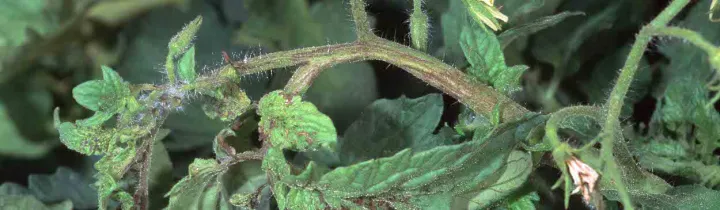
The hallmark symptoms of tobacco streak include the development of chlorotic spots on leaves, which rapidly evolve into necrotic streaks or patterns that severely damage leaf tissue.
Stems and petioles often show characteristic brown or black necrotic lines, which provide the disease with its name, indicating a deep systemic impact on the plant's vascular system.
Infected plants exhibit stunted growth, leaf deformation, and often the death of the apical buds, which halts the normal development of the entire plant structure.
In fruit-bearing crops like tomatoes, the fruit may become deformed and display necrotic spotting or a mottled appearance, rendering the harvest unmarketable.
For cranberries, the infection typically manifests as general chlorosis, reduced vigor, and lower productivity, which often requires laboratory testing for an accurate diagnosis.
Pathogen
Tobacco streak is a significant viral disease caused by the Tobacco streak virus (TSV), which belongs to the Ilarvirus genus. It is known for having a remarkably wide range of susceptible plant hosts.
The pathogen is transmitted primarily through mechanical injury to plant tissues during cultivation and via insect vectors, most notably thrips, which are the main carriers of the virus in open fields.
It affects a variety of agricultural crops, including tobacco, tomatoes, potatoes, beans, and even American cranberry, where the infection may sometimes present as a latent condition.
The virus is capable of persisting in plant debris and seeds of certain hosts, making it a difficult pathogen to eradicate once it becomes established in a specific growing area.
Because there is no curative treatment for viral diseases in plants, understanding the biological cycle of TSV is crucial for implementing effective preventative agricultural practices.
Conditions for development
Disease outbreaks are frequently associated with warm temperatures and high humidity, which provide optimal conditions for the proliferation of thrips, the virus's primary vectors.
Weed populations in and around production fields act as significant reservoirs for the virus, allowing it to survive and spread to new crops throughout the growing season.
Poor agricultural practices, such as failing to maintain spatial isolation between susceptible crops, significantly increase the risk of rapid virus dissemination across a farm.
Plants under physiological stress, often due to improper water management or nutrient deficiencies, are inherently more susceptible to successful viral infection by the tobacco streak virus.
The use of infected, non-certified seeds is perhaps the most critical factor in introducing the virus into previously healthy agricultural zones.
Why it matters
The primary economic damage caused by tobacco streak is a drastic reduction in total crop yield due to the inhibition of photosynthesis and poor fruit set in affected plants.
The market value of the harvest is severely compromised because infected leaves and fruits lose their aesthetic and quality standards due to necrotic damage and deformities.
Viral infections weaken the host's immune system, leaving the plants much more vulnerable to secondary fungal and bacterial opportunistic pathogens, accelerating total plant collapse.
Large-scale infestations can force farmers to abandon certain crops in affected fields, leading to significant financial losses and the need for expensive land rehabilitation.
Managing the spread of the virus requires constant vigilance and expenditure, making it a constant threat to the profitability of intensive agricultural systems.
Protection
The most effective strategy for managing tobacco streak is strict adherence to phytosanitary protocols, specifically the use of high-quality, certified, and disease-free plant material.
Integrated pest management is essential; specifically, maintaining low thrips populations through regular insecticide applications is critical during the peak growing season.
- Rigorous weed control to eliminate virus reservoirs near cultivated areas.
- Implementing spatial separation between different susceptible plant species.
- Immediate rogueing and safe disposal of any plants showing symptoms.
- Sanitizing pruning and cultivation tools between uses to prevent mechanical transmission.
Breeding and planting resistant or tolerant cultivars remains the most sustainable and economically viable long-term solution for combating the impact of tobacco streak.
Proactive management of soil and plant health helps bolster plant resistance, reducing the likelihood of severe outbreaks even when the pathogen is present in the environment.
Pathogens and affected parts
Affects crops · 1
Discussion
No discussions yet — be the first.