
Tobacco necrosis
Tobacco necrosis
Description
Symptoms
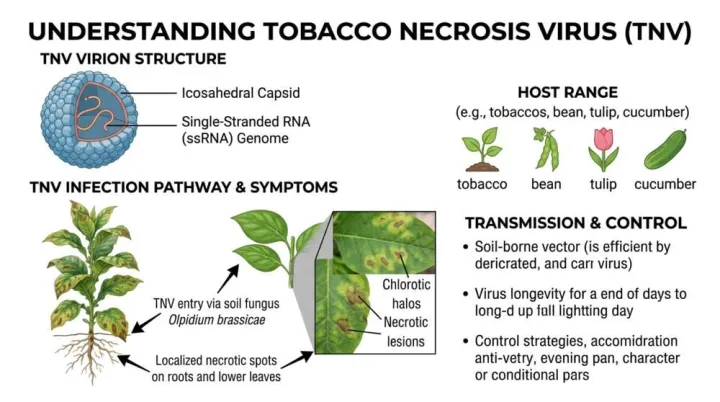
Tobacco necrosis is characterized by the appearance of necrotic spots on leaves, which typically turn brown or dark grey as the disease progresses. These spots can form concentric rings, streaks, or angular patterns depending on the susceptibility of the host plant species.
In many cases, the stem exhibits long dark stripes, leading to brittleness and potential collapse of the plant. Infected leaves often become deformed, wilted, or fall off prematurely, significantly reducing the photosynthetic capacity of the plant.
The root system may show signs of necrosis, including rotting or stunted development, which interferes with nutrient and water uptake. This often results in overall plant stunting, where affected specimens remain significantly smaller than healthy ones.
Terminal necrosis is a common symptom in several crops, where the growing point of the plant turns black and ceases growth. This leads to the stimulation of side shoots, resulting in a bushy and non-productive plant architecture.
Fruits and tubers can also be affected, displaying necrotic patches or lesions that degrade the quality of the produce, making it unsuitable for commercial storage or sale.
Pathogen
The disease is caused by the Tobacco necrosis virus (TNV), a member of the genus Betanecrovirus. It is a small, stable RNA virus that can persist in soil for extended periods even in the absence of a host.
The virus is naturally transmitted by the soil-borne chytrid fungus Olpidium brassicae. The zoospores of this fungus carry the virus and introduce it into the root tissues of host plants during periods of high soil moisture.
Mechanical transmission is also a significant route of spread, occurring through contaminated equipment, handling of plants during routine maintenance, or contact between healthy and diseased tissues.
TNV has an extremely broad host range, infecting many horticultural and ornamental crops. This diversity allows the virus to persist within a cropping system even when primary host crops are not present.
The viral particles are highly resistant to environmental stress, remaining infectious in soil debris, which makes the management of soil-borne inoculum a primary challenge for growers.
Conditions for development
The development and spread of tobacco necrosis are highly dependent on soil conditions, particularly moisture levels. High soil humidity is essential for the movement and infection activity of the fungal vector Olpidium brassicae.
Greenhouse environments with poor drainage, over-irrigation, and limited ventilation provide the ideal conditions for the rapid multiplication of both the vector and the virus, often leading to severe localized outbreaks.
In field settings, periods of prolonged rainfall or cool, moist spring weather favor the infection process. Under these conditions, the fungal zoospores can swim through the water film in the soil to reach the roots of susceptible plants.
The accumulation of the virus in soil over previous seasons, especially after growing susceptible species like legumes, potatoes, or tobacco, increases the disease pressure on subsequent plantings.
Water source contamination can also contribute to disease introduction. Using untreated irrigation water sourced from streams or contaminated runoff can introduce the virus and its vector into clean production areas.
Why it matters
The economic impact of tobacco necrosis is driven by significant yield losses and a reduction in the marketability of the harvested product. Infected crops often suffer from severe stunting and lower biomass production.
Leaves affected by necrosis lose their physiological integrity, which leads to reduced sugar and nutrient accumulation in the fruit or tobacco leaf, directly impacting the final quality of the yield.
In nursery stages, an outbreak of tobacco necrosis can be devastating, resulting in high mortality rates for young transplants and significant financial losses due to the need for replanting.
Infected plants are weakened, making them significantly more susceptible to secondary infections by pathogenic bacteria and fungi, which can complicate diagnosis and accelerate crop death.
For the tobacco industry, specifically, necrotic lesions render the leaf useless for high-grade processing, causing severe economic downgrading of the total harvest value.
Protection
The primary control strategy involves the use of resistant or tolerant cultivars when available. Ensuring that transplants are sourced from certified virus-free programs is crucial for avoiding initial field infections.
Implementing a strict crop rotation cycle is essential to reduce the inoculum level in the soil. Avoiding continuous cropping of highly susceptible species helps to suppress the population of the fungal vector.
In greenhouses, soil sterilization via steam or chemical fumigation is highly effective at reducing the presence of Olpidium brassicae and the associated viral particles in the growing medium.
Sanitation practices are vital: all tools should be sanitized regularly, and infected plants should be carefully removed and destroyed, including the root system, to limit the spread of the virus.
- Utilizing steam sterilization for greenhouse substrates.
- Managing irrigation to maintain well-drained soil conditions.
- Controlling weeds that may harbor the virus.
- Sanitizing footwear and tools to prevent mechanical transmission.
Discussion
No discussions yet — be the first.