
Thyridaria canker
Thyridaria
Description
Symptoms
The most distinctive symptom of Thyridaria canker is the development of sunken, necrotic lesions on the bark. These cankers may appear as discolored, cracked patches that expose the underlying wood, eventually encircling the infected branch.
As the disease progresses, the foliage above the infection point often turns yellow and wilts. In many cases, the affected branch becomes brittle and eventually dies back, leading to a thin and stunted canopy in that specific area.
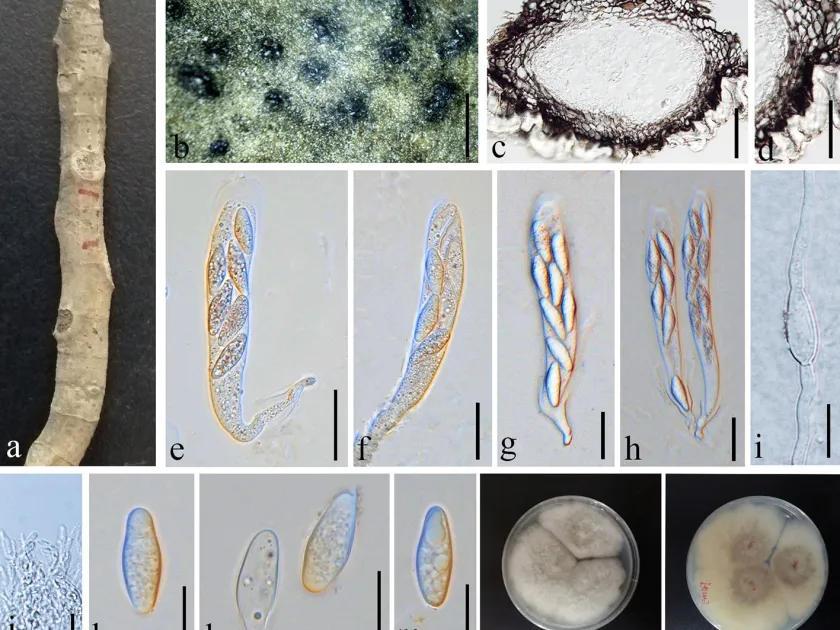
Upon closer examination, small, pimple-like bumps (perithecia) can be seen on the surface of the dead bark. When cutting into the infected wood, one will notice a distinct browning or necrosis of the sapwood, reflecting the extent of internal damage.
The bark in the affected areas may peel away or exhibit longitudinal splitting. In certain fruit trees, this is also accompanied by heavy gumming, as the tree attempts to wall off the infection site, though this is rarely sufficient to halt the fungus.
- Sunken bark lesions and deep necrotic cankers
- Longitudinal cracking and peeling of bark
- Premature yellowing and wilting of leaves
- Presence of small dark fungal structures (perithecia)
- Branch dieback and localized stunted growth
Pathogen
Thyridaria canker is a fungal disease caused by various species of the Thyridaria genus, notably Thyridaria insignis. This pathogen acts as an opportunistic fungus that colonizes the woody tissues and bark of trees and vines, leading to significant structural damage.
The fungus produces sexual spores within small, flask-shaped structures called perithecia embedded in the host's bark. These spores are released under humid conditions and are spread through rain splashes or wind to fresh wounds on the tree.
The pathogen is highly persistent, capable of surviving for several years within dead wood or bark debris. It colonizes the cambium layer, slowly breaking down the conductive tissues and effectively choking off the plant's nutrient flow.
The biological success of Thyridaria is tied to the host's physiological state. It primarily infects trees that are already suffering from stress, environmental damage, or improper horticultural practices that leave the wood vulnerable.
Overwintering occurs directly in the cankers formed on the branches. Once temperatures rise in the spring, the fungus resumes development and begins producing new spores, maintaining the infection cycle within the orchard.
Conditions for development
Thyridaria canker frequently invades through physical injuries such as winter frost cracks, sunscald, or improper pruning cuts. Leaving large wounds unprotected is the primary invitation for spore germination.
High humidity and consistent rainfall are critical environmental factors for disease proliferation. The fungus thrives in moist environments where temperatures range between +15°C and +25°C, providing the optimal conditions for aggressive colonization.
Host tree vitality is a major determinant of disease incidence. Trees suffering from drought stress, waterlogging, or mineral deficiencies show reduced natural resistance, making them easy targets for fungal colonization.
Poor orchard sanitation, such as failing to remove and destroy dead or diseased branches, ensures that the pathogen remains abundant in the environment. This constant source of inoculum leads to repeated annual infections.
Improper spacing and lack of pruning lead to dense canopies, which restrict airflow and increase the duration of surface wetness on branches. This damp microclimate is ideal for the rapid spread of the fungus throughout the tree.
Why it matters
The primary harm caused by Thyridaria canker is the progressive decline of tree vigor. By disrupting the vascular system, the pathogen limits water and nutrient availability, which results in poor fruit set, small size, and inferior fruit quality.
Chronic infection often leads to the death of major branches or whole tree sections. This requires heavy pruning, which not only removes valuable wood but also causes further physiological stress to the tree, potentially leading to total tree loss.
Infected trees often become susceptible to secondary infestations by wood-boring insects. These pests take advantage of the weakened tree, exacerbating the damage and significantly shortening the productive lifespan of the orchard.
The economic impact involves not only reduced harvest yields but also the high costs associated with repeated fungicide applications and intensive labor for sanitation and surgery of the diseased wood.
Because the disease often goes unnoticed until significant damage is already present, the cumulative loss of canopy volume can render trees economically unviable, necessitating premature orchard removal and replacement.
Protection
The cornerstone of control is strict sanitation. All branches showing signs of canker must be pruned back to healthy wood, and the debris must be burned or removed from the site. All tools used must be disinfected between cuts.
Proper horticultural care is essential to boost tree immunity. This includes balanced fertilization, appropriate irrigation to avoid stress, and measures to prevent bark injury, such as painting trunks with white latex to prevent sunscald.
Preventive fungicide sprays containing copper compounds are highly effective when applied during dormant periods (early spring and late autumn). These treatments target overwintering structures and inhibit the germination of new spores.
To reduce humidity around the plant, implement proper canopy management through training and thinning cuts. This ensures good light penetration and airflow, helping to keep the branches dry and less susceptible to infection.
In cases of valuable trees, surgeons can perform a 'canker surgery' by carefully excising the necrotic bark down to the healthy cambium. After cleaning, the area should be treated with protective antiseptic pastes to encourage callus formation and wound healing.
Discussion
No discussions yet — be the first.